

A strong core is important not only for a toned abdomen but also for everyday movement and overall physical stability. The muscles around the abdomen, lower back, pelvis and hips help support the spine and keep the body balanced. A weak core can make activities such as bending, lifting, walking or even getting up from a chair more difficult. It can also affect posture and put extra strain on other muscles. Therefore, building core strength can help improve stability, movement and body control.
Yoga can be a good way to strengthen the core because there are poses that require the abdominal and surrounding muscles to stay engaged. Unlike fast-paced workouts, yoga combines controlled movements with breathing. Practising these poses regularly can help improve core endurance, flexibility, posture and balance. Here are some yoga asanas that you can do at home to strengthen your core.
Yoga Asanas You Can Do To Strengthen Your Core
1. Phalakasana (Plank Pose)
This is one of the simplest yoga poses for engaging the entire core. Start on your hands and knees, extend your legs backwards and keep your body in a straight line from your head to your heels. Then, tighten your abdominal muscles and avoid letting your hips drop or rise too high. Hold the pose for 20-30 seconds and gradually increase the duration as your strength improves.
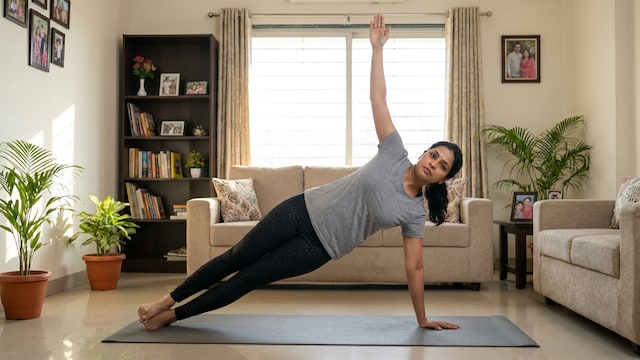
2. Vasisthasana (Side Plank)
Side plank targets the abdominal muscles along the sides of the body, especially the obliques. From a plank position, shift your weight onto one hand and turn your body sideways while stacking one foot over the other. Raise your free arm towards the ceiling and keep your hips lifted. Hold for 15-20 seconds on each side. Beginners can keep the lower knee on the floor for better support.
3. Navasana (Boat Pose)
Navasana works the abdominal muscles and also engages the hip flexors. Sit with your knees bent and feet on the floor. Lean back slightly, lift your feet and extend your legs as much as you can. Keep your chest open and your back as straight as possible rather than rounding your spine. Hold for 15-20 seconds, rest and repeat.
4. Setu Bandhasana (Bridge Pose)
Bridge pose strengthens the abdominal area while also working the lower back, glutes and thighs. Lie on your back with your knees bent and feet flat on the floor. Keep your feet hip-width apart and lift your hips towards the ceiling while tightening your core. Hold for a few breaths before slowly lowering your body.
5. Marjaryasana-Bitilasana (Cat-Cow Pose)
Although Cat-Cow is commonly used for improving spinal mobility, it also helps the abdominal muscles and controls your core. Start on all fours with your hands under your shoulders and knees under your hips. Round your back while gently drawing your abdomen in, then slowly arch your spine as you lift your chest. Move between the two positions slowly and with your breaths.
6. Ardha Navasana (Half Boat Pose)
Half Boat Pose is a variation of Navasana and can help build abdominal endurance. Sit with your knees bent and feet slightly lifted from the floor. Lean your upper body back while keeping your chest open and your spine long. Extend your arms forward and hold the position for 15-20 seconds.
7. Dhanurasana (Bow Pose)
Dhanurasana engages the abdominal muscles while also working the back, shoulders and thighs. Lie on your stomach, bend your knees and hold your ankles with your hands. Gently lift your chest and thighs away from the floor while keeping your abdomen engaged. Hold for a few breaths before slowly releasing. Do not force the lift or pull aggressively on the ankles.
8. Bhujangasana (Cobra Pose)
Cobra pose primarily strengthens the back, but maintaining a controlled position also needs abdominal engagement. Lie on your stomach with palms near your shoulders. Press gently into the floor and lift your chest. Avoid relying entirely on your arms to lift the body. Keep the pose comfortable and stop if you experience lower-back pain.
Disclaimer: This content including advice provides generic information only. It is in no way a substitute for a qualified medical opinion. Always consult a specialist or your own doctor for more information. NDTV does not claim responsibility for this information.