

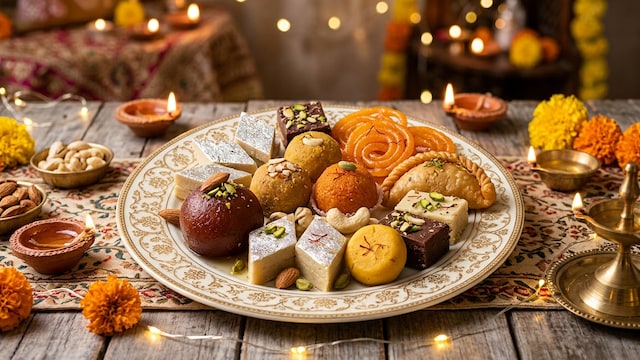
Diwali is a time of joy, family gatherings and delicious food. There's always an abundance of sweets like kaju katli, laddoos and gulab jamun along with savoury snacks. It's hard to say no when everything smells so good and feels so festive. Especially if you are trying to lose weight it can feel like a choice--do I give up my favourite treats or skip the joy? But here's the thing--enjoying sweets doesn't mean you have to give up your weight-loss goals. It's not about cutting out food. It's about balance. A calorie deficit means you eat calories than your body uses over time. That doesn't mean you can't have sweets. It means you need to be mindful. You can still have a piece of kaju katli or a couple of gulab jamun. Just keep the portion small. Enjoy every bite. Savor the moment. Then move on. Be aware of how much you're eating and what you're having that day. If you eat an extra sweetness, balance it with a lighter meal later or a short walk after dinner.
According to Ms Edwina Raj, Head of Services, Clinical Nutrition and Dietetics, Aster CMI Hospital, Bangalore, occasional indulgences can be part of a sustainable weight-loss plan. The key is moderation, consistency and avoiding the temptation to compensate for festive eating through extreme dieting or excessive exercise.
Can You Eat Diwali Sweets While Following A Calorie-Deficit Diet?
"Eating a piece of kaju katli or enjoying a small serving of gulab jamun does not automatically undo your weight-loss progress. What matters more is your overall calorie intake over time rather than what you eat during one particular meal," says the dietitian.
A calorie deficit occurs when the body uses more energy than it receives through food and drinks. Therefore, you do not necessarily have to give up your favourite foods to maintain one. You can make room for occasional treats by adjusting portions and being mindful of your overall intake.
Ms Raj suggests following the 80:20 approach. Under this principle, around 80 per cent of your diet should comprise nutritious, balanced foods, while the remaining 20 per cent can allow room for occasional indulgences. "This does not mean that you should completely refrain from eating sweets. Have a small portion and make an allowance for it in your daily calorie intake," she explains.
The idea is to build a flexible eating pattern rather than follow a restrictive diet that becomes difficult to maintain during festivals and social occasions.
5 Ways To Enjoy Diwali Food Without Derailing Your Weight-Loss Goals
1. Practise portion control instead of avoiding sweets
You do not have to say no to every festive treat. However, be mindful of how much you eat. Instead of having multiple sweets throughout the day, choose the ones you genuinely enjoy and stick to smaller portions. Eating slowly can also help you recognise when you are satisfied. Remember, enjoying a sweet does not mean you have to keep eating simply because it is available.
READ | Too Much Fried Food, Too Little Fibre. What Happens To Your Gut During Festivities?
2. Do Not Skip Meals To Save Calories
One common mistake during festivals is skipping breakfast or lunch to make room for a large festive meal later. However, going without food for long periods can leave you excessively hungry and make it harder to control portions when you finally eat.
Ms Raj advises against skipping meals to accommodate snacks or sweets. Instead, follow your regular meal schedule and include balanced foods throughout the day.
3. Prioritise Protein, Vegetables And Fibre
A festive meal can include sweets and savoury dishes, but try to maintain a balance. Include protein-rich foods, vegetables, fruits and fibre in your regular meals. Protein and fibre can help improve satiety, making you feel fuller for longer. This may also help you avoid mindless snacking between meals.
4. Stay Physically Active
Physical activity is an important part of a healthy weight-management routine. Continue your regular workouts during Diwali, whether that means strength training, walking, cycling or another activity you enjoy.
You can also stay active through everyday movement, such as walking after meals or spending time on your feet during family celebrations. However, exercise should not become a punishment for eating festive food.
5. Avoid Extreme Dieting After Festive Indulgences
After a celebration, some people try to compensate for eating more than usual by drastically reducing their food intake or exercising excessively. This is not a sustainable approach to weight management.
Ms Raj emphasises that one festive meal does not undo weeks of consistent effort. Rather than feeling guilty or resorting to extreme restrictions, return to your usual balanced eating pattern at the next meal.
Does One Cheat Meal Ruin Your Calorie Deficit?
One indulgent meal or an occasional day of eating more than planned does not automatically erase your progress. Weight management depends on your overall eating habits and activity levels over time. You may notice a temporary increase in body weight after a festive meal. However, this does not necessarily mean you have gained an equivalent amount of body fat. Higher salt and carbohydrate intake can cause temporary water retention, while the additional food in your digestive system can also affect the number on the weighing scale.
The important thing is not to panic or respond with crash dieting. Return to your regular routine, stay hydrated, eat balanced meals and continue your usual physical activity. Diwali is a time to celebrate, and following a weight-loss plan should not mean giving up every food you enjoy. You can have your favourite sweets, savour festive meals and still work towards your fitness goals.
As Ms Raj advises, a pragmatic and consistent approach is more useful than extreme restrictions. Practise portion control, avoid skipping meals, prioritise nutritious foods and remain physically active. Enjoy the festive food without guilt, but remember that moderation and consistency matter more than perfection.