

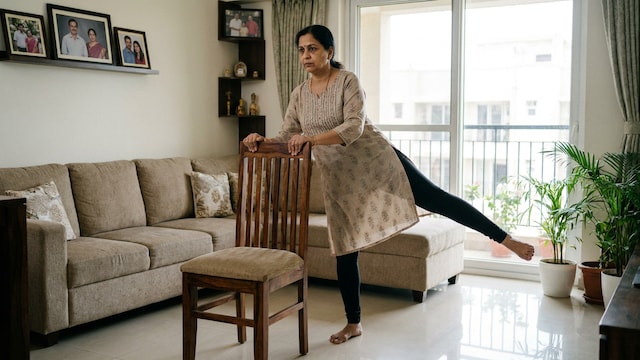
As you age, maintaining balance can become more difficult, making simple activities such as walking, climbing stairs or getting up from a chair feel difficult. Losing balance is not always a sign of a serious health problem. It can happen because several systems that help you stay upright, including your muscles, eyes, inner ear and brain, gradually become less efficient with age. Reduced muscle strength and slower reflexes can also make it harder.
Poor balance should not simply be considered an unavoidable part of ageing. Regular physical activity and balance-focused exercises can help strengthen the muscles involved in stability and improve coordination. Training these abilities can also make everyday movements safer and may reduce the risk of falls. If balance problems are sudden, severe or getting worse, it is important to speak to a doctor to identify the underlying cause.
Why Do You Lose Balance As You Age?
1. Muscle Strength Reduces
Age-related loss of muscle mass, particularly in the legs and core, can make it difficult to keep the body stable. Weak muscles may also make it more difficult to recover after a trip or slip.
2. Reflexes Become Slower
Your body needs to react quickly when you lose your footing. With age, reaction times may slow down, making it harder to make rapid adjustments and prevent a fall.
3. Changes In Vision
Good vision helps the brain understand where the body is in relation to its surroundings. Age-related changes in eyesight can make it harder to judge steps, obstacles, uneven surfaces or distances.
4. The Inner Ear Can Affect Balance
The inner ear contains the vestibular system, which helps the brain understand movement and body position. Changes in this system can lead to dizziness or unsteadiness.
5. The Brain Receives And Processes Information Differently
Balance depends on the brain combining signals from the eyes, muscles, joints and inner ear. Age-related changes in how these signals are processed can affect coordination and stability.
6. Joint Stiffness And Lower Flexibility
Stiff ankles, knees or hips can affect the way you walk and make it harder to adjust your posture. Conditions such as arthritis may also limit movement and stability.
Exercises To Improve Balance As You Age
1. Single-Leg Stand
Stand behind a sturdy chair and hold it with one hand. Slowly lift one foot off the floor and try to maintain your position for a few seconds. Repeat with the other leg. As your balance improves, you can gradually increase the time.
2. Heel-To-Toe Walking
Stand upright and walk forward by placing the heel of one foot directly in front of the toes of the other foot. Take slow steps while keeping your eyes forward. Hold a wall or have someone nearby for support if needed.
3. Sit-To-Stand
Sit on a sturdy chair with your feet flat on the floor. Slowly stand up without using your hands if you can do so safely, then lower yourself back into the chair. This exercise strengthens the thighs, hips and core, which are important for daily movements.
4. Side Leg Raises
Stand behind a sturdy chair and hold it for support. Slowly move one leg out to the side without leaning your body, then bring it back. Repeat on both sides. This helps strengthen the hip muscles that contribute to stability while walking.
5. Heel Raises
Stand behind a chair and hold it lightly. Slowly lift your heels so you are standing on your toes, then lower them back down with control. This strengthens the calf muscles and can support steadier walking and movement.
Start slowly and use a sturdy chair, countertop or wall for support when necessary. Avoid doing balance exercises when you are tired or dizzy. If you fall frequently, feel dizzy, experience unexplained weakness or notice a sudden change in your balance, consult a doctor before starting an exercise routine. Regular practice can help older adults maintain strength, coordination and confidence in everyday movements.
Disclaimer: This content including advice provides generic information only. It is in no way a substitute for a qualified medical opinion. Always consult a specialist or your own doctor for more information. NDTV does not claim responsibility for this information.