

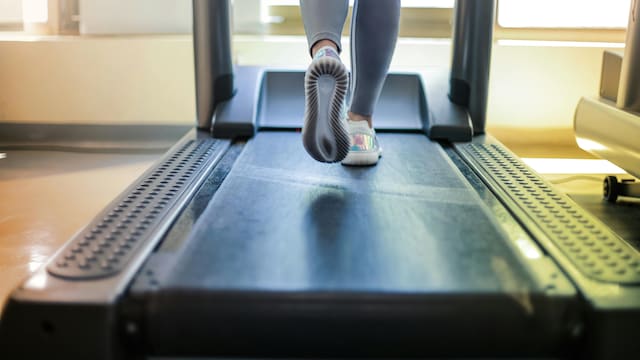
Walking backwards on a treadmill may look unusual, but this simple exercise is gaining attention for its potential benefits for lower-body strength, knee function and balance. Also, known as retro walking or retro treadmill training, the movement involves walking in the opposite direction to normal, engaging muscles differently and challenging the body's coordination. Unlike conventional treadmill walking, which primarily involves moving forward, backward walking requires greater attention to foot placement, posture and balance. It also changes how the muscles around the knees and hips work during movement.While it is not a replacement for conventional strength training or physiotherapy, backward walking can be a useful addition to a fitness routine when performed correctly. A study in Medical Journal of Islamic Republic of Iran has also explored its potential role in improving knee pain, physical function and balance, particularly among people with knee osteoarthritis.pls rewrite it and make it human. But does walking backwards really strengthen your knees? What muscles does it engage, and who should try it?
How Does Walking Backwards On A Treadmill Work?
Backward walking, also called retro walking, changes the mechanics of the normal walking pattern. Instead of stepping forward with the heel landing first, individuals move one foot backwards at a time, requiring greater control over their lower-body movements. This movement changes the way the quadriceps, hamstrings and calf muscles coordinate during walking. The quadriceps, located at the front of the thighs, play an important role in controlling knee movement and supporting the body during physical activity. Backward walking also challenges proprioception, which is the body's ability to understand the position and movement of its joints without constantly looking at them. Since individuals cannot rely on their usual forward visual cues, they need to pay closer attention to their surroundings and foot placement. On a treadmill, the movement can be performed at a controlled speed, making it easier to regulate the intensity. However, it requires concentration and should be attempted only on a treadmill designed for this purpose, with appropriate supervision when necessary.
5 Potential Benefits Of Walking Backwards On A Treadmill
1. May Strengthen The Quadriceps
One of the most researched benefits of backward walking is its potential to improve quadriceps strength. The quadriceps help extend the knee and support movements such as walking, climbing stairs, standing up and squatting. Strengthening these muscles is particularly important for people experiencing knee weakness or reduced physical function. A 2019 randomised controlled trial published in BMC Musculoskeletal Disorders examined the effects of a six-week backward walking programme in 68 people with knee osteoarthritis. Participants in the backward walking group performed supervised sessions lasting 10 minutes, three times a week, alongside their usual care. Researchers observed improvements in quadriceps strength, knee pain and physical performance compared with the control group.
2. May Help Improve Knee Function
Backward walking may also support knee function by changing the movement patterns and muscle coordination involved in walking. In people with knee osteoarthritis, pain and stiffness can make everyday activities such as walking, standing and climbing stairs difficult. A systematic review and meta-analysis published in Clinical Rehabilitation examined 21 studies involving 635 participants with different gait impairments. It found that backward walking combined with conventional physiotherapy helped reduce pain and functional disability and improve quadriceps strength in people with knee osteoarthritis. However, the researchers also noted that evidence was insufficient to establish similar benefits across all other conditions studied.
3. Can Challenge Balance And Coordination
Maintaining balance requires coordination between the muscles, joints, nervous system and sensory systems. Backward walking introduces a different movement pattern, requiring individuals to control their steps and maintain stability while moving in an unfamiliar direction. This can challenge proprioception and coordination, which are important for maintaining balance during everyday activities.
A 2021 randomised controlled trial involving people with knee osteoarthritis found that adding backward walking to conventional treatment improved static stability and physical function. However, improvements in all measures of proprioception were not significantly greater than those seen with conventional treatment alone. PubMed
4. May Help Reduce Knee Pain In People With Osteoarthritis
Backward walking has also been studied as an additional exercise for people experiencing knee osteoarthritis. A possible explanation is that backward walking changes the forces and muscle activity involved in knee movement. This may influence how pressure is distributed around the knee joint during exercise. The 2019 randomised controlled trial found greater reductions in pain and functional disability among participants who performed backward walking alongside their usual care compared with the control group. More recently, a 2025 systematic review and meta-analysis of 13 randomised controlled trials also reported that backward walking combined with conventional rehabilitation was associated with reduced pain and disability in people with knee osteoarthritis. However, these findings do not mean that backward walking can cure arthritis or replace medical treatment. Its potential benefits are best understood as part of a broader rehabilitation programme.
5. Provides A Different Lower-Body Training Stimulus
Most people walk forwards during their daily activities and cardiovascular workouts. Walking backwards introduces a different movement pattern and challenges the lower-body muscles in a different way. The exercise requires coordination between the quadriceps, hamstrings and calf muscles while encouraging controlled movement at the knee and ankle. It can therefore be used as a variation in a fitness routine, particularly for people who want to work on lower-body coordination and movement control. However, backward walking should complement rather than replace conventional strength exercises such as squats, step-ups and leg presses.
How To Walk Backwards On A Treadmill Safely
Although the exercise looks simple, walking backwards requires more attention than conventional treadmill walking. Beginners should prioritise safety and movement control rather than speed. Start by choosing a treadmill with a stable handrail and ensure that the surrounding area is clear. If you are new to the exercise, seek guidance from a qualified trainer or physiotherapist. Begin at a very slow speed that allows you to take controlled steps. Stand facing the rear of the treadmill and carefully move backwards, placing one foot behind the other. Keep your knees slightly bent and your torso upright.
Maintain a controlled stride and avoid taking unnecessarily long steps. Your movements should remain smooth rather than jerky. Use the handrails for support if required, particularly when starting out. Do not increase the treadmill speed simply to make the exercise more challenging. Once you become comfortable with the movement, the duration and intensity can be adjusted gradually. People with existing knee pain, balance problems or a history of falls should consult a physiotherapist before attempting backward treadmill walking.
How Long Should You Walk Backwards On A Treadmill?
There is no universally established duration for backward treadmill walking. The appropriate time depends on your fitness level, movement control and whether you are performing it for general fitness or rehabilitation. A useful research reference is the 2019 clinical trial involving people with knee osteoarthritis. Participants performed 10-minute supervised backward walking sessions three times a week for six weeks, alongside their usual care. However, this was a structured rehabilitation programme and should not be treated as a universal prescription for everyone. Beginners should start with short sessions under supervision and increase the duration only when they can maintain proper technique without discomfort.
Who Should Avoid Backward Treadmill Walking?
Backward treadmill walking is not suitable for everyone, particularly when balance or mobility is already compromised. People with severe knee pain, recent lower-limb injuries, significant balance difficulties or a history of frequent falls should seek medical advice before attempting it. Individuals recovering from knee surgery or ligament injuries should only include the exercise if their treating doctor or physiotherapist considers it appropriate. Older adults who have difficulty maintaining stability should also avoid attempting the movement unsupervised. A controlled rehabilitation environment may be more suitable. If you experience knee pain, dizziness, instability or discomfort while exercising, stop the activity and seek professional guidance. Walking backwards on a treadmill is more than an unusual fitness trend. Research suggests that retro walking, particularly when combined with conventional physiotherapy, may help improve quadriceps strength, knee function and pain in people with knee osteoarthritis.
It can also challenge balance, coordination and lower-body movement control. However, the available evidence does not establish that backward treadmill walking alone can prevent knee injuries or improve balance in everyone. The most important consideration is to perform the exercise safely, begin at a manageable speed and treat it as an addition to a well-rounded fitness or rehabilitation programme rather than a replacement for conventional strength training.
Disclaimer: This content including advice provides generic information only. It is in no way a substitute for a qualified medical opinion. Always consult a specialist or your own doctor for more information. NDTV does not claim responsibility for this information.