

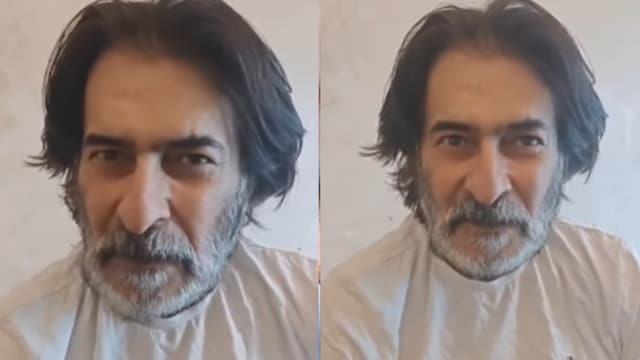
Actor Sharad Kapoor has opened up about the football injury that has temporarily affected his mobility and interrupted his professional routine. The actor recently found himself in the spotlight after a video of him appealing to senior actors and members of the film industry for work went viral. He has now clarified that his appeal was neither an attempt to seek financial assistance nor a criticism of his colleagues. In an interview with HT City, Sharad revealed that he had spent seven years in New York before returning to India a year ago. Recalling how he sustained the injury, the actor said he had travelled to Barcelona to play football with a team that included experienced players. "I went to play football in Barcelona like a fool. There were big players in the team. I thought I was also an intense player. Suddenly I started thinking of myself as Messi," he recounted. The actor explained that a collision with another player during the game resulted in a serious injury. "This one guy, his foot touched mine during the game. As soon as his foot touched mine, I understood that it's gonna be a solid injury." According to Sharad, his doctor has advised him to allow two months for recovery. Although he is currently recuperating, the actor is keen to resume professional commitments and return to the screen. Clarifying his appeal to the film industry, he said that he was looking for meaningful acting opportunities rather than financial support. "I want to appeal to the centre that I am just looking for good work. And I need your support... A little bit of moral support is also enough for me. I am a brilliant actor, and you know that. For a fact. Money is not the issue," he stated. While the actor works towards recovery, his injury also brings attention to an important aspect of sports-related trauma: why even a seemingly brief collision during football can affect movement and require several weeks of rehabilitation.
Why Can A Leg Injury Restrict Movement?
A leg injury can affect much more than a person's ability to participate in sports. Depending on the structures involved, it can interfere with walking, standing, climbing stairs and performing routine activities. The lower limb consists of several interconnected structures, including bones, muscles, tendons, ligaments and joints. An injury to any of these can cause pain, swelling, weakness or restricted movement. For instance, a ligament injury can affect joint stability, while damage to muscles or tendons can make it difficult to move the affected leg or bear weight. A fracture can further limit mobility because the injured bone needs adequate time and protection to heal. The exact nature of Sharad Kapoor's injury has not been disclosed in the information shared by the actor. Therefore, it would be premature to associate his condition with a particular fracture, ligament tear or muscle injury.
5 Reasons Why Recovery From A Leg Injury Can Be Challenging
Recovering from a leg injury involves more than waiting for the pain to disappear. The body needs time to repair damaged tissues, restore strength and regain normal movement. Here are some factors that can make the recovery process challenging.
1. Pain And Swelling Can Restrict Movement
Pain and swelling are common responses to sports-related injuries. They can make it uncomfortable to put weight on the affected leg, bend the knee or move the ankle. Swelling can also restrict the normal movement of a joint, making everyday activities such as walking and climbing stairs difficult. According to the UK's National Health Service (NHS), sprains and strains can cause pain, tenderness, weakness, swelling and bruising. Some people may also find it difficult to bear weight on the injured area. Managing pain and swelling is therefore an important part of the initial recovery process.
2. Damaged Muscles, Ligaments And Tendons Need Time To Heal
Different tissues in the leg recover at different rates. Muscle injuries involve damage to muscle fibres, while ligament injuries affect the tissues that connect bones and provide stability to joints. Tendon injuries can interfere with the ability of muscles to move bones effectively.
The severity of the damage also matters. A minor soft-tissue injury may improve within a few weeks, whereas more serious injuries can require several months of treatment and rehabilitation. The recovery timeline depends on the type of injury, its severity and the treatment recommended by the doctor.
READ | 7 Cricketers Who Suffered Serious Ligament Injuries: How Such Injuries Affect Mobility And Recovery
3. Prolonged Rest Can Lead To Muscle Weakness
Rest is important after an injury, particularly when putting weight on the affected leg could worsen the damage. However, prolonged inactivity can also affect muscle strength and joint mobility. When muscles are not used regularly, they can become weaker. Reduced movement may also contribute to stiffness and make it harder to return to normal physical activities.
This is why rehabilitation often involves gradually introducing appropriate movements and strengthening exercises once the injured tissues are ready. The goal is to restore strength and mobility without placing excessive stress on the recovering area.
4. Regaining Balance And Coordination Takes Time
Walking and running require several muscles and joints to work together. The body also relies on balance, coordination and joint stability to maintain normal movement. After a significant leg injury, these functions may be affected. An individual might find it difficult to walk normally, maintain balance or put equal weight on both legs. Rehabilitation can include exercises that improve muscle strength, flexibility, balance and coordination.
The American Academy of Orthopaedic Surgeons (AAOS) recommends structured foot and ankle conditioning exercises to help restore strength, flexibility and stability following injuries. These exercises should be selected with guidance from a doctor or physical therapist.
5. Returning To Physical Activity Too Soon Can Cause Further Injury
One of the biggest challenges during recovery is knowing when to resume physical activity. Pain may decrease before the injured tissues have completely healed. Returning to sports, running or strenuous exercise too early can place additional stress on the recovering area and increase the risk of reinjury.
For someone who regularly participates in sports, returning to the same level of performance also requires adequate strength, flexibility, coordination and confidence. A gradual return to activity under medical supervision is therefore important.
What Does Rehabilitation After A Leg Injury Involve?
Rehabilitation is an important part of recovering from many musculoskeletal injuries. It aims to restore normal movement, rebuild strength and help individuals return to their daily activities. The rehabilitation plan depends on the type and severity of the injury. It may involve physiotherapy, mobility exercises, strengthening movements and balance training. Initially, treatment may focus on protecting the injured area and managing pain and swelling. As healing progresses, a physiotherapist may introduce controlled movements to improve the range of motion.
Strengthening exercises are gradually added to rebuild the muscles supporting the affected joint. Balance and coordination exercises may also be introduced to improve stability and movement control. According to the National Institute of Arthritis and Musculoskeletal and Skin Diseases (NIAMS), rehabilitation following a sports injury can help restore strength and range of motion while reducing residual pain. It can also support a safer return to previous activities.
How Long Does It Take To Recover From A Leg Injury?
There is no fixed recovery timeline for every leg injury. The duration depends on whether the injury involves muscles, tendons, ligaments or bones, as well as the extent of tissue damage. According to the NHS, most sprains and strains begin feeling better within two weeks. However, strenuous exercise may need to be avoided for up to eight weeks, while severe injuries can take several months to recover from. Bone injuries can require considerably longer. For instance, the American Academy of Orthopaedic Surgeons notes that many people with ankle fractures return to normal activities within three to four months, although complete recovery can take longer depending on the injury. In Sharad Kapoor's case, his doctor has reportedly advised a two-month recovery period. However, the actual timeline for returning to physical activity and professional commitments will depend on his injury, progress and medical assessment.
Sharad Kapoor's football injury highlights how an unexpected collision during a sporting activity can disrupt everyday movement and professional commitments. Recovering from a leg injury involves more than allowing the pain to subside. Healing damaged tissues, restoring muscle strength, improving joint mobility and regaining balance are all important parts of the process. Although the actor's exact diagnosis has not been disclosed, his doctor's recommendation of two months for recovery highlights the importance of allowing adequate healing time. Returning to normal activities should be gradual and guided by medical advice. Rushing the process can increase the risk of further injury and delay recovery.
Disclaimer: This content including advice provides generic information only. It is in no way a substitute for a qualified medical opinion. Always consult a specialist or your own doctor for more information. NDTV does not claim responsibility for this information.