

Cortisol, also known as the stress hormone, plays an important role when the body senses any sort of stressful situation. It is produced by the adrenal glands and helps regulate blood sugar levels, blood pressure, metabolism and the sleep-wake cycle. Cortisol levels naturally increase in the morning, and they usually decrease towards the evening. However, when you have prolonged stress, poor sleep and unhealthy lifestyle habits, it can impact this pattern, keeping cortisol levels elevated for longer. While cortisol is important for normal body functions, maintaining a healthy balance is important for overall well-being.
Persistently high cortisol levels can affect several aspects of health, including sleep, mood, digestion and immunity. Over time, excess cortisol can lead to weight gain, particularly around the abdomen, increased blood pressure, higher blood sugar levels and difficulty concentrating. It can also leave a person feeling anxious, irritable or constantly tired. Certain exercises can help to lower cortisol levels, including Pilates. Pilates can help in relaxation, ease tension and support in stress management. While it cannot guarantee lower cortisol levels, practising Pilates regularly may help the body cope better with everyday stress. Here are some Pilates exercises to lower your cortisol levels.
Pilates Exercises To Lower Cortisol Levels
1. Pilates Breathing
This is one of the simplest ways to begin a stress-relieving routine. It involves slow, controlled breathing coordinated with body movements. Lie on your back with your knees bent and feet flat on the floor. Place your hands on your rib cage. Breathe in through your nose, and allow your ribs to expand gently. Breathe out slowly through your mouth while drawing your abdominal muscles inward. Repeat for 8-10 breaths without straining. Controlled breathing may reduce feelings of stress and aid the body's relaxation response.
2. Cat-Cow Stretch
The cat-cow stretch combines gentle spinal movements with controlled breathing. It helps release stiffness in the back and neck, areas where people commonly experience tension. Get on your hands and knees, keeping your wrists below your shoulders and knees below your hips. As you breathe in, gently lift your chest and tailbone while allowing your back to arch. As you breathe out, round your spine and tuck your chin towards your chest. Repeat 8-10 times at a comfortable pace. Gentle movement and focused breathing can help ease physical tension and help in relaxation.
3. Child's Pose
This is an exercise that allows the body to relax while stretching the back, hips and shoulders. It can be useful after a long day of sitting. Kneel on the floor and slowly sit your hips back towards your heels. Extend your arms forward and lower your forehead towards the mat. If this feels uncomfortable, place a cushion beneath your forehead or between your thighs and calves. Stay in the position for 30-60 seconds. This exercise can help reduce feelings of anxiety and physical tension associated with stress.
4. Pelvic Tilts
Pelvic tilts are movements that activate the abdominal muscles and improve awareness of the lower back and pelvis. They are suitable for beginners and do not require any equipment. Lie on your back with your knees bent and feet flat on the floor. Breathe in naturally. As you breathe out, gently tighten your abdominal muscles and tilt your pelvis so your lower back moves closer to the floor. Hold for two to three seconds, then return to the starting position. Repeat 10-12 times. This can give you a calming break from stressful thoughts.
5. Swimming Exercise
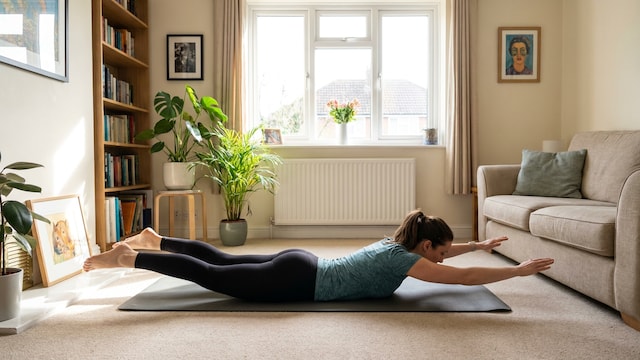
The Pilates swimming exercise works the back, shoulders, glutes and core muscles. It requires coordination between the arms and legs, helping in concentration and controlled movement. Lie face down on a mat with your arms extended overhead and legs straight. Gently lift your right arm and left leg, then switch to your left arm and right leg. Continue alternating slowly while breathing normally. Begin with 10 alternating lifts on each side. Start with small movements, and avoid lifting your limbs too high or arching your lower back too much.
Disclaimer: This content including advice provides generic information only. It is in no way a substitute for a qualified medical opinion. Always consult a specialist or your own doctor for more information. NDTV does not claim responsibility for this information.