

In today's fast-paced world, many people find themselves sitting at their desks for most of the workday. It is widely recognised that prolonged sitting can negatively impact your body, particularly your lower back. The sedentary nature of desk jobs often results in poor posture, muscle tension, and increased stiffness, all of which can lead to chronic discomfort and pain.
When you sit for prolonged periods, your hip flexors and hamstrings tighten, while the muscles in your lower back weaken and become less flexible. This imbalance can lead to discomfort not only during work hours but also after the day ends, often leaving individuals with a sense of heavy stiffness. In such cases, simple stretching exercises can be incredibly effective in relieving tightness, increasing flexibility, and restoring balance to the muscles throughout the back.
Here are five effective lower back stretches to help alleviate post-work back stiffness.
5 stretches to relieve lower back pain and stiffness
To relieve post-work lower back stiffness, target the spinal muscles, hip flexors, and glutes:
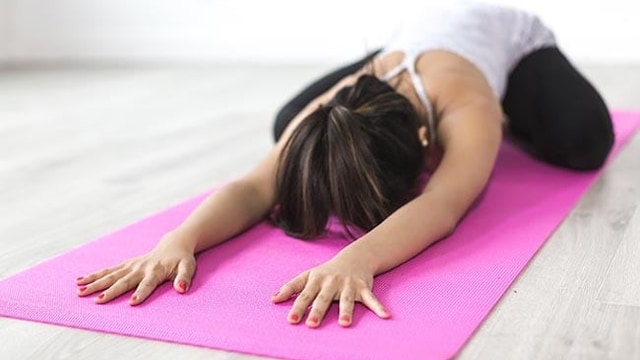
1. Child's pose
Begin this stretch by kneeling on the floor. Sit back on your heels, then lean forward with your arms extended in front of you. Hold this position for 20-30 seconds, breathing deeply and allowing your spine to lengthen. This stretch helps release tension in the lower back and hips.
READ | 6 Standing Yoga Poses For Back Pain
2. Cat-cow pose
Start on all fours, with your wrists positioned directly under your shoulders and your knees right below your hips. As you inhale, arch your back and lift your head (Cow Pose). On your exhale, round your back and tuck your chin to your chest (Cat Pose). Repeat this sequence for 5-10 cycles. This dynamic stretch promotes flexibility in the spine and relieves tension.
3. Seated forward bend
Sit with your legs extended in front of you. Inhale deeply, and as you exhale, hinge at your hips to reach toward your toes. It's best to keep your spine straight as you bend forward. This stretch targets the hamstrings and lower back, promoting overall relaxation.
READ | Back Pain While Bending Or Lifting? Your Core Muscles May Need Attention
4. Knee to chest stretch
While lying on your back, bring one knee toward your chest, using your hands to gently pull it closer. Hold for 20-30 seconds, then switch legs. This movement helps to elongate the lower back and relieve any pent-up tension.
5. Supine spinal twist
Lie on your back with your arms extended out in a T-shape and knees bent. Keep your shoulders flat on the floor as you slowly drop both knees to one side to release tension along the lumbar spine. Hold for 15 to 20 seconds per side for 2 to 3 repetitions.
READ | Yoga For Core Strength: 8 Simple Asanas To Strengthen Your Abdomen, Back And Hips
Execution and safety guidelines
- Mild muscular tightness or a gentle pulling sensation during a stretch is normal after sitting. Stop immediately if you feel sharp, shooting pain, tingling, or numbness radiating down your legs, as these indicate nerve or disc irritation.
- Ease into each position slowly and hold steady rather than pulsing, using your exhales to let tight tissues relax naturally.
Daily stretches, specifically tailored for the lower back, can be beneficial for anyone who spends long hours sitting at a desk. Remember to listen to your body and perform each stretch gently. Regular practice can lead to a healthier back and improved overall well-being, making your work experience far more comfortable. So, the next time you're feeling the post-work stiffness set in, take a moment to stretch it out!
Disclaimer: This content including advice provides generic information only. It is in no way a substitute for a qualified medical opinion. Always consult a specialist or your own doctor for more information. NDTV does not claim responsibility for this information.