

)
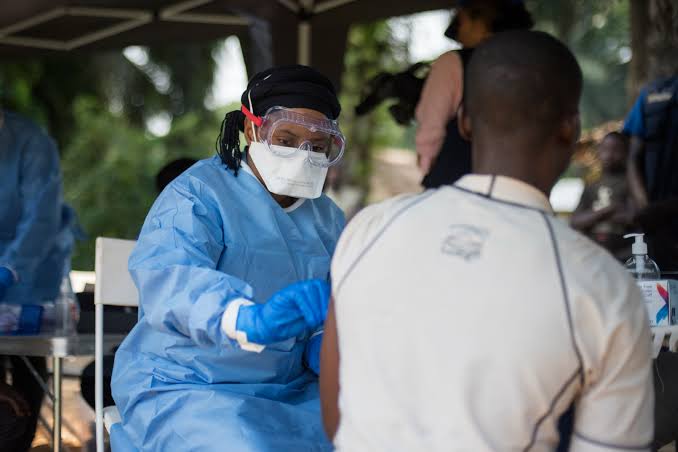
The World Health Organization (WHO) declared the current Ebola outbreak in the Democratic Republic of Congo (DRC) and Uganda a "Public Health Emergency of International Concern" (PHEIC). Everyone is keeping a close watch after fresh cases were reported in DRC and Uganda. The latest outbreak has drawn global attention because it involves the Bundibugyo strain of the virus, a type for which there is no approved vaccine or specific treatment yet.
Health officials in DRC first detected unusual illness in Ituri province, where several suspected infections and deaths were reported. Uganda later confirmed imported cases linked to travel from DRC. The outbreak has pushed international agencies into emergency response mode because the affected areas sit near busy trade and migration routes, raising concerns about cross-border spread.
Ebola was first identified in 1976 and since then, more than 30 outbreaks have been recorded, mostly in Central and West Africa. Some remained small and localised, while others turned into major public health crises. The largest outbreak between 2014 and 2016 spread across several countries and changed how the world responds to deadly infectious diseases. Over the years, better surveillance, faster testing, contact tracing and vaccines have improved outbreak control. The latest outbreak in DRC and Uganda shows why monitoring and rapid action remain essential.
1976: The First Ebola Outbreaks
Ebola was first identified in 1976 during two separate outbreaks in Central Africa. One occurred in what is now the Democratic Republic of Congo, near the Ebola River, which later gave the virus its name. The second happened in Sudan.
The DRC outbreak reported hundreds of cases and had a very high death rate. Scientists recognised that the disease spread through direct contact with infected body fluids and contaminated materials. These outbreaks introduced the world to one of the deadliest viral diseases known.
Late 1970s To 1990s: Smaller But Repeated Outbreaks
After the first outbreaks, Ebola appeared again several times during the following decades. Cases were reported in Sudan, Gabon and parts of the DRC.
These outbreaks were generally smaller than later epidemics but helped researchers understand the disease. Health teams learned the importance of isolation, protective equipment and contact tracing.
By the 1990s, Ebola had already shown a pattern: it could disappear for years and then suddenly return.
1995: Major Outbreak In DRC
One of the most serious early outbreaks occurred in Kikwit, DRC, in 1995. The outbreak infected hundreds of people and caused many deaths. Hospitals struggled initially because healthcare workers lacked protective gear and information about the disease.
This event pushed global organisations to strengthen emergency response systems for Ebola.
2000-2001: Uganda Faces A Large Outbreak
Uganda experienced one of its biggest Ebola outbreaks between 2000 and 2001.
The outbreak mainly affected northern districts and led to extensive contact tracing efforts. Health workers introduced stronger quarantine measures and community awareness campaigns.
Uganda later became one of the countries with the most experience in handling Ebola outbreaks.
2001-2012: Continued Outbreaks Across Central Africa
During this period, outbreaks appeared in Gabon, the Republic of Congo, Uganda and the DRC. Most remained limited, but together they pushed the total number of Ebola outbreaks steadily upward.
A significant outbreak happened in 2007 when the Bundibugyo strain was identified in Uganda. This strain is now linked to the current DRC-Uganda outbreak.
In 2012, another Bundibugyo-related outbreak occurred in DRC.
2014-2016: The Largest Ebola Epidemic In History
The West Africa epidemic changed everything.
It started in Guinea and spread to Liberia and Sierra Leone. This outbreak became the largest Ebola crisis ever recorded. Thousands of people lost their lives, and the disease reached urban centres, thereby, increasing transmission.
Unlike earlier outbreaks that stayed relatively isolated, this epidemic crossed borders rapidly and created worldwide concern.
International agencies deployed medical teams, treatment centres and emergency funding. This outbreak also accelerated vaccine development and improved global outbreak preparedness.
2018-2020: Eastern DRC Outbreak
Another major outbreak struck eastern DRC in 2018.
The response became especially difficult because conflict and insecurity affected the region. Health teams faced challenges reaching patients and tracing contacts.
However, this outbreak marked an important milestone because vaccines were used more widely. Vaccination campaigns helped reduce spread and became a key tool in Ebola control.
2021-2025: Re-emergence And Smaller Events
Ebola did not disappear after the major outbreaks.
Smaller outbreaks appeared in Guinea, Uganda and different provinces of DRC. Some investigations suggested that the virus may occasionally re-emerge from survivours or animal sources.
These events were generally controlled faster due to better surveillance systems and faster testing methods.
The DRC alone recorded several outbreaks during these years, reinforcing its status as the country most frequently affected by Ebola.
2026: The Latest DRC-Uganda Outbreak
The latest outbreak has again placed Central Africa at the centre of Ebola monitoring. Officials have linked the cases to the Bundibugyo strain, a rarer form of Ebola with fewer treatment options available. The outbreak began in DRC and later appeared in Uganda through imported cases. Health authorities are focusing on isolation, surveillance and cross-border cooperation to stop wider transmission.
Nearly five decades after its discovery, Ebola remains a serious public health threat. More than 30 outbreaks have shown that the virus can return unexpectedly.
Disclaimer: This content including advice provides generic information only. It is in no way a substitute for a qualified medical opinion. Always consult a specialist or your own doctor for more information. NDTV does not claim responsibility for this information.