

)
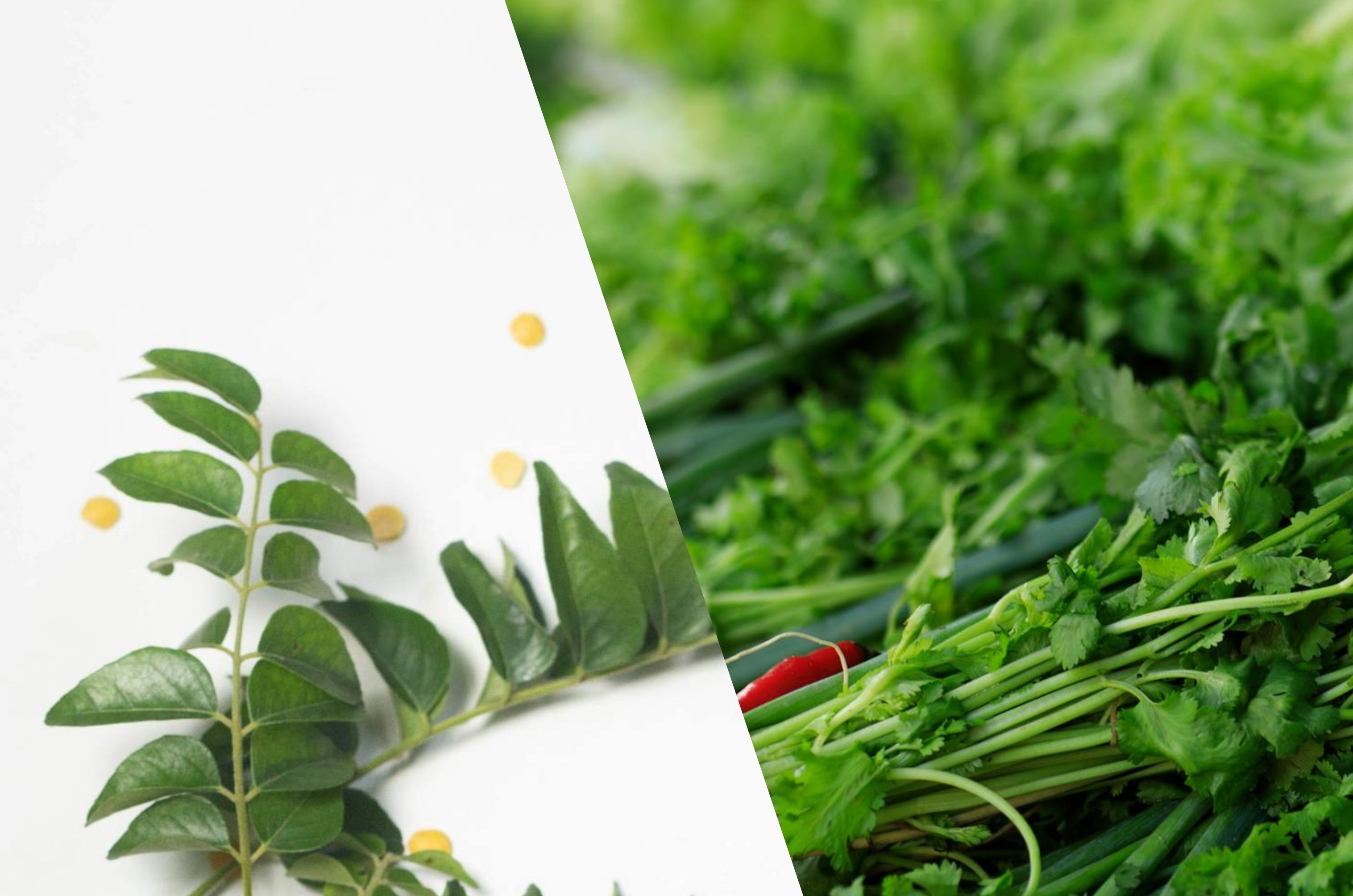
If you walk into any Indian kitchen, the aroma of crackling curry leaves is unmistakable. Another similar ingredient that has a distinct scent is the citrussy burst of coriander leaves freshly chopped over a hot bowl of dal. Curry leaves are native to the foothills of the Himalayas and are found growing wild throughout the Indian subcontinent. While coriander (dhaniya) is actually native to Southern Europe, North Africa, and Southwestern Asia (the Mediterranean region). While these herbs are often treated as mere garnishes or flavour enhancers, they are actually potent medicinal powerhouses. For anyone looking to improve their diet, the question isn't just about flavour; it is about which one packs the bigger nutritional punch.
Curry Leaves Vs. Coriander Leaves: Which Herb Is Healthier?
Both herbs are low in calories but dense in micronutrients. However, their 'specialities' differ significantly. Curry leaves are exceptional sources of carbazole alkaloids, which have powerful antioxidant properties. According to the Journal of Food Science and Technology, they are also surprisingly high in:
- Iron: A vitamin vital for combating anaemia, a common concern in the Indian population.
- Calcium: Essential for bone health and its mineralisation.
- Fibre: Aids in slow glucose absorption and helps the gut function better.
Coriander leaves are your go-to for a refreshing taste, and their raw nutrition is unmatched. It is particularly rich in:
- Vitamin K: A vitamin crucial for blood clotting and bone metabolism.
- Vitamin C: It is a powerful immunity booster.
- Folate (vitamin B9): It is important for heart health and cell repair.
Health Benefits Of Curry Leaves And Coriander Leaves
Curry leaves and coriander leaves both have individual health benefits that are making people gravitate towards these herbs. Incorporating these leaves into your diet can not only elevate the flavour of your meals but also contribute significantly to overall well-being. The specific health benefits that each of them provides are as follows:
- Anti-Diabetic Properties: Research at the University of Madras suggests that curry leaves can help reduce blood glucose levels by protecting insulin-producing cells in the pancreas.
- Liver Health: According to the International Journal of Pharma and Bio Sciences, curry leaves help shield the liver from oxidative stress and toxins.
- Hair and Skin: As per the International Journal of Pharmaceutical and Phytopharmacological Research, curry leaves are used in oils; the antioxidants in them help prevent premature greying and skin infections.
- Cholesterol Management: Coriander acts as a natural diuretic and helps in lowering LDL (bad) cholesterol while potentially increasing HDL (good) cholesterol. The function has been documented in the Journal of Environmental Biology.
- Digestive Aid: It contains essential oils like linalool, as per the journal Phytotherapy Research, which helps stimulate digestive enzymes, reducing bloating and heavy stomach feelings after meals.
- Anti-Inflammatory: Its high vitamin content helps reduce internal inflammation, which is the root of many lifestyle diseases. This benefit has been highlighted in the Journal of Ethnopharmacology.
Read More: Can Chewing Curry Leaves On An Empty Stomach Help In Managing Diabetes?
How To Consume Curry And Coriander Leaves
In India, these herbs aren't just food; they are cultural staples whose accessibility and usage have made them sought-after.
- Accessibility: Both are incredibly affordable and can be grown in a simple balcony pot.
- Usage: Curry leaves are usually cooked (tempered in oil), which helps release their fat-soluble nutrients. Coriander is mostly consumed raw as a garnish or in chutneys, preserving its heat-sensitive vitamin C.
What Does the Science Say?
Comparative studies on bioactive compounds show that curry leaves often have a higher concentration of stable antioxidants that survive high-heat cooking. A study published in the Journal of Food Science and Technology highlighted that the carbazole alkaloids in curry leaves possess significant anti-tumour and anti-inflammatory properties.
On the other hand, coriander has been studied extensively for its ability to detoxify heavy metals from the body (chelation) and its role in managing hypertension, a growing lifestyle disease in urban India.
Pro-Tip: For the ultimate health boost, blend them together in a 'green chutney'. The vitamin C in the coriander will actually help your body absorb the iron from the curry leaves more effectively!
So, which is healthier? It's a tie, but with different strengths. Curry leaves are superior for long-term medicinal benefits like liver protection and diabetes management. Coriander leaves are your daily dose of essential vitamins and the perfect aid for a happy gut.
Read More: WHO Adds Key Diabetes, Weight-Loss Drugs To Essential Medicines List
Potential Side Effects Of Curry Leaves
- Stomach Upset in Excess: While they aid digestion in small amounts, consuming a large quantity of raw leaves can sometimes cause stomach cramps or nausea due to the high fibre and alkaloid concentration.
- Pregnancy and Breastfeeding: There isn't enough large-scale clinical data on concentrated medicinal doses (like extracts or supplements) during pregnancy. Stick to amounts found in food for safety.
- Allergic Reactions: Though rare, some individuals may experience skin rashes or breathing difficulties if they have a specific allergy to the rutaceae plant family.
- Interference with Medication: Because they are so effective at lowering blood sugar, eating them in therapeutic amounts alongside diabetes medication might cause sugar levels to drop too low.
Potential Side Effects Of Coriander Leaves
- Photosensitivity: Large amounts of coriander can make some people's skin more sensitive to sunlight, increasing the risk of sunburn or allergic 'sun rashes'.
- The "Soap" Gene: For about 4-14% of the population, a specific gene (OR6A2) makes coriander taste like soap; for these people, it can cause genuine oral discomfort and nausea.
- Allergic Cross-Reactivity: If you are allergic to fennel, caraway seeds, or celery, you might experience a cross-reaction with coriander, leading to itching or swelling.
- Low Blood Pressure: Since coriander acts as a natural diuretic, excessive consumption may lead to a slight drop in blood pressure, which could be an issue for those already on hypertension medication.
- Contamination Risks: Because coriander is almost always eaten raw, it is a high-risk carrier for salmonella or E. coli if not washed thoroughly in salt water or vinegar.
Tip: If you are planning to take curry leaf or coriander supplements or powders for a specific health condition, always consult your doctor first, especially if you are already on medication for diabetes or blood pressure.
In the Indian kitchen, the secret isn't in the choice; it is in the combination. The best way to take these herbs is to consume them together.
Disclaimer: This content, including advice, provides generic information only. It is in no way a substitute for a qualified medical opinion. Always consult a specialist or your own doctor for more information. NDTV does not claim responsibility for this information.