

)
Pilates is a low-impact form of exercise that focuses on improving strength, flexibility, balance, posture, and body awareness. It was developed by Joseph Pilates in the early 20th century and has since become a popular fitness method for people of all ages and fitness levels. Unlike high-intensity workouts, Pilates emphasizes slow, controlled movements combined with proper breathing. While Pilates is usually practiced with equipment, there are some that can be done at home easily.
Regular Pilates practice offers several physical and mental health benefits. It helps build core strength, improves posture, and increases flexibility, all of which can help reduce muscle stiffness and support better movement in everyday life. It also enhances balance, coordination, and joint mobility, making daily activities easier and lowering the risk of injuries. Here are some Pilates exercises that can be done at home without any equipment.
Pilates Exercises That Can Be Done At Home
1. The Hundred
The Hundred is one of the most popular Pilates exercises and is often used as a warm-up. Lie on your back with your knees bent at 90 degrees and lift your head, neck, and shoulders slightly off the floor. Extend your arms alongside your body and gently pump them up and down while taking controlled breaths. This exercise helps activate the core muscles, improves breathing control, and prepares your body for the rest of the workout.
2. Single Leg Stretch
The Single Leg Stretch is excellent for improving core strength and coordination. Lie on your back, lift your shoulders slightly off the mat, and bring one knee towards your chest while extending the other leg out. Switch legs in a smooth, controlled motion while keeping your abdominal muscles engaged. Avoid pulling on your neck. This exercise strengthens the abdominal muscles, hip flexors, and lower body while also improving balance and flexibility.
3. Glute Bridge
The Glute Bridge focuses on strengthening the hips, glutes, and lower back. Lie on your back with your knees bent and feet flat on the floor, hip-width apart. Tighten your core and lift your hips until your body forms a straight line from your shoulders to your knees. Hold the position for a few seconds before lowering your hips slowly. This exercise helps improve posture, supports the lower back, and strengthens muscles that are important for everyday movements.
4. Roll-Up
The Roll-Up is a classic Pilates movement that improves spinal flexibility and core strength. Start by lying flat on your back with your legs extended and arms stretched overhead. Slowly lift your arms, then roll your upper body forward one vertebra at a time until you reach towards your toes. Reverse the movement slowly to return to the starting position. Make sure to move with control. This exercise strengthens the abdominal muscles, improves posture, and increases flexibility in the spine and hamstrings.
5. Side-Lying Leg Lifts
Side-Lying Leg Lifts are simple yet effective for strengthening the hips, thighs, and outer glute muscles. Lie on one side with your legs straight and stacked on top of each other. Rest your head on your lower arm and lift the top leg slowly before lowering it without letting it drop. Repeat on both sides. Keep your core engaged and avoid rolling your hips backwards. Strong hip muscles improve balance, support the knees, and help reduce the risk of injuries.
6. Bird Dog
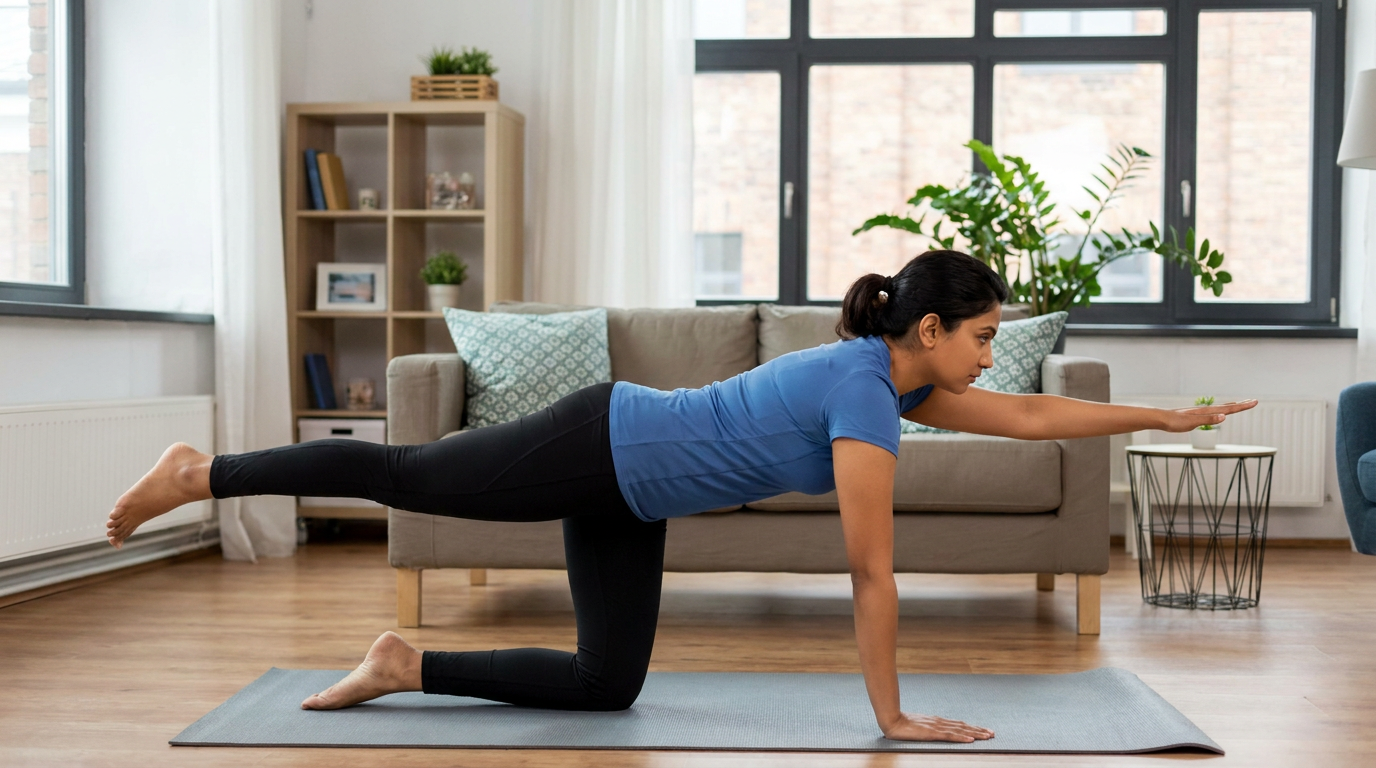
The Bird Dog is a Pilates-inspired exercise that improves stability, balance, and coordination. Begin on your hands and knees with your wrists directly below your shoulders and knees below your hips. Extend your right arm forward while stretching your left leg behind you. Hold the position before returning to the starting position and switching sides. Keep your back flat and avoid twisting your hips. This movement strengthens the core, back, shoulders, and hips while improving overall body control and posture.
Disclaimer: This content including advice provides generic information only. It is in no way a substitute for a qualified medical opinion. Always consult a specialist or your own doctor for more information. NDTV does not claim responsibility for this information.