





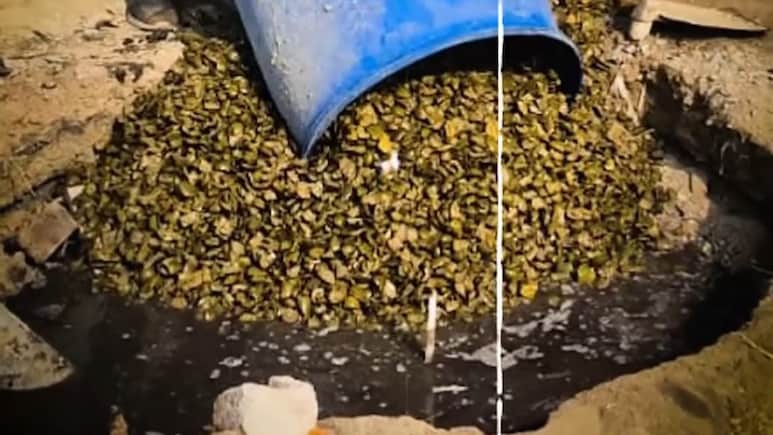
Pickles are a staple in Indian kitchens, adding tangy, spicy bursts of flavour to everyday meals. But a recent crackdown in Rajasthan has raised serious concerns about what's really inside those jars. The state's Food Safety Department seized and destroyed over 1,600 kg of unsafe pickle in Alwar, along with 200 kg of ghee and jaggery, after finding them unfit for consumption. An Instagram video shared by FSSAI (Food Safety and Standards Authority of India) on January 15 shows drums of pickle being dumped into a ditch to prevent any chance of sale. This operation is part of a nationwide food safety drive aimed at protecting consumers from substandard products.
Pickles Are Widely Consumed In Daily Indian Diet
From aam ka achar to nimbu ka achar, pickles are deeply woven into India's culinary culture. Traditionally, they are made by fermenting vegetables or fruits in oil and spices like mustard seeds, fenugreek, and chilli powder. Winter favourites include carrot, radish, and cauliflower pickles. While many households still prepare achaar at home, packaged pickles dominate store shelves. But as this recent raid shows, not all packaged products meet safety standards.
Also Read: Food Authority Seizes 7,210 Kg Of Adulterated Ghee In Uttar Pradesh
5 Tips To Buy Good Quality Pickles
Pickles may seem harmless, but poor-quality products can pose serious health risks. Here are tips to buy good-quality pickles:
1. Note For Authentic Ingredients
Choose brands that use cold-pressed oils like sesame, natural spices such as mustard and fenugreek, and fresh, locally sourced produce, be it any pickle - mango, lemon, chilli and so on.
2. Check The Label
Always read the manufacturing and expiry dates, ingredient list, and oil and salt content. Verify if it's a homemade-style or mass-produced pickle.
Also Read: UP Food Authority Busts 750 Sacks Of Roasted Chana Laced With Yellow Dye Harmful For Kidneys, Liver
3. Check The Preparation Method
Traditional pickles are sun-dried and naturally fermented, enhancing flavour and nutrition. Many commercial pickles use shortcuts like pressure cooking or chemical preservatives. Choose brands that stick to authentic methods.
4. Avoid Artificial Preservatives
Natural preservatives like mustard oil, vinegar, and salt are safest. Pickles without synthetic additives may have shorter shelf lives but offer better taste and health benefits.
5. Inspect The Packaging
Good packaging keeps pickles fresh and safe. Look for leak-proof, tamper-evident jars or pouches with clear labelling of ingredients, dates, and storage instructions.
Track Latest News Live on NDTV.com and get news updates from India and around the world

