





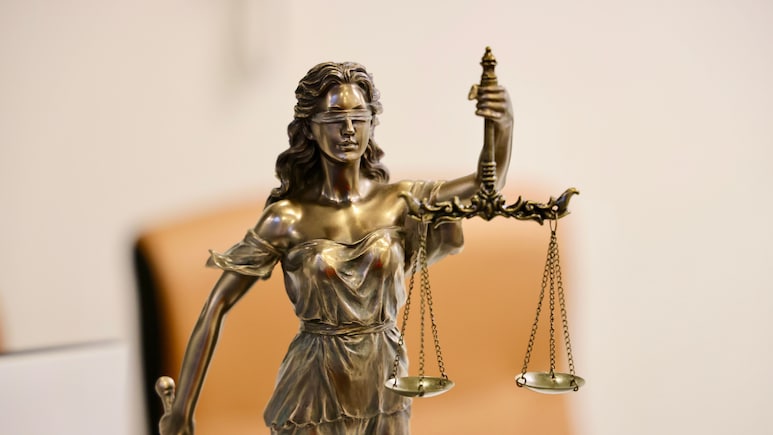
A US federal judge in Mississippi cancelled a civil trial and disqualified all four attorneys after discovering both legal teams relied on artificial intelligence (AI) to write their briefs. The court filings contained AI-generated research, which included fake legal citations, prompting US District Judge Sharion Aycock to remove all four lawyers from the contract dispute, issue financial penalties, and bar two attorneys from practising in the Northern District of Mississippi for two years.
In an order filed on Monday, Judge Sharion Aycock stated that the four lawyers had violated Rule 11 of the Federal Rules of Civil Procedure when they certified that the information in their filings was factual, according to a report in the New York Times.
"This case presents the Court with an unusual scenario, attorneys for both litigants engaged in similar sanctionable conduct," Aycock wrote in a sanctions order. "This court is yet again 'burdened with addressing AI hallucinations court filings.'"
"In an era of rampant unverified AI usage within the legal field, this case presents a prime example of the risk associated with serving as a rubber stamp when acting as local counsel," the judge added.
The case involves a contract dispute over legal fees between lawyer Tom Withers and the city of Aberdeen, Mississippi. The lawyers barred have been identified as Kathleen Wilson and Kathryn Williams, who have also been fined $2,500 and $3,500, respectively. The other lawyers who were disqualified, Shauncey Hunter Ridgeway and Mark McClinton, were not directly involved in drafting the filings. They were each ordered to pay $1,000.
Rob Freund, a lawyer who first noticed the use of AI in the case, called it a "comedy of errors", stating that “there were two clients who basically were paying for ChatGPT (or whatever LLM) to argue against itself".
Previous Instances
This is not the first instance when lawyers have been caught using AI to create legal documents. Last month, lawyers representing My Pillow CEO Mike Lindell were pulled by a federal judge for using AI to write a legal brief in a defamation lawsuit. As per District Judge Nina Wang, the brief had 30 defective citations, including misquotes and citations to fictional cases.
In Canada, a lawyer submitted a court document that included links to non-existent cases, alleged misreadings of real cases and what Ontario Superior Court Judge Fred Myers described as possible "AI hallucinations".

