





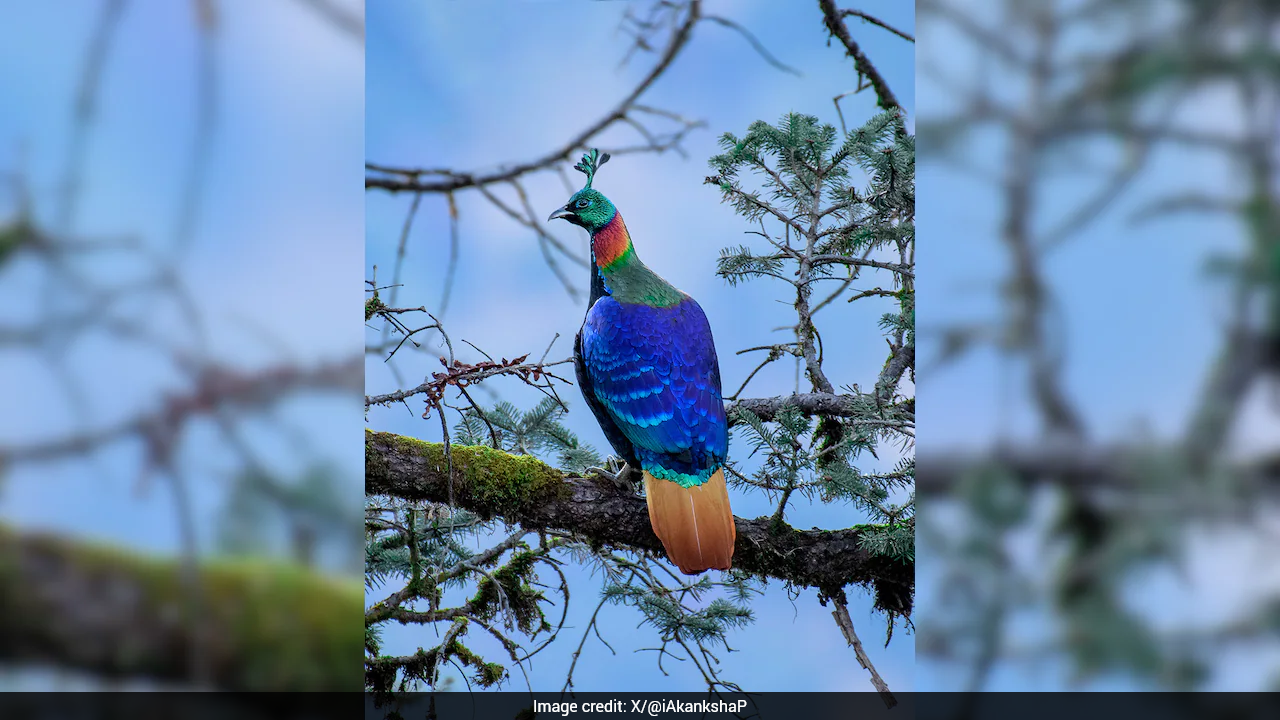
A rise in human activity in the Himalayas and the nearby high-altitude forests has impacted how one of the region's most distinctive birds lives and communicates, BBC reported, citing two studies by Indian researchers. According to the report, two field studies conducted over five years highlight how infrastructure, tourism, and changing weather patterns are disrupting the Himalayan monal (Lophophorus impejanus).
The bird, famous for the shimmering green, blue, and copper plumage of the male, serves as the state bird of Uttarakhand in India and the national bird of Nepal. The report mentioned that researchers from Uttarakhand conducted two separate studies on the Himalayan monal and shared key threats these birds are facing. The birds are even forced to move higher in the mountains, away from their 'crowded' natural habitat, one study found. Also, these birds are changing their pitch to cut through human noise in a busy valley.
Scientists view these behavioural shifts because the monal lives in a delicate belt between lower forest slopes and high alpine meadows. This also appears to be an early indicator of wider ecological stress across the northwestern Himalayas.
"These two studies give a useful warning for other more vulnerable species - if the monal is forced to change both its voice and its address, how are the more sensitive species responding?" Vishal Singh, an expert on ecology and climate issues in the Himalayas, said, as quoted by the BBC.
Also read | 80-Year-Old Woman Hosts Her Own 'FOMO Funeral': 'She Refuses To Miss Anything'
Findings of first study
In one study, researchers from Hemvati Nandan Bahuguna Garhwal University, led by Dr Rajeev Lochan alongside Dinesh Kumar Sharma and Anand Kumar, tracked bird vocalisations within the Kedarnath Musk Deer Sanctuary in Uttarakhand.
The team recorded and analysed more than 700 calls across two contrasting locations, including Chopta Valley and Madmaheshwar Valley.
Audio analysis revealed that monals in noisy surroundings consistently sang at a higher peak pitch than those in peaceful habitats. By raising their pitch, the birds attempt to slice through low-frequency background noise caused by cars and crowd chatter.
While this adjustment helps them communicate, researchers caution that altered calls could affect how monals defend territories or attract mates.
"This does not mean that the species has undergone a permanent or evolutionary change in its vocal frequency; rather, our findings suggest behavioural flexibility in response to different acoustic environments," Lochan said.
Also read | Kartik Aaryan's New iPhone Leaves Internet Confused After Users Spot 'Two Flashlights'
Findings of second study
The second study used climate and habitat modelling to analyse how monal populations might fare through the end of the century across Uttarakhand and Himachal Pradesh.
The findings show that expanding human presence in alpine meadows, combined with global warming, is pushing the birds higher up the mountains. As monals move upward toward isolated peaks, their habitats are becoming smaller.
"These birds are now slowly moving upwards in the Himalayas as the snow is melting and vegetation is growing, making the area accessible to them. They are anyway being pushed upwards as their natural habitats in alpine meadows are being encroached upon by humans," Lochan said.
Track Latest News Live on NDTV.com and get news updates from India and around the world

