Spoilers Ahead: This story contains spoilers related to Dhurandhar 2.
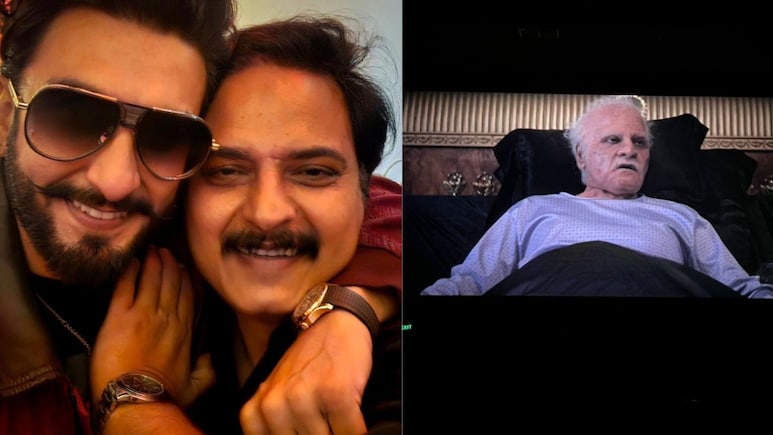
For Danish Iqbal, the transformation in Dhurandhar: The Revenge began long before the camera rolled, in a makeup chair at 3 am. In Dhurandhar 2, the actor plays 'Bade Sahab', a moniker for Dawood Ibrahim, one of the key characters in the Aditya Dhar film.
"If my shift was 7 to 7, I would be on set by 3 in the morning," Danish Iqbal told NDTV in an exclusive interview. "Five to six people working on me, and it would take almost nine hours."
The prosthetic process was as exhausting as it was restrictive. "You can't breathe properly, you can't eat anything once it's done. You are sweating inside, you feel trapped." Food was off the table. "Entire day I was on liquids. Just some juice, maybe a little dark chocolate for energy."
But for Danish, the real performance began after the transformation. "Once the look was locked, the real work started," he says. "Because then it is not about how I look, it is about how I exist in that body." Instead of resisting the discomfort, he leaned into it. "After nine hours of makeup, you are already drained. I used that exact exhaustion for the character. It actually helped me."
His preparation went far beyond the physical. "I started observing a lot of people, older individuals, people with medical conditions, people with physical challenges.How they speak, how they react, how they communicate," he explains.
But he was not interested in surface-level imitation. "I was not chasing mannerisms. I was trying to find the spine of the character," he says. "My biggest question was, how does someone so physically weak still control a room?"
That question shaped his biggest challenge. "The toughest part was the speech," Danish admits. "Delivering long lines in that physical state and still maintaining authority." For him, power had to come from within. "Even if I look weak, the people in the room should feel my power. That cannot be fake."
The casting process, he says, unfolded gradually. "It started with a call asking my height, my weight, my physicality," he recalls. "Then meetings started, readings started, but I still didn't know the full picture." The real turning point came during the prosthetic test. "When I saw myself in the mirror, I was shocked. I didn't recognise myself."
Secrecy was crucial. "Of course, we sign NDAs. You have to protect things that can spoil the film," he says. "I didn't tell my family what I was playing." He adds, "There is a right time for everything to come out. Till then, you have to hold it."
Working with director Aditya Dhar meant complete trust. "I never questioned his vision," Danish says. "It is his film, his world."
His own focus stayed specific. "My questions were only about the acting, about voice, about rhythm."
Aditya Dhar's direction, he says, was minimal. "Once the moment was there, it was already working."
On set, there was also an unexpected reunion with Ranveer Singh, one that goes back years.
"First time I met Ranveer, it was before Band Baaja Baaraat. We did a play called Siddharth, it was on Buddha, based on his life and philosophy. Ranveer played Buddha and I played his father. It happened in Delhi, and it was really fun working with him," he said.
What stood out even back then was Ranveer's relentless energy. "He was so full of energy even during rehearsals. He would give more than 100 percent. The play was very demanding because it was movement-based, but he was completely invested in every scene," Danish recalled. "He used to do two to three rehearsals in a day. He is a high-octane energy powerhouse."
Years later, when the two came together again for Dhurandhar 2 the energy hadn't faded one bit.
Danish shared that he was waiting for a reading session with Aditya Dhar when Ranveer walked in, brimming with his trademark enthusiasm. "He came in talking, stretching, completely in his zone," he said. The director introduced them, and what followed initially was a polite, formal interaction.
But then came a moment straight out of a movie.
"There was a pause, almost like a time lapse," Danish described. "I was smiling, he was looking at me, and suddenly it clicked. He just went, 'Oh my God!'" That instant recognition turned into a warm reunion, bringing back memories of their theatre days.
For Danish, it was striking to see how little had changed. "When I met him during the rehearsals of Dhurandhar, I could see the same energy in him," he said.
On set, he adds, Ranveer remained deeply collaborative and supportive. Despite being the film's biggest star, he had no airs. "He was very involved, very cooperative. He was there in the scene, helping and reacting, making sure everyone was comfortable."
From performing together in a play on Buddha's life to reuniting on a big film set, Danish and Ranveer's journey reflects a rare continuity in an industry that's constantly evolving. And as Danish puts it, the spark that defined Ranveer back then still defines him today.
Also Read | 'No Tantrums': Dhurandhar 2 Makeup Artist Recalls Working With Ranveer Singh In 45-Degree Heat
