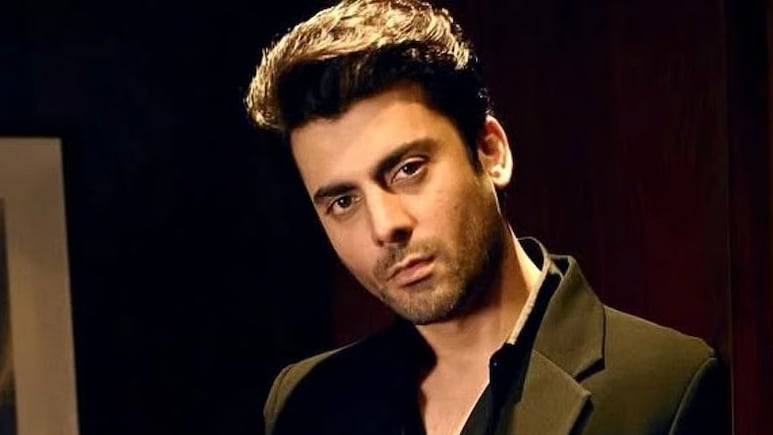
For Fawad Khan, it almost feels like a case of history repeating itself. A decade ago, the Pakistani actor found himself at the centre of a cross-border controversy just as his Bollywood career was gaining momentum.
Now, in 2026, another project featuring him has run into trouble in India, bringing back memories of the circumstances that forced him to step away from Hindi cinema in the first place.
The timing is particularly interesting. Fawad is gearing up for the global release of Pakistan's first Netflix series, Jo Bachay Hain Sang Samait Lo, on December 4.
The show's trailer was recently unveiled at a special event in Karachi, where the actor spoke about being part of the project and described it as an emotional journey.
"It's a win for Pakistan. I am glad and honoured to be a part of it. It was a difficult journey. It was a heavily emotional story," he said.
Fawad also added, with a touch of humour, that the makers probably felt he was ready to face the camera once again and decided to offer him the role.
However, the excitement surrounding the series has been accompanied by fresh opposition in India. Film bodies, including the All Indian Cine Workers Association (AICWA) and the Federation of Western India Cine Employees (FWICE), have raised objections to its release and urged Prime Minister Narendra Modi to intervene.
India's Ministry of Information and Broadcasting also reminded Netflix of its earlier commitment to keep Pakistan-origin content off its Indian service.
In other words, even before the series reaches its global audience, Fawad is once again facing a situation that bears an uncomfortable resemblance to 2016.
When Bollywood Doors Opened For Fawad Khan
Interestingly, Fawad's popularity in India did not begin with Bollywood. Indian audiences had already fallen for him as Zaroon in the Pakistani television show Zindagi Gulzar Hai.
He made his Bollywood debut opposite Sonam Kapoor in Khoobsurat (2014). Playing the charming Vikram Singh Rathore, Fawad quickly established himself as a favourite.
The film opened more doors for him. He subsequently joined the cast of Karan Johar's Kapoor & Sons (2016), where he played Rahul Kapoor alongside Sidharth Malhotra, Alia Bhatt and Rishi Kapoor.
That same year, he made a special appearance as DJ Ali in Karan Johar's Ae Dil Hai Mushkil, starring Ranbir Kapoor, Anushka Sharma and Aishwarya Rai Bachchan. Although his role was eventually reduced to an extended cameo, fans were happy to see him on screen.
Little did they know that it would be his last appearance in a Hindi film released in India.
Uri Attack Changed The Course
The September 2016 Uri terror attack changed the atmosphere around Pakistani artistes working in India. Following the attack, political groups and film industry associations began demanding that Pakistani actors be barred from working in the country.
The Indian Motion Pictures Producers' Association (IMPPA) also passed a resolution against Pakistani artistes working in India. Ae Dil Hai Mushkil itself faced protests ahead of its release, with its makers coming under pressure because of Fawad's presence in the film.
Amid the growing controversy, the actor returned to Lahore, where he had been staying since July as he and his wife were expecting their second child.
In October 2016, Fawad broke his silence through a Facebook post. He said he had received several requests from the media and well-wishers to comment on the incidents that had taken place over the preceding weeks.
"I've been in Lahore since July as my wife and I had been expecting our second child. I've received numerous requests from the media and from well-wishers worldwide asking me for my thoughts on the sad incidents that took place in the past few weeks. As a father of two little children, I pray and wish like many others that together we can build and live in a more peaceful world. I believe we owe it to our children who will shape our tomorrow," he wrote.
The actor gradually moved away from Indian cinema and returned to working predominantly in Pakistan. His career there continued to flourish, with projects such as The Legend of Maula Jatt bringing him considerable success.
Another Bollywood Comeback Hits A Roadblock
For years, fans had hoped to see Fawad return to Hindi cinema. That possibility appeared to be getting closer with Aabeer Gulaal (also spelt Abir Gulaal), in which he starred opposite Vaani Kapoor.
The film was scheduled to release theatrically in India in May 2025. However, following the April 2025 Pahalgam terror attack and the subsequent restrictions on Pakistani artistes, it was denied permission for release in the country.
This was not the first time one of Fawad's projects had encountered difficulties with an Indian release. His Pakistani blockbuster The Legend of Maula Jatt also failed to reach Indian cinemas after its proposed theatrical release was stalled amid political opposition and protests.
Meanwhile, his other projects have faced their own complications. Barzakh, which featured Fawad, was pulled from YouTube in Pakistan in August 2024 following backlash over its LGBTQ+ themes. It is important to note that the show was not originally banned in India. However, the wider restrictions on Pakistan-origin content introduced later added another uncertainty for such projects.
In May 2025, India's Ministry of Information and Broadcasting advised OTT platforms to stop streaming Pakistan-origin content. Netflix subsequently assured authorities that it would restrict such titles on its Indian service. The advisory also came amid broader restrictions affecting Pakistani artistes and their online presence.
Now, the same issue has resurfaced with Jo Bachay Hain Sang Samait Lo. Despite its planned worldwide Netflix premiere on December 4, 2026, the series has attracted objections from Indian film organisations. The Ministry's latest reminder to Netflix has once again brought the question of Pakistani content being available to Indian audiences into focus.
The Last Time Karan Johar Celebrated Ae Dil Hai Mushkil
There is another interesting detail from the Ae Dil Hai Mushkil chapter that has not gone unnoticed by fans.
When Karan Johar marked six years of the film's release, he shared a lengthy note celebrating the project and tagged Anushka Sharma and Aishwarya Rai Bachchan. He also included Ranbir Kapoor's hashtag, but did not mention Fawad Khan.
Given the controversy surrounding Pakistani artistes at the time, the omission caught attention and prompted speculation that Johar was perhaps being cautious about mentioning the actor publicly.
Today, as Fawad finds himself caught in another debate over the release of a project in India, the similarities with that period are difficult to ignore.
