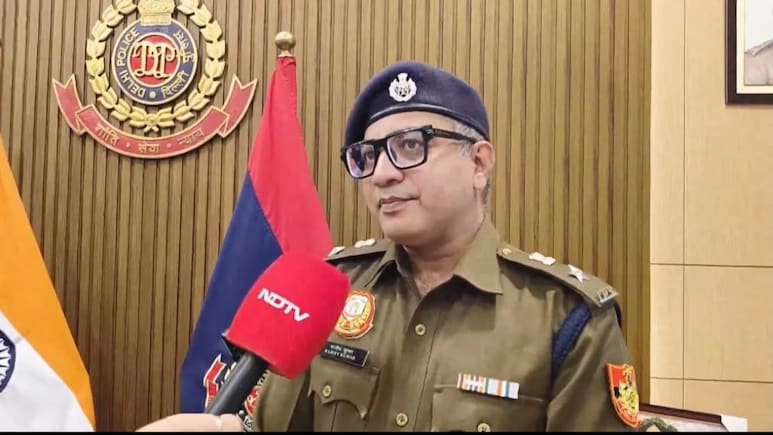

UPSC Success Story: When a father leaves for duty in his police uniform, it is natural for his child to dream of wearing that same uniform one day. However, the story of Rajiv Kumar is different. His father, a constable in the Delhi Police, hoped that at least one of his two sons would join the police force. When his father suggested he prepare to become a Sub-Inspector, Kumar replied, "If I am to join the police, why settle for being a Sub-Inspector? I will become an IPS officer." Today, Rajiv Kumar serves as the Deputy Commissioner of Police (DCP) for East Delhi.
In an exclusive conversation with NDTV, IPS Rajiv Kumar shared insights into his journey to success and revealed the types of questions he was asked during his UPSC interview.
From Panipat To Delhi
Rajiv Kumar comes from Panipat, Haryana. His father, however, served as a constable in the Delhi Police, having joined the force in 1975. The family lived in a police colony in the Kidara area of Old Delhi, near the Jhandewalan Temple, where Kumar spent his childhood.
Speaking to NDTV, Kumar mentioned that he was always an excellent student. After topping his class in school, he pursued a BTech degree from the Delhi College of Engineering. He subsequently began his career at a private company, later going on to pursue an MBA from the Faculty of Management Studies (FMS) in Delhi. Throughout this time, however, his father's long-held wish remained a constant presence in his life.
Father's Wish
Rajiv Kumar told NDTV that his father wished for at least one of his two sons to join the police service. His younger brother also aspired to join the police; he attempted examinations for the posts of constable and sub-inspector but was eventually selected for the Delhi Fire Service.
One day, Kumar's father asked him if he would consider preparing for the sub-inspector examination. At the time, he was already employed in a good job. He reasoned that if he were to join the police force, why aim only for the rank of sub-inspector; why not prepare to become an IPS officer instead?
Cleared Prelims Without Preparation, But Failed Mains
Rajiv Kumar made a total of three attempts at the UPSC examination, succeeding on his third try. His first attempt was in 2011. Interestingly, he had not even prepared seriously for the exam; he recalled that the preliminary examination was held on June 12, yet he only picked up a UPSC textbook for the first time on May 27. Despite this, he managed to clear the Prelims.
Following the results, he began preparing for the Mains. He approached several coaching institutes, but due to the limited time remaining, none were willing to enroll him. Consequently, he borrowed books and notes from a friend to study on his own. He appeared for the Mains but was unsuccessful. Later, when he checked his scores, he found he had fallen just 20 marks short of the cutoff.
Second Setback Led To A Shift In Strategy
In 2012, Kumar made his second attempt with complete dedication. He enrolled in coaching, set aside time for his studies, and worked tirelessly, day and night. At the time, he was also pursuing an MBA. He would sleep for no more than five hours, dedicating the rest of his time to his studies. Despite this, he fell 12 marks short of the cutoff in the Mains.
After failing for the second consecutive time, he began to wonder what was missing, given how hard he had worked. During this period, someone suggested Kumar meeting a retired professor who had been associated with the UPSC panel. Kumar approached the professor with his study materials and the subjects he had covered.
After assessing his preparation, the professor offered an insight that completely transformed the way Kumar studied. He explained that the UPSC syllabus is as vast as an ocean, impossible to cover in its entirety. Therefore, rather than trying to read as many books as possible, it is far more effective to study a limited set of resources repeatedly. He also advised Kumar to create his own notes from these books and to focus on reviewing those notes consistently.
Kumar took this advice to heart. He prepared comprehensive notes for his entire syllabus, which spanned 15 notebooks. From then on, his primary focus shifted to repeatedly studying these notes.
The Third Attempt
The impact of this revised strategy became evident in the 2013 examination. Rajiv Kumar cleared the Mains examination and reached the interview stage, ultimately securing a selection for the Indian Police Service (IPS). In 2014, he achieved the 670th rank and became an IPS officer. Kumar mentioned that his optional subject was Philosophy.
Regarding his UPSC interview, Kumar mentioned that it lasted for about 35 minutes. One of the questions concerned a law-and-order situation: he was asked what he would do if, as the Superintendent of Police (SP) of a district, he found it necessary to use force to maintain law and order, but was prevented from doing so due to political pressure. Kumar replied that it is the SP's responsibility to maintain law and order and ensure the safety of the lives and property of the people; therefore, he would take the necessary action while remaining within the bounds of the law.
'In UPSC, The Tortoise Succeeds, Not The Hare'
Rajiv Kumar, who currently serves as the DCP (East), attributes his success to consistency and a sound strategy. He believes that having a sharp mind alone is not enough for the UPSC; consistent hard work and the ability to remain focused on one's goal over a long period are far more important.
He said, "In the UPSC, the tortoise is more likely to succeed than the hare. It is not essential to have an exceptionally high IQ. If you work hard consistently every day, you can achieve success."
According to him, scoring low marks in the tenth or twelfth grade does not mean that a student cannot pass the Civil Services Examination. Many students who performed only averagely in school have gone on to succeed in the UPSC through their own hard work, he added.
Do Not Fear Failure; Keep A Backup Plan
Rajiv Kumar offered another piece of advice to young people preparing for the UPSC. He suggested that while it is commendable to aim for the Civil Services, one should always have an alternative option in place. He prepared for the exam while working a job, and he believed that UPSC preparation is not limited merely to passing the examination.
"You might not get selected for the Civil Services, but if you have prepared for the UPSC with sincerity, your knowledge and understanding will develop to such an extent that you will certainly be able to succeed in the challenges of life," he said.
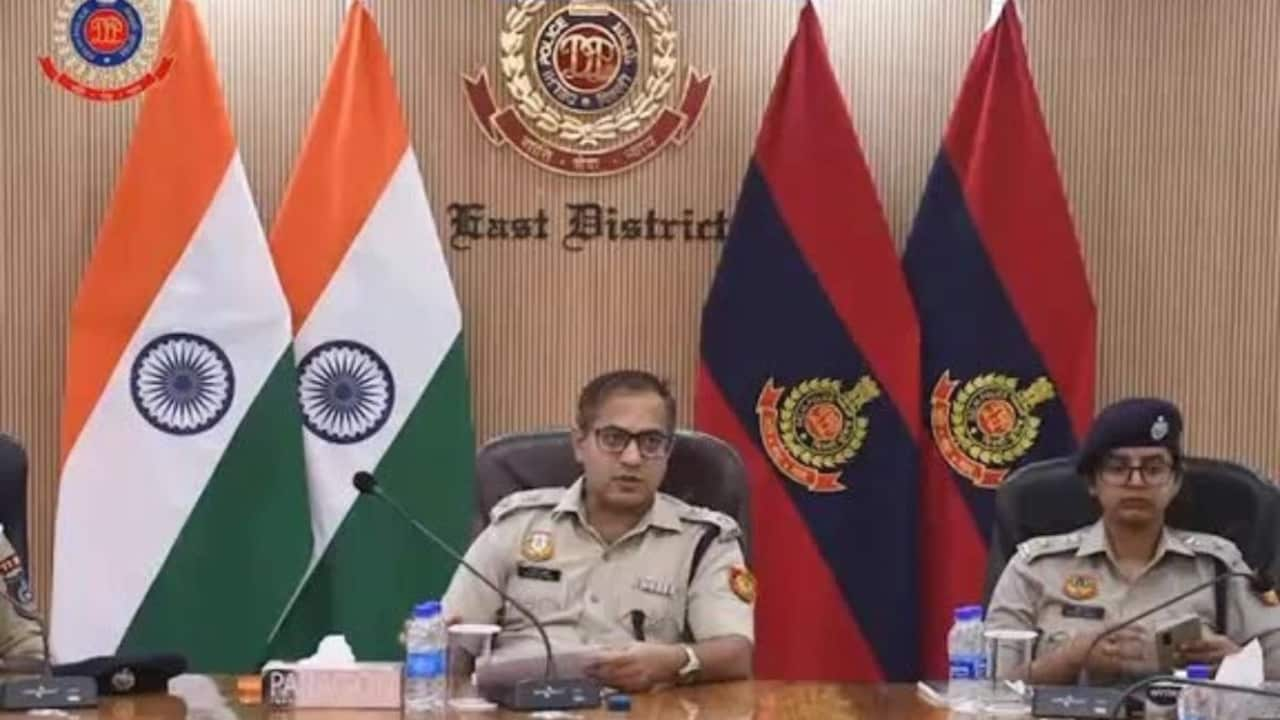
Reflecting on his experience since joining the police service, Rajiv Kumar identified three qualities as the most essential: the ability to make quick decisions, working with integrity and discipline, and maintaining persistent hard work even in difficult circumstances.
According to him, policing is a 24-hour responsibility. Often, a single decision by an officer can have a direct impact on people's lives and safety; in such situations, making timely decisions is crucial.
(With inputs from Ravi Dalmia)
