





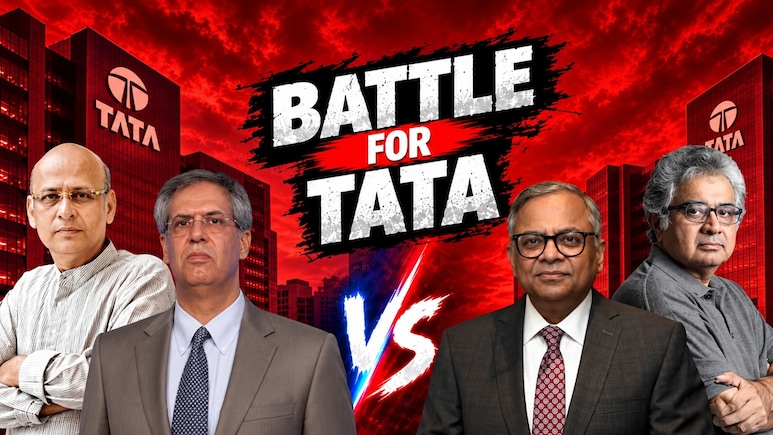
The 2021 Supreme Court verdict in the Cyrus Mistry case is back at the centre of the Tata Sons boardroom battle. This time, it is about the powers given to Tata Trusts under Tata Sons' Articles of Association, and whether those powers can override a broader board majority.
Senior advocate Abhishek Manu Singhvi, representing Tata Trusts, has invoked the judgment to argue that the Supreme Court had recognised the Trusts' primacy within the governance arrangement.
How The Cyrus Mistry Case Came Back
The Tata Trusts, which collectively hold about 66 per cent of Tata Sons, are challenging the validity of the September 17 board decision to reappoint N Chandrasekaran as executive chairman for another five years.
Also Read | Layoffs Are Rising In Tech, But These Skills Are Helping People Unlock Better Pay
At the heart of the dispute is a simple but important question. Can a general board majority override a separate voting condition given to Tata Trusts' nominee directors under Tata Sons' Articles of Association?
This is where the 2021 Supreme Court judgment in the Cyrus Mistry case becomes relevant. Singhvi referred to the verdict while arguing that the Supreme Court had "clearly given Tata Trusts the primacy" in their relationship with Tata Sons. The argument centres on the special rights of Trust-nominated directors that the top court upheld in 2021.
What Happened In The Cyrus Mistry Case?
The dispute began in October 2016, when Cyrus Mistry was removed as executive chairman of Tata Sons.
The Mistry family and Shapoorji Pallonji Group, which held about 18.37 per cent of Tata Sons, challenged the removal. The case eventually reached the Supreme Court after the National Company Law Appellate Tribunal ordered Mistry's reinstatement in 2019.
In March 2021, a three-judge Supreme Court Bench headed by then Chief Justice SA Bobde overturned the NCLAT order.
The judgment dealt with several issues, including Mistry's removal, minority shareholder rights and the special provisions in Tata Sons' Articles.
What Did The Supreme Court Say About Tata Trusts' Rights?
The Tata Sons Articles gave the principal Tata Trusts special rights, including the right to nominate directors.
The Mistry side had challenged the special voting powers of these nominees. The NCLAT had found the provisions oppressive and sought to restrict them.
The Supreme Court overturned that finding.
It upheld the validity of the affirmative voting rights available to the Trusts' nominee directors. The Court also recognised that these directors had responsibilities linked not only to Tata Sons but also to the beneficiaries of the Trusts.
This is the part of the 2021 judgment that Tata Trusts is now relying on. The important point is that the Supreme Court did not create a fresh veto for Tata Trusts in 2021. It upheld rights that already existed in Tata Sons' Articles.
Why Article 121 Is Now So Important
The current dispute turns heavily on Article 121 of the Tata Sons Articles. The provision requires certain matters decided by a board majority to also receive the affirmative vote of a majority of the directors nominated by Tata Trusts under Article 104B. The Supreme Court's 2021 judgment had reproduced and examined these provisions.
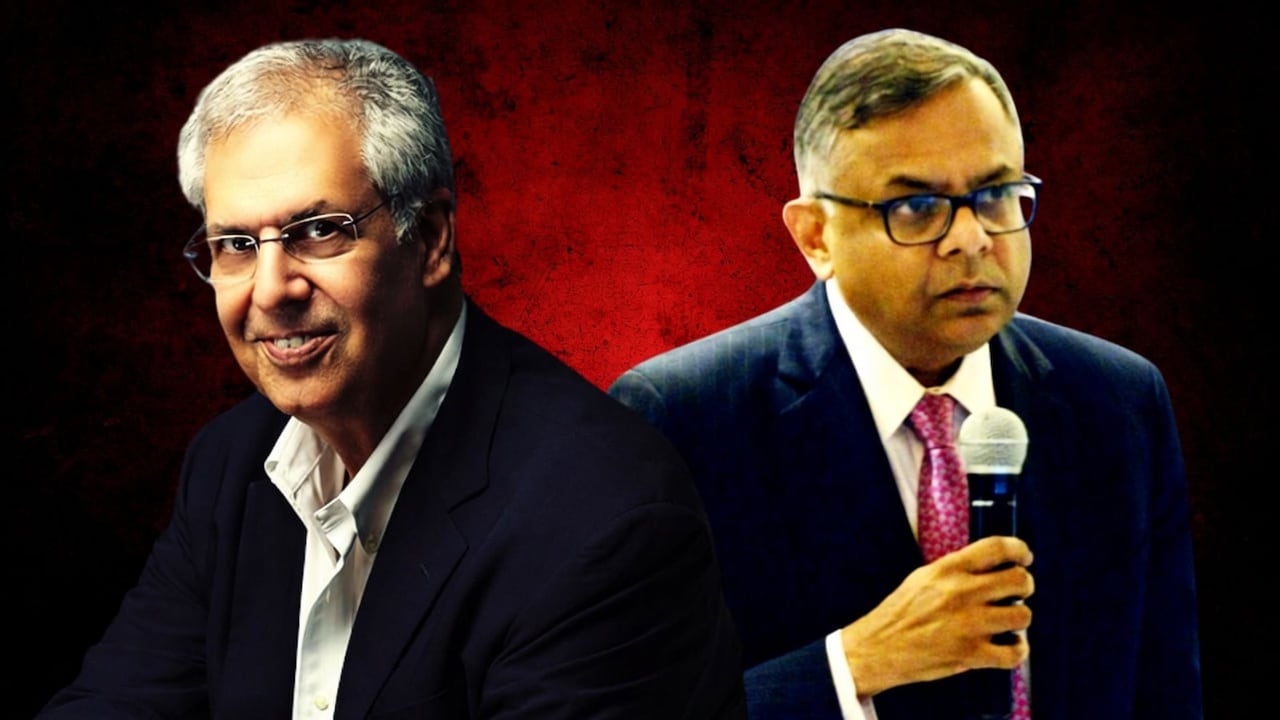
There are currently two Tata Trusts nominees on the Tata Sons board: Noel Tata and Venu Srinivasan.
During the September 17 board meeting, Srinivasan supported Chandrasekaran's reappointment. Noel Tata opposed it. The broader board nevertheless backed the reappointment. A casting vote was then used by the meeting's chairman.
What Are Tata Trusts Arguing?
Tata Trusts' position is that the affirmative vote of the required number of Trust nominees is a separate condition. With two Trust nominees on the board, the Trusts argue that a majority means both nominees.
Since Noel Tata voted against the resolution, the Trusts say that condition was not met. The Trusts have also argued that a chairman's casting vote can operate only when there is an equality of votes at the overall board level. It cannot replace the separate affirmative support required from Trust nominees.
The Trusts summarised their position by saying that "majority amongst two is two and not one". This makes the dispute less about the arithmetic of the overall board vote and more about how the Articles are interpreted.
Why Tata Trusts Are Pointing To The 2021 Verdict
There is another important part to the argument. During the Cyrus Mistry litigation, Tata Sons had defended the special rights of the Trust nominees.
The Supreme Court ultimately upheld those provisions. Tata Trusts are now arguing that Tata Sons cannot defend those rights before the Supreme Court and then interpret the same provisions differently when they become relevant to the current board dispute.
However, it is important to remember that the Supreme Court did not decide the present Chandrasekaran dispute in 2021. It did not consider a situation in which two Tata Trusts nominees had split their votes on a chairman's reappointment.
The present issue is about applying the Articles to a new situation.
Did The Supreme Court Give Tata Trusts Absolute Control?
No. The 2021 judgment upheld specific rights contained in Tata Sons' Articles. It did not declare that Tata Trusts could control every decision taken by Tata Sons.
The present controversy is narrower. It concerns how the special affirmative voting mechanism works when the two Trust nominees disagree.
Vishal Gada, Founder & CEO at Aurtus, told NDTV that the dispute raises a broader corporate governance question about the balance between board-majority decisions and shareholder rights.
"The leadership reappointment discussions at Tata Sons highlight a fundamental question of corporate governance: balancing board-majority decisions with shareholder rights under a company's Articles of Association," Gada said.
He said the 2021 Supreme Court judgment had upheld the legal validity of Tata Sons' Articles, including the affirmative voting rights of Tata Trusts' nominee directors.
Gada also pointed to the reason behind those rights. "It recognised the dual duty these directors hold toward both the operating holding company and the Trusts' philanthropic mission," he said.
What Happens When Trust Nominees Disagree?
This is perhaps the biggest unanswered question in the current dispute. The 2021 judgment established the validity of the special affirmative voting structure.
But the present situation is different. There are two Trust nominees. One supported Chandrasekaran's reappointment. The other opposed it.
So the question is whether the general board majority can settle the matter, or whether the separate requirement for affirmative Trust-nominee support remains unsatisfied.
Gada described this as the "operational ambiguity" at the heart of the dispute. "The current dispute centres on an operational ambiguity: how affirmative voting applies when Trust-nominated directors themselves split, and whether a general board majority or chairman's casting vote can resolve a protected sub-group deadlock," he said.
Why The Casting Vote Matters
The casting vote has become one of the most contested parts of the episode. Tata Trusts' position is that the casting vote cannot cure the failure of the separate affirmative-vote requirement.
The other side of the legal debate is likely to turn on the precise wording of the Articles and the circumstances in which the chairman's casting vote is permitted.
Former Chief Justice of India DY Chandrachud has separately provided a legal opinion sought by Noel Tata, reportedly taking the view that a casting vote cannot substitute for the required affirmative support of Trust nominees.
Track Latest News Live on NDTV.com and get news updates from India and around the world

