




Karnataka has a new way of taxing alcohol. But five months after the state introduced its alcohol-content-based tax system, a sharp rise in beer sales and sluggish growth in Indian-made liquor volumes have raised questions about its impact on consumers and government revenue.
The Confederation of Indian Alcoholic Beverage Companies (CIABC), an industry body representing liquor manufacturers, has urged the state to reconsider its policy. It argues that while beer sales have surged, Indian-Made Liquor (IML) continues to account for most of the increase in excise revenue.
The debate centres on a key question: Is Karnataka's new tax system delivering the results the government intended, and who is bearing the higher tax burden?
Also Read | Layoffs Are Rising In Tech, But These Skills Are Helping People Unlock Better Pay
What Is Karnataka's New Liquor Tax Policy?
Karnataka became the first Indian state to implement an Alcohol-in-Beverage (AIB)-based excise duty system on May 11, 2026. Under the earlier system, taxation depended on the volume and price category of the beverage. The new framework links excise duty to the amount of alcohol in a drink.
The state also reduced the number of excise slabs from 16 to eight and moved away from government-controlled retail pricing, giving manufacturers greater flexibility to set prices. The policy aims to simplify taxation and align the tax burden more closely with alcohol content. However, the change has affected different segments of the market differently.
Budget liquor brands have faced higher tax costs, while some premium spirits and beer brands have become cheaper. Industry estimates suggest that prices of some entry-level Indian-made liquor products could rise by 20 per cent (or above), while certain premium products could see price reductions. For consumers, the result depends on the brand, alcohol content and price category of the beverage.
Beer Sales Jump Nearly 50%. What About Liquor?
The latest Karnataka government sales figures for July to September 2026 show a striking difference between beer and IML. According to data cited by CIABC, beer sales rose nearly 50 per cent in volume terms. IML sales, meanwhile, increased by just 1.52 per cent. Here is how the two categories performed during the second quarter:-
| Sales and revenue | IML | Beer |
| Sales in 2025 | 169.12 lakh cases | 84.63 lakh cases |
| Sales in 2026 | 171.69 lakh cases | 126.68 lakh cases |
| Volume growth | 1.52% | 49.69% |
| Revenue in 2025 | Rs 7,968.69 crore | Rs 1,234.50 crore |
| Revenue in 2026 | Rs 9,033.21 crore | Rs 1,463.07 crore |
| Revenue growth | 13.36% | 18.52% |
The figures show that beer sales grew much faster than IML sales. However, the increase in beer revenue was considerably smaller than the additional revenue generated from IML.
Why Is CIABC Questioning the Policy?
Despite IML volumes growing by only 1.52 per cent, revenue from the category increased by Rs 1,064.52 crore in the July-September quarter. Beer revenue, in comparison, rose by Rs 228.57 crore, even as sales volumes increased by nearly 50 per cent.
Karnataka's total excise revenue increased by Rs 1,291.94 crore during the quarter. IML accounted for around 82 per cent of this additional revenue, while beer contributed approximately 18 per cent, according to CIABC's analysis. The industry body argues that the revenue increase is being driven largely by higher tax realisation from IML consumers rather than a significant increase in sales volumes.
In a statement shared with NDTV, CIABC warned that continued tax increases could eventually hurt demand for mass-market liquor. If sales volumes weaken further, the state could find it harder to sustain revenue growth. The body has also questioned whether a system that encourages rapid growth in beer volumes but derives most of its additional revenue from IML offers a balanced taxation model.
However, the figures alone do not establish that the new tax regime caused the change in sales patterns. A longer period of data would help determine how much of the shift can be attributed to taxation and how much to other factors affecting consumer demand.
What Does This Mean for Consumers?
The biggest concern is the price pressure on consumers who buy lower-priced liquor. Under the revised structure, some mass-market IML products have faced higher tax burdens. If manufacturers pass on these costs, consumers could end up paying more for the same quantity of liquor.
Premium liquor buyers, on the other hand, may benefit from lower prices on certain products. Beer drinkers could also benefit from price reductions in some segments, although the final price depends on the brand and the manufacturer's pricing decisions.
This creates a different impact across consumer groups. A tax reform intended to align duties with alcohol content can change relative prices, influencing what people buy and how much they spend.
For the government, the challenge is to balance revenue collection, affordability, market stability and public health objectives.
Is Beer Less Harmful Than Hard Liquor?
CIABC has also challenged the idea that beer is inherently safer than spirits simply because it contains a lower percentage of alcohol. The industry body argues that the total amount of pure alcohol consumed, along with drinking frequency and patterns, matters more than the beverage category alone.
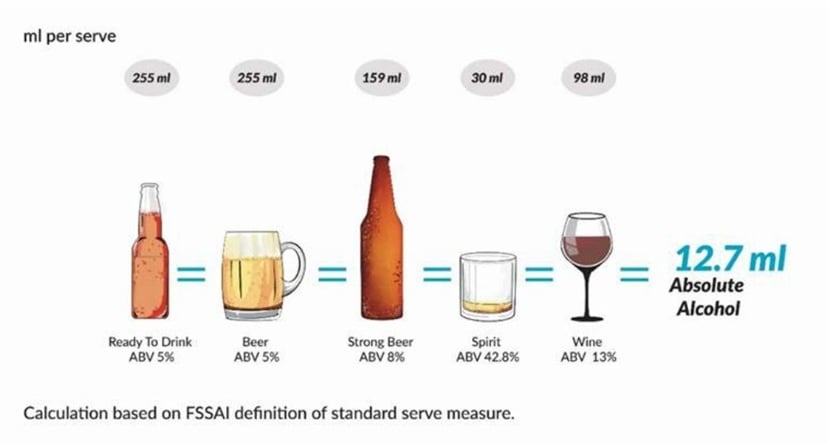
For example, a 30 ml serving of spirits containing 42.8 per cent alcohol, a 255 ml glass of beer containing 5 per cent alcohol and a 98 ml glass of wine containing 13 per cent alcohol contain roughly similar amounts of pure alcohol. So, a beverage with a lower alcohol concentration can still deliver a similar amount of alcohol if consumed in a larger quantity.
However, the health risks of drinking are not determined by alcohol quantity alone. Drinking patterns and other individual factors also matter. The comparison does not mean that all drinking patterns carry identical risks. Karnataka's policy debate therefore raises two separate questions: how alcohol should be taxed and how taxation can support public health goals.
Track Latest News Live on NDTV.com and get news updates from India and around the world

