





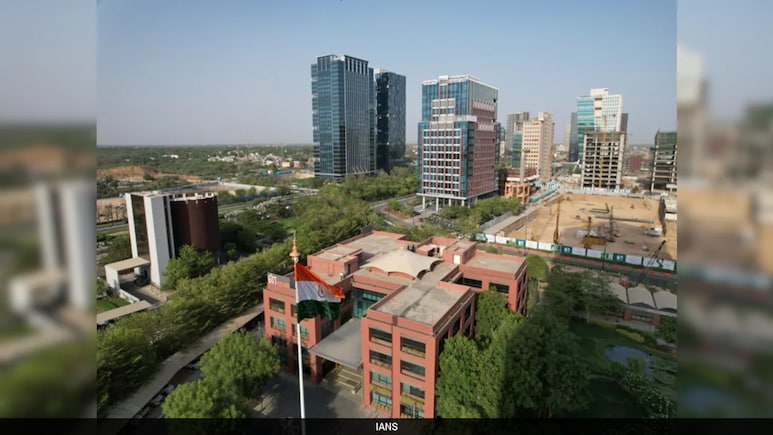
- GIFT City now hosts over 1,100 entities and $110 billion in banking assets
- Major Indian brokers got IFSCA approval to offer global investing through GIFT City
- IFSCA has strengthened regulations but investor protection depends on enforcement
For years, the biggest question around GIFT City was whether it could attract global capital. That question is fast becoming irrelevant.
With India's largest retail brokerages -- including Groww, Zerodha, Angel One and Upstox -- receiving approvals from the International Financial Services Centres Authority (IFSCA) to offer international investing through GIFT City, the conversation has entered a new phase. Millions of Indian investors could soon gain easier access to overseas stocks and global investment products through India's own international financial hub.
But as participation widens, another question is beginning to dominate boardrooms, legal circles and regulatory discussions.
Is India's regulatory framework strong enough to protect investors once the money starts flowing in?
According to Kinjal Shah, Chartered Accountant and Vice President of the Bombay Chartered Accountants Society, that is now the defining challenge for GIFT City.
"The scale of activity has reached a point where the debate is no longer about attracting capital. It is about protecting capital," Shah says.
GIFT City Has Moved Beyond The Experiment Stage
A few years ago, GIFT City was largely viewed as an ambitious policy experiment. Today, it has become a meaningful part of India's financial ecosystem.
Banking assets housed in GIFT City have crossed $110 billion, while cumulative fund commitments have exceeded $39 billion. More than 1,100 entities now operate from the IFSC, making it one of the fastest-growing international financial centres in the region.
Recent approvals allowing major retail brokers to facilitate global investing from GIFT City mark another milestone. Until now, international investing remained largely limited to specialised platforms or direct overseas remittances.
With mainstream brokerages entering the space, access is expected to become significantly easier for Indian investors.
That also raises the stakes for regulators. As Kinjal Shah notes, tax incentives may have brought businesses to GIFT City. But keeping investors there will depend on confidence in the regulatory system.
Rules Are Becoming More Mature
One of the biggest changes has been the gradual shift away from temporary circulars towards a dedicated legal framework.
According to Kinjal Shah, IFSCA has steadily refined its fund management regulations to accommodate newer business models, including third-party fund management and corporate treasury operations, while simultaneously tightening governance requirements.
Similarly, the Capital Market Intermediaries Regulations now bring brokers, custodians, research firms and ESG rating providers under one comprehensive framework with clearly defined compliance standards, capital requirements and governance norms.
For global investors, Shah says, certainty often matters more than leniency. "A codified framework-even if stringent-is preferable to a system driven by ad hoc clarifications," she argues.
Investor Protection Is Stronger. But Not Foolproof
GIFT City is often marketed as India's gateway to global finance. That does not mean investments made there carry any government guarantee.
This distinction is important, says Kinjal Shah. The IFSC operates under a unified regulator in the form of IFSCA, which prescribes disclosure standards, governance norms and conduct rules across financial entities.
However, investor protection ultimately depends on how effectively those rules are enforced. "The framework is designed to protect investors. But it should never be mistaken for a deposit insurance scheme," Shah explains.
She adds that the quality of protection depends significantly on the intermediary handling the investment, its internal controls and compliance culture.
Recent regulatory proposals suggest the watchdog is trying to plug remaining gaps.
Draft Financial Adviser Regulations released in 2026 propose continuous "fit and proper" assessments for advisers and require them to operate through licensed IFSC institutions.
Meanwhile, the Stewardship Code pushes fund managers to disclose voting practices, manage conflicts of interest transparently and strengthen corporate governance.
FEMA Still Leaves Room for Interpretation
One area that continues to create uncertainty is India's foreign exchange framework.
GIFT City enjoys an offshore status under the Foreign Exchange Management Act (FEMA), allowing IFSC entities to conduct foreign currency transactions with greater flexibility.
But Kinjal Shah says the practical application of FEMA is still evolving.
Questions frequently arise over whether particular structures fall under Foreign Direct Investment (FDI), Overseas Direct Investment (ODI) or other reporting requirements.
Those distinctions are not merely technical. They influence capital flows, reporting obligations, taxation and even whether certain investment structures are permissible.
Because of these grey areas, Shah believes businesses should avoid relying on broad assumptions and instead seek transaction-specific legal advice, particularly where Indian residents or Indian-source income are involved.
One Regulator Doesn't Mean One Rulebook
One of GIFT City's biggest strengths is its unified regulator. IFSCA combines powers that traditionally sat with multiple regulators such as the Reserve Bank of India, SEBI, IRDAI and PFRDA.
That significantly reduces regulatory overlap. Yet, on the ground, companies often continue dealing with multiple authorities.
Alongside IFSCA, firms may still interact with the RBI, the Development Commissioner of the Special Economic Zone and other agencies depending on the nature of their business.
According to Kinjal Shah, the larger challenge isn't simply filing reports. It is ensuring different regulators interpret reporting requirements consistently.
Businesses operating across borders require certainty over what must be reported, when it must be filed and which regulator has jurisdiction.
Without that clarity, compliance becomes more expensive and slower.
Operational Challenges Continue
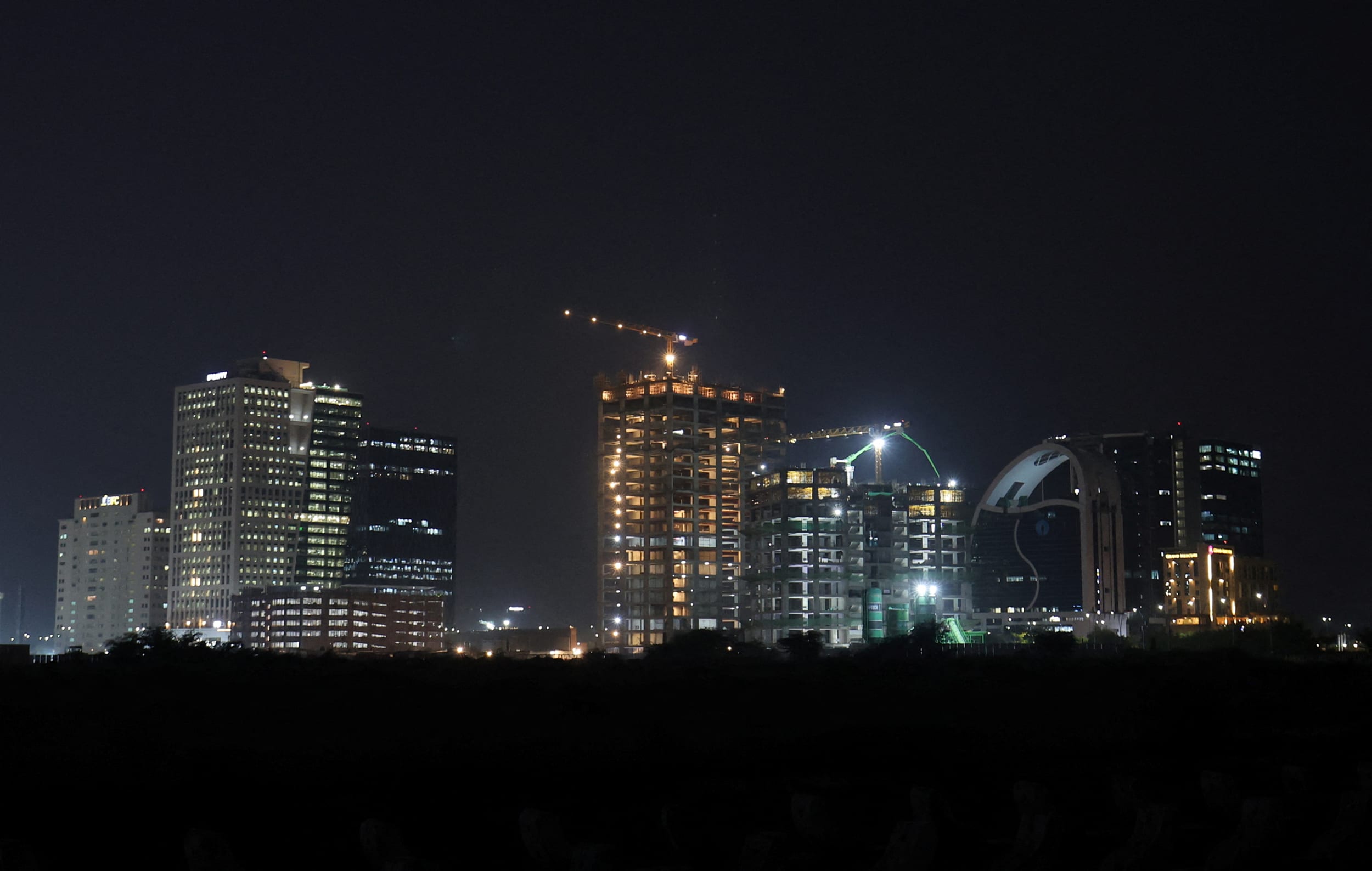
Despite rapid growth, GIFT City's ecosystem is still evolving. Industry participants continue to flag operational bottlenecks.
These include onboarding delays, banking infrastructure gaps, tax friction between the Special Economic Zone and mainland India, and cumbersome KYC processes for international investors.
Even setting up operations can involve parallel approvals from both IFSCA and the SEZ Development Commissioner.
In some cases, businesses still encounter manual paperwork, physical registrations and wet-ink documentation-procedures that appear inconsistent with GIFT City's digital-first ambitions.
Retail participation also remains constrained by the Liberalised Remittance Scheme, which caps overseas remittances at $250,000 per financial year for resident Indians.
According to Kinjal Shah, simplifying these operational processes without weakening regulatory safeguards will be critical for long-term growth.
Why Growth Hasn't Matched Early Expectations
Although GIFT City's expansion has been impressive, it has been slower than many policymakers originally envisioned. The reasons extend beyond regulation.
Building a global financial centre requires more than tax incentives. It demands deep pools of specialised talent, experienced financial institutions, supporting professional services and international market confidence.
Shah says attracting senior professionals has proved particularly challenging. Financial hubs such as Singapore and Dubai already possess mature ecosystems that have developed over decades.
GIFT City, by comparison, is still building that network. The result is that many global institutions continue to view it as a promising financial centre under construction rather than a fully mature destination.
The Next Phase Will Be About Trust
For policymakers, the next chapter will not be written through more tax breaks. It will be shaped by regulatory consistency.
According to Kinjal Shah, aligning FEMA interpretations, simplifying reporting requirements, reducing onboarding delays and improving coordination across regulators could significantly strengthen GIFT City's appeal.
If those gaps are addressed, India's international financial centre could emerge as a credible alternative to established global hubs.
If not, the risk isn't failure. The bigger risk is underperformance. GIFT City has already demonstrated that it can attract capital. The real test now is whether it can convince investors that their money will remain protected once it arrives.
And as millions of Indians prepare to invest overseas through familiar platforms like Groww, Zerodha, Angel One and Upstox, that question has never been more important.
Track Latest News Live on NDTV.com and get news updates from India and around the world

