





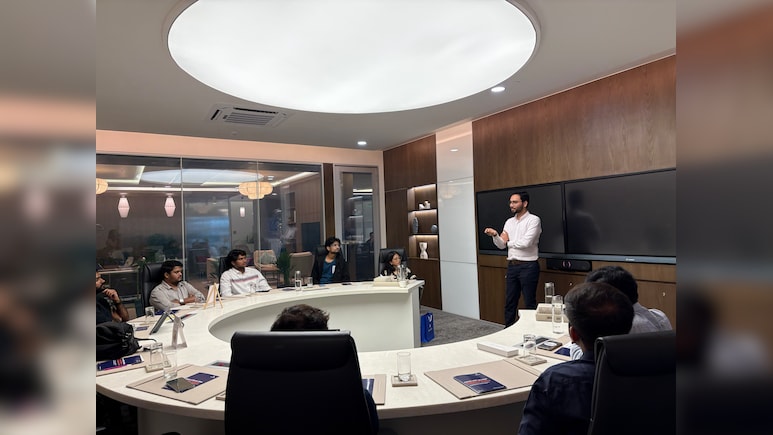
For years, India's brightest graduates chased MBA degrees and corporate jobs. Now, a growing number of young professionals are choosing a different classroom -- one where the goal isn't landing a job but building a company.
Across the country, a new generation of "founder schools" and venture-building programmes is taking shape. These programmes don't just teach entrepreneurship. They handpick aspiring founders, pair them with seasoned entrepreneurs and investors, help validate business ideas, refine products, prepare fundraising pitches and, in many cases, even write the first cheque.
The trend reflects how India's startup ecosystem is maturing. While the country has become the world's third-largest startup ecosystem, many first-time founders still struggle to survive beyond the early stages. Increasingly, educators and investors believe the missing ingredient isn't ambition. It's structured guidance.
Also Read | Layoffs Are Rising In Tech, But These Skills Are Helping People Unlock Better Pay
This belief is driving programmes such as VenturEdu and founder schools backed by venture capital firms, where entrepreneurs spend months working closely with mentors before taking their startups to market.
Last year, Zerodha co-founder Nikhil Kamath and Kishore Biyani of Future Venture had also launched "The Foundery" to mentor entrepreneurs. Conceived as a co-founder factory, The Foundery is part school, part accelerator, and part venture studio, compressing the early-stage startup journey into a 90-day programme. Participants move from concept to investible business, guided by accomplished mentors, investors, and operators.
The model has already started producing success stories.
Ankit Agarwal, founder of Breww 47, who attended a founders' school run by Fibonacci X, says the experience changed how he approached fundraising.
"Storytelling, execution, and a clear path to scale matter just as much during fundraising. Having Fibonacci X alongside us throughout the journey has helped focus on building the business while knowing we had the right strategic support," Agarwal said.
His experience reflects a broader shift. Investors today increasingly look beyond innovative ideas. They want founders who can execute, communicate their vision and scale sustainably.
'Entrepreneurship At An Inflection Point'
According to Kulmani Rana, Founder of VenturEdu, entrepreneurship in India has reached an important turning point.
"India is witnessing a fundamental shift in entrepreneurial aspirations. Nearly 6.5 lakh students enroll in business programmes every year, and today around 30 to 35 percent of business graduates are choosing startup careers, compared to just about 10 percent a decade ago," Rana said.
Yet ambition alone isn't enough.
"India is the world's third largest startup ecosystem, yet only about one in five first-time founders succeeds. The challenge is not a lack of ambition. It is a lack of structured preparation," he added.
Rana believes venture schools fill that gap by combining education, venture building, mentorship and access to capital under one roof.
"Instead of learning entrepreneurship in theory, founders build companies with experienced operators and investors alongside them. That is how we can improve not just the number of startups India creates, but the quality and sustainability of the businesses that emerge," he said.
'Venture Studios Are New Launchpads'
Industry experts say this shift mirrors global trends, where startup accelerators and venture studios have become an important launchpad for entrepreneurs. Rather than expecting founders to figure everything out themselves, these programmes compress years of learning into months through intensive mentoring and real-world execution.
A recent VenturEdu study underlines why such programmes are finding takers. The survey found that while 58.5 per cent of respondents showed a strong interest in entrepreneurship, only 16 per cent had actually built a startup during college. Around 84 per cent of aspiring entrepreneurs said they had not taken concrete steps towards launching a venture, largely because of a lack of guidance, funding and mentorship.
The biggest hurdles cited were inadequate guidance, concerns over job security, limited access to funding, lack of mentors and the absence of structured incubation support. Many respondents also admitted they lacked practical skills in fundraising, identifying product-market fit and building go-to-market strategies.
These are precisely the gaps founder schools claim to address.
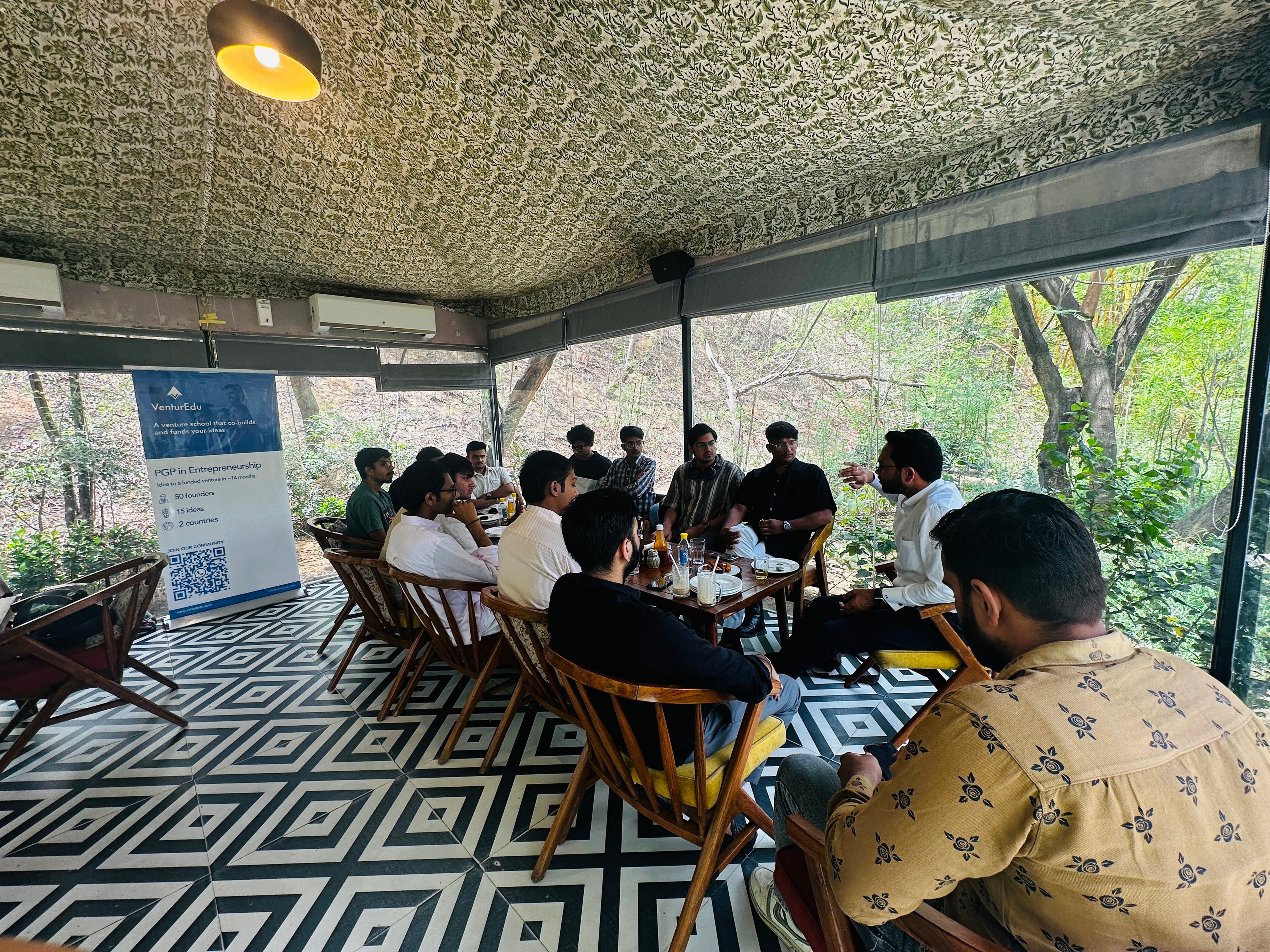
For instance, at VenturEdu, admissions are based less on academic qualifications and more on entrepreneurial potential.
"Our admissions are founder first, not degree first. We look for entrepreneurial mindset, problem-solving ability, resilience and the commitment to build a company, regardless of academic or professional background," Rana said.
Selected founders receive access to a dedicated Rs 15 crore seed corpus, with investments decided by an independent committee of active investors for the best-performing ventures.
The programme stretches over 14 months across India, Singapore and the UAE. Participants receive mentorship from more than 100 founders and industry leaders, interact regularly with investors and get hands-on support in product development, go-to-market strategy, fundraising and scaling.
'Long-Term Mentorship'
Importantly, Rana says the support doesn't stop after graduation.
"Founders continue to receive long-term mentorship and access to our global investor network to help them raise institutional capital as they grow," he said.
The concept has also found support among seasoned business leaders.
Pramod Arora, former CEO of PVR INOX and former Managing Director and CEO of Future Group, believes mentorship can significantly improve the odds for first-time founders.
"India has no shortage of entrepreneurial talent. What many young founders need is access to experienced mentors who can help them navigate the realities of building and scaling a business," Arora said.
"Mentorship shortens the learning curve, helps founders avoid costly mistakes and builds the confidence needed to make better decisions."
He added that programmes such as VenturEdu are creating an ecosystem where entrepreneurs learn directly from experienced operators, investors and industry leaders.
"Building stronger founders today will create stronger businesses and a stronger innovation ecosystem for India tomorrow," Arora said.
According to Umesh Kothari Assistant Dean, GMBA/MGB and GCGM & Assistant Professor SP Jain School of Global Management, building a successful company today requires far more than the ability to launch a startup.
"Founders must understand how businesses operate across different markets, adapt to diverse consumer behaviours, navigate varied regulatory environments, and build solutions that can scale globally. This is where multi campus learning becomes a significant advantage. Exposure to different countries, industries, and business ecosystems allows students to develop a global mindset while strengthening their ability to identify opportunities beyond their home market. Interacting with peers and faculty from diverse backgrounds also enhances creativity, collaboration, and strategic thinking. The next generation of unicorn founders will not only need entrepreneurial ambition but also the ability to think globally, lead across cultures, and build resilient businesses that can compete in an increasingly interconnected world," said Kothari.
Track Latest News Live on NDTV.com and get news updates from India and around the world

