






- Employees in India are showing a decline in discretionary effort, termed effort recession
- 63% of Indian firms report employees unwilling to go beyond job duties, per recent studies
- Gen Z now forms 26% of workforce, demanding flexibility and meaningful work over stability
The era of employees going above and beyond may be fading fast.
A new workplace trend called "effort recession" is reshaping corporate India. According to Great Place To Work India's latest workplace studies, nearly 63 per cent of Indian organisations say employees are no longer willing to put in discretionary effort -- the extra work that isn't part of their job description but often drives innovation, customer service and business growth.
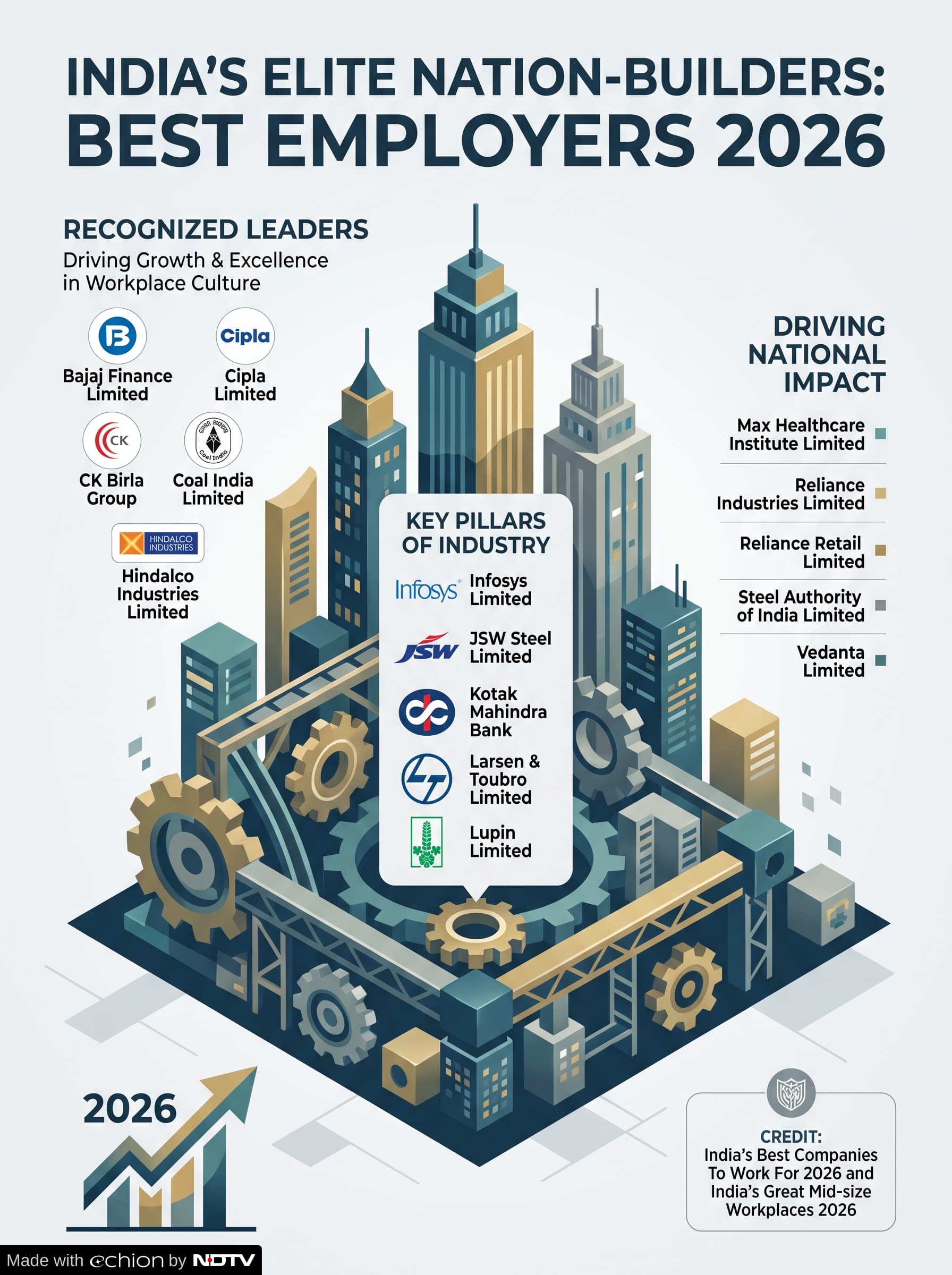
The findings come from two workplace culture studies -- India's Best Companies To Work For 2026 and India's Great Mid-size Workplaces 2026. Together, they captured feedback from more than 5.7 million employees across over 20 industries, making them among the most comprehensive assessments of Indian workplaces. The reports also show that discretionary effort has fallen 4 per cent since 2023, suggesting the trend is becoming more pronounced.
The phrase "effort recession" refers to a decline in employees' willingness to stretch beyond what is expected. Workers still complete assigned tasks, but fewer are volunteering for additional responsibilities, solving problems outside their role or putting in extra hours simply because they care about the organisation's success.
The report argues that this is not because workplaces have become worse. In fact, employee experience has improved in several areas, with better benefits and more enjoyable workplaces. Yet that has not translated into greater commitment.
"Work is becoming a better place to be, but not necessarily a stronger reason to strive," the report notes.
Gen Z Is Changing The Workplace
One of the biggest reasons behind this shift is the rapid rise of Gen Z, as per the report.
Since 2023, the share of Gen Z employees in India's workforce has doubled from 13 to 26 per cent. The increase has been visible across sectors, including IT, banking, manufacturing, pharmaceuticals, healthcare, retail, construction and professional services.
The research suggests younger employees are bringing different expectations to the workplace. Flexibility, meaningful work, transparent career growth and purpose rank higher than the traditional focus on job stability.
For employers, that has created a challenge.
Nearly one in two CHROs admitted they still do not clearly understand what motivates younger employees. More than 58 per cent said they are simultaneously dealing with the rise of Gen Z while also figuring out how artificial intelligence will transform their businesses.
The report also finds that companies with a higher proportion of Gen Z employees tend to report weaker perceptions around work-life balance, long-term retention and sense of purpose unless leadership actively addresses these expectations.
AI Is Adding To The Pressure
The timing could hardly be more difficult for employers.
Companies are trying to introduce AI across their operations even as they struggle to keep employees engaged.
According to the study, two in five CHROs say uneven AI adoption across teams and functions is their biggest challenge. At the same time, only about one in four organisations measure AI's success using actual business outcomes such as revenue growth or customer impact.
That means many companies are investing in AI without yet having a clear way to assess whether it is delivering results.
The report warns that AI can unintentionally create new workplace tensions. Faster tools often mean more work, shorter deadlines and higher expectations, making employees feel that technology is increasing pressure rather than reducing it.
Leadership Becomes The Deciding Factor
The research suggests that the solution is not more perks or stricter performance targets. Instead, it points to leadership.
Companies where employees have strong confidence in leadership report dramatically better outcomes. According to the study, high-trust workplaces see a 47 per cent increase in productivity, 56 per cent greater agility, 34 per cent more innovation and a 52 per cent improvement in customer appreciation compared with organisations where trust is weaker.
Similarly, organisations that score highest on caring and inspiring leadership outperform others across key measures such as employee retention, recruitment, customer service, agility and discretionary effort.
Balbir Singh, CEO of Great Place To Work India, said this year's findings reinforce that employees increasingly expect leaders who care, listen and inspire.
He said organisations that consistently demonstrate these behaviours build stronger trust, adaptability, productivity and retention, adding that workplace culture has become a strategic business advantage rather than a soft HR metric.
Some Sectors Are Feeling It More
The decline in discretionary effort is not uniform.
According to the report, the trend is strongest in information technology, professional services, and construction, infrastructure and real estate. Manufacturing has been relatively more resilient and has largely managed to sustain employee willingness to go beyond assigned responsibilities.
The report concludes that Indian companies now face a new leadership challenge.
For years, organisations focused on making employees more productive. Today, technology can improve productivity, but it cannot make people care more about their work.
As AI automates more routine tasks, the real competitive advantage may come from something machines cannot create - employees who genuinely want to contribute more than they have to.
That, the researchers argue, depends less on technology and more on whether leaders can make work feel meaningful again.
Track Latest News Live on NDTV.com and get news updates from India and around the world

