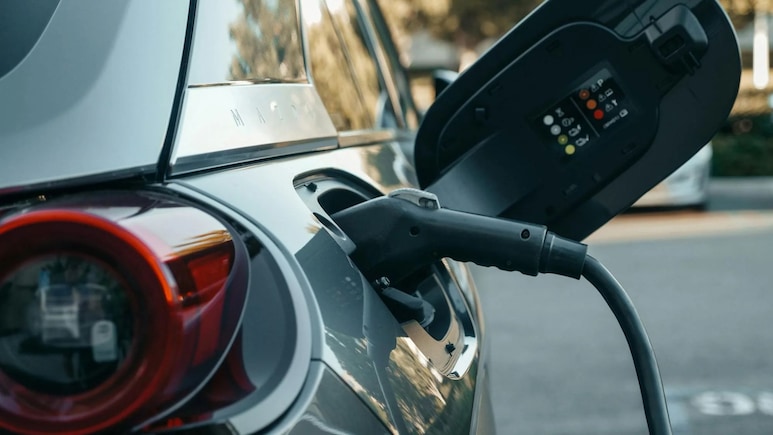
India's electric vehicle story is often told through sales numbers, new launches and public charging stations. But a new report argues that the real challenge lies much closer to home. A study by Alliance for an Energy Efficient Economy (AEEE)-Kazam says a basic but critical issue is slowing the country's EV transition. It claims most homes are not yet ready for safe, reliable and affordable charging.
That finding matters because EV ownership is not just about buying a vehicle. It is about whether a family can plug it in at night without worrying about overloaded sockets, weak wiring or the need for repeated electrical upgrades. For many buyers, especially in cities, that is now becoming the deciding factor.
The report says India's EV sales have risen sharply, from 0.5 lakh in 2016 to more than 23 lakh in 2025. Two-wheelers and three-wheelers account for about 91 per cent of total EV sales, underlining how deeply electric mobility is tied to everyday commuting and livelihood. Yet the charging ecosystem at home has not kept pace with that growth.
Also Read: Explained: Why Delhi's 2028 Petrol Two-Wheeler Ban Is A High-Stakes Move
Home Charging Gap
The report notes that only 55 per cent of prospective EV buyers currently have access to home charging, while another 30 per cent could enable it only after electrical upgrades. In practical terms, that means a large share of buyers may still be forced to depend on makeshift solutions before they can charge an EV comfortably at home.
Those workarounds are where the problem starts to become visible. The report says users often resort to "general-purpose sockets, temporary extensions, and shared connections not designed for sustained EV loads." Such arrangements may keep the vehicle charged for the night, but they are not built for long-term safety or consistency.
Also Read: Tata Sierra.EV Launching Today: Here's What We Know So Far
The report warns that these practices can create fire and electrical safety risks, reduce charging reliability, and even contribute to equipment damage and faster battery degradation.
Challenges With Apartments
The challenge becomes more serious in apartment complexes, gated communities and rental housing, where residents may not control parking, wiring or metering. The report says around 70 to 75 per cent of urban households live in multi-family units such as apartments or gated communities. In major cities like Mumbai and Bengaluru, more than 60 to 80 per cent of residents live in apartments with shared parking and restricted electrical load capacity.
Also Read: 3 Key Lessons From Tigor-Scorpio Accident On Dehradun Expressway To Stay Safe
In the words of Kazam Co-founder and CEO Akshay Shekhar, affordability is not the real issue. "I don't think affordability is the main concern because, in most cases, the cost of the charger is included in the price of the vehicle," he said, adding that the bigger challenge is getting "multiple stakeholders to work together so that installations can happen much faster."
For those residents, the problem is not a lack of interest in EVs. It is the lack of a clear and workable charging setup inside the building. Approval processes involving landlords, resident welfare associations and utilities often become part of the journey, turning something as simple as overnight charging into a long negotiation.
A Livelihood Issue Too
The report also highlights how deeply this affects gig workers and delivery riders. For them, home charging is not just a convenience feature. It is part of their daily earnings cycle.
The study says gig-economy workers often travel 250 to 300 kilometres a week, making reliable overnight charging essential to income stability. If charging access is delayed, unreliable or expensive, the impact is felt not just in the household but on the road, in missed trips and lost working time.
AEEE's Sumedh Agarwal said the real bottleneck is deeper than the vehicle or charger itself. "The bottleneck lies in the electrical wiring inside buildings," he said, adding that home electrical upgrades and safety upgrades are essential if EV adoption has to accelerate.
That is why the report describes residential electrical readiness as more than a technical issue. "The question is no longer whether India needs EV-ready homes. It is how they should be defined, financed, built, and governed," it says. It also notes that "residential electrical readiness is not a secondary or downstream concern. It is the foundation on which India's EV ambitions must be built."
Report's Claims
The report says nearly 45 per cent of Indian homes need electrical upgrades to safely charge an EV. It calls for a national framework for EV-ready homes, dedicated EV metering, safer installation standards and better coordination between housing authorities, utilities and policymakers.
For India's EV market, the message is clear. The next phase of growth will not depend only on what is sold in showrooms. It will also depend on what is ready inside homes, apartment complexes and parking spaces across the country.
Track Latest News Live on NDTV.com and get news updates from India and around the world
