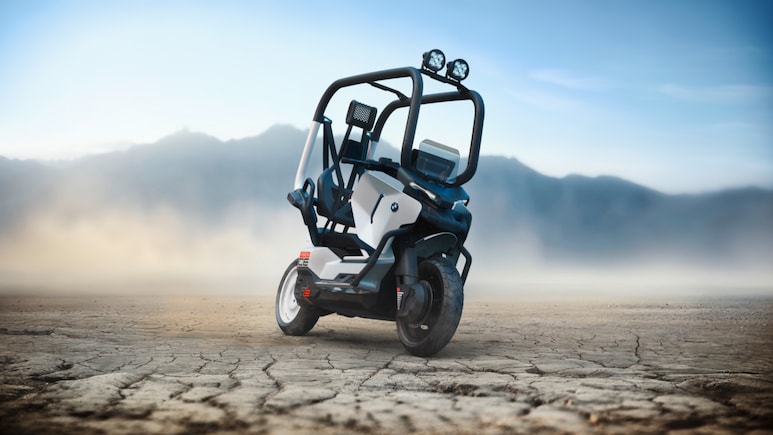
BMW Motorrad has filed a design patent in India for its Vision CE electric scooter concept, suggesting the German brand is at least evaluating the country as a potential market for the radical two-wheeler. The Vision CE, first unveiled at IAA Mobility 2025, is a self-balancing scooter that doesn't even need a stand to stay upright when stationary.
Self-Balancing Technology
The Vision CE's defining feature is its self-balancing system, which uses sensors and electric actuators to keep the scooter upright even at a standstill. This means riders don't have to put their feet down at traffic lights or when coming to a halt an experience closer to a car than a conventional scooter.
-

-
 Anarchy Or Change? Nepal Minser's Lesson From Nepal's Gen Z Movement
-
 'Needs Very Rapid New Concept Of Warfare': Ex-CIA Chief's Advice To India
-
 Nepal Minister On Lessons India Can Learn From Its Gen Z Movement
-
 'US Never Apologised': Iran Diplomat On Primary School Bombing
-
 AI Divine, AI Gods And Phantoms: BAPS Monk's Warning At NDTV World Summit
-
 'India Was The First Responder': Nepal Minister On Times Of Crisis
-
 What Should India Learn From Pakistan And The Ukraine War? Ex-CIA Chief Answers
-
 If Pakistan Attacks Again, Will The US Back India? | Gen. David Petraeus At NDTV World Summit
-
 "Hundred Million Buddhas Better Than Millions Of Einsteins": BAPS Monk On AI
-
 'Human Pulled The Trigger, Machine Helped': Ex-CIA Chief On Iran School Bombing
READ | Mahindra Bolero Bold Edition Launched, But There's A Catch
A stand is still provided for when the scooter is turned off and parked for long periods, during which the self-balancing system disengages to conserve battery and avoid component strain. The system likely reactivates automatically when the scooter is switched on again.
Safety-First Design
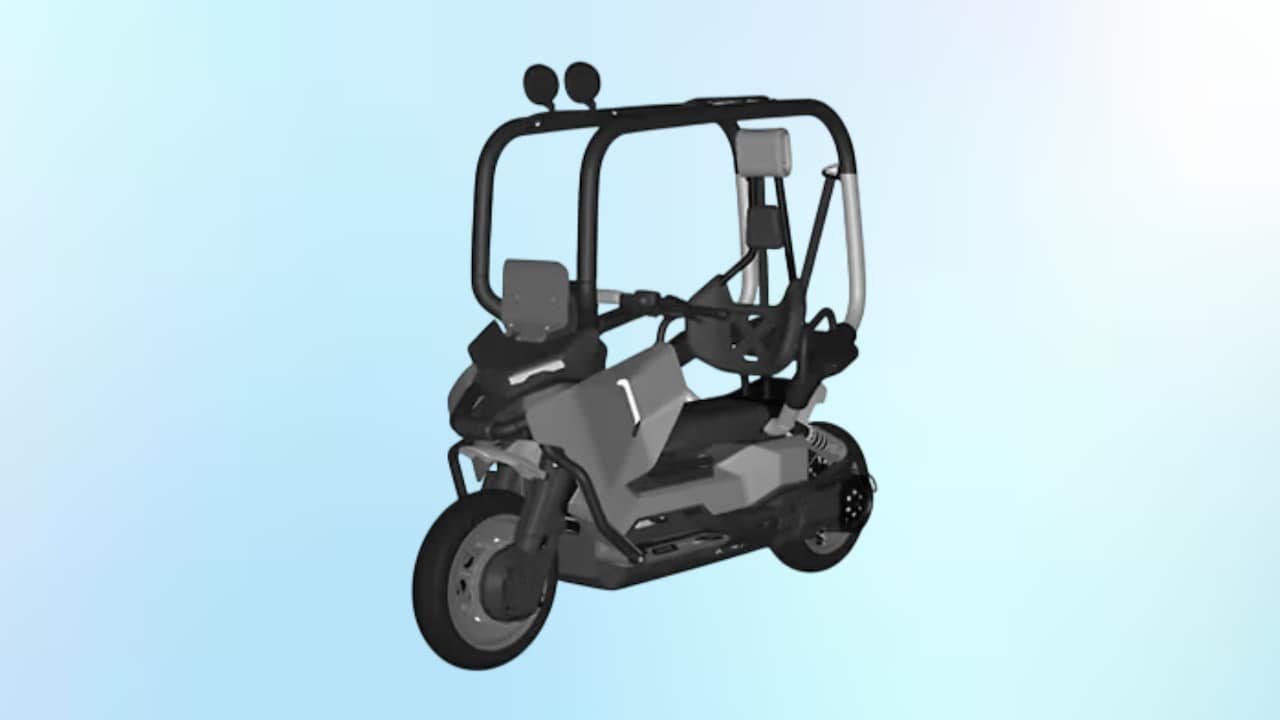
Rider safety is a major focus for the Vision CE. The scooter features a tubular steel frame at the front designed to protect the rider's feet and legs, along with a robust cage all around that eliminates the need for a helmet, gloves or specialised riding gear.
READ | New Honda CBR500R Four Breaks Cover With 502 cc Four-Cylinder Engine
A four-point seatbelt secures the rider to their seat, protecting them in case of a crash or tip-over. Side elements built into the frame protect the hip and shoulder areas, while foam cushioning on the cage, backrest, handlebar and other parts minimises potential injuries during an impact.
The Vision CE is also likely to be equipped with rear-facing radar and driver-assistance electronics to detect potential collisions before they occur.
READ | Kawasaki Z300 Launched In India At Rs 3.24 Lakh: Check Highlights
Expected Specifications
Official specifications for the Vision CE haven't been revealed, but speculative reports suggest it could be derived from the platform used for the CE 04. That scooter uses an 8.5 kWh high-voltage battery pack delivering a range of 130 km, powered by a permanent-magnet liquid-cooled synchronous motor producing 42 hp and 62 Nm of torque, with a top speed electronically limited to 120 km/h.
With the added safety equipment, the Vision CE could be heavier than the CE 04, potentially impacting range and top speed. However, changes to the battery pack and electric motor could help achieve the desired performance.
Track Latest News Live on NDTV.com and get news updates from India and around the world
