





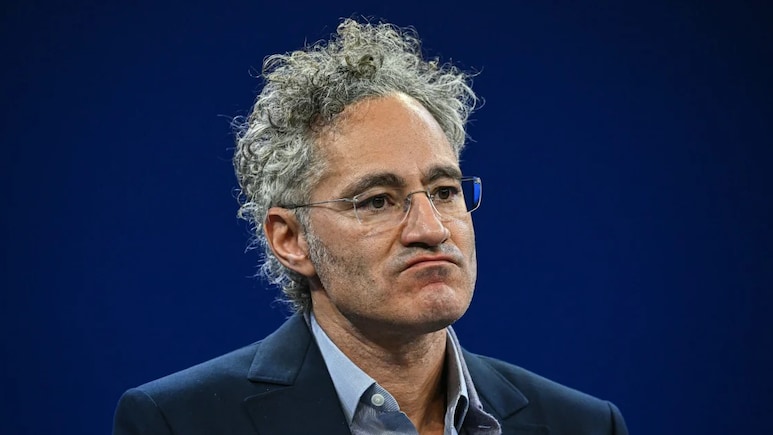
In a scathing interview with CNBC, Palantir co-founder and CEO Alex Karp slammed the token-based business models of ChatGPT maker OpenAI and Claude maker Anthropic, calling parts of the AI industry "effing insane."
Tokens are the small chunks of text that AI models read and generate, with companies such as OpenAI and Anthropic typically charging customers based on how many tokens they use.
"So the general way these things were sold... Sam (Altman, OpenAI cofounder) and Dario (Amodei, Anthropic co-founder), there's nothing more fun than debating Dario in private. So I'm not throwing shade at them, but something has gone completely wrong," Karp said.
The pointed remarks about Amodei come against the backdrop of a growing rift between the two companies. The disagreement stems from a fundamental clash between Anthropic's safety-first approach to AI deployment and Palantir's role as a major software provider to the US Department of Defense also referred to as the Department of War.
Anthropic has been locked in a standoff with the Trump administration for refusing to allow its technology to potentially be used for mass surveillance and autonomous weapons, leading the Pentagon to cut contracts with the company.
Amid the tensions, Palantir has been expanding support for alternative AI models, including those from Elon Musk's xAI, to ensure continuity for defence customers.
Palantir is best known for building AI-powered software used by governments, defence agencies and large enterprises to analyse data and support critical operations.
Karp argued that governments and businesses should have greater control over AI systems instead of relying entirely on AI companies.
"In the classified context, when the Department of War goes to you and says, 'I need this application,' do they get to control the weights to do it? Or do you get to control the weights? Are we really going to outsource the battlefield of this country to the consensus view in Silicon Valley? That is effing insane," he said.
Here, "weights" refers to the internal parameters of an AI model that determine how it behaves and can be customised for specific tasks.
Karp argued that organisations deploying AI should retain control over them rather than leaving that power entirely with AI developers.
He also criticised the industry's pricing model, arguing that enterprises are spending heavily on AI without receiving commensurate value while potentially exposing valuable business information.
"And the basic view among enterprises in this country is, 'I'm going to chillax and waste my time with tokens. I'm going to get no value and they're going to get my IP (Intellectual Property),'" Karp said.
He claimed businesses increasingly fear handing over valuable data and becoming dependent on AI providers.
"Every single enterprise I deal with... these people are livid. They're like, 'I am paying for tokens that create no value. These people are stealing the weights and alpha of my business,'" he said.
His comments reflect a broader debate within the AI industry over who should control AI models, enterprise data and the economics of AI adoption. While companies such as OpenAI and Anthropic primarily charge customers based on usage, Palantir has increasingly positioned itself as an AI platform that gives organisations greater control over their data and AI deployments.
"This is the voice of American business that is being channelled through me," Karp said, adding that enterprises were "tired" of what he described as AI models being "oversold."

