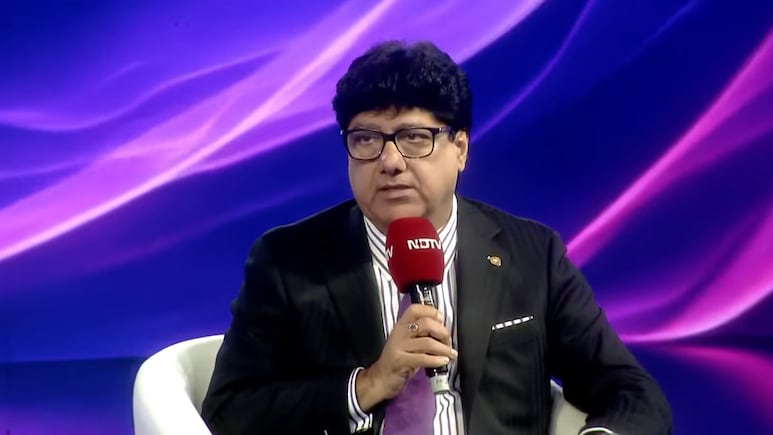
Puneet Chhatwal, CEO of Taj Hotels, Resorts and Palaces, believes Indian cuisine has a bigger role to play in attracting international travellers. Speaking on Day 2 of NDTV World Summit 2026, during a session titled "Built to Last: Can Hospitality Thrive in a Changing World?," he said India had spent years welcoming international brands and cuisines, and that the time had come to take its own culinary traditions overseas. Chhatwal also spoke about the potential of food tourism, the changing definition of luxury, and the need to market India more effectively to international visitors.
"The Time Has Come To Start Exporting Indian Cuisines Outside Of India"
#NDTVWorldSummit | "I think we were very busy bringing international brands to India and international cuisines to India. I think the time has come to start exporting Indian cuisines outside of India”: Puneet Chhatwal, CEO, Taj Hotels Resorts & Palaces #NDTVWorldSummit2026 https://t.co/Xf0h8zJooU
— NDTV (@ndtv) October 23, 2026
Chhatwal said India had significant potential in food tourism, but that the opportunity had only begun to be explored. He pointed to the country's range of cuisines and the possibility of introducing more international travellers to them.
"We were very busy bringing international brands to India, international cuisines to India. I think the time has come to start exporting Indian cuisines outside of India," he said.
He cited Bombay Brasserie, which operates at Taj hotels in Frankfurt, San Francisco, Cape Town and Dubai, as an example of how Indian food can help build a brand's presence overseas.
According to Chhatwal, the restaurant in Frankfurt is helping improve the brand's reputation and awareness, with people visiting Bombay Brasserie and discovering that it is part of a Taj hotel.
He also said Indian cuisine could appeal to international diners because of its spices, when used in the right combinations.
Chhatwal pointed to the variety within Indian food itself, noting that even a familiar dish such as sambar can differ across regions.
"There is a sambar from Mangalore and there is a sambar from Chennai and there is a sambar from Kerala," he said, adding that regional food traditions offer plenty of scope to develop distinctive culinary experiences.
He compared this opportunity with destinations in Europe that attract visitors specifically for their food and wine, suggesting that India could similarly draw travellers through its culinary offerings.
"If You Want Service From The Heart, Then You Go To The Taj"
#NDTVWorldSummit | “If You Want Service From The Heart, Then You Go To The Taj”: Puneet Chhatwal, CEO, Taj Hotels Resorts & Palaces #NDTVWorldSummit2026 https://t.co/gS6yTNYL9f
— NDTV (@ndtv) October 23, 2026
Chhatwal also spoke about how the Taj brand has evolved since its first hotel opened in 1903. He said the company spent decades building its portfolio, which later expanded to include palace hotels such as Rambagh Palace and Lake Palace.
He credited the founders and successive leaders with building a distinctive brand and culture, which the group now calls Tajness.
"If you want service from the heart, then you go to the Taj. If you want process and others, you can choose another brand," he said.
Chhatwal also highlighted the growth of Ginger, IHCL's midscale hotel brand. He said the company revamped it around six or seven years ago and that it has since grown significantly.
"The only brand in India to have more than 100 hotels in operation is actually Ginger," he said.
He added that building a strong brand begins early, before it attracts widespread attention. Once a brand matures, the focus shifts to innovation and staying relevant to changing customer expectations.
"The World Has Moved On": How The Idea Of Luxury Is Changing
According to Chhatwal, luxury hospitality is no longer defined only by large rooms, grand lobbies or premium fittings. These are now expectations that guests take for granted, he said, while their interests have expanded to include experiences.
He pointed to the growth of experience-driven travel, food tourism and spiritual tourism, saying that travellers' needs and preferences evolve as society changes.
Chhatwal also reflected on how access to luxury has changed in India since Independence. He said that for the first several decades after Independence, many people were focused on meeting basic needs, which meant luxury remained out of reach for a relatively small section of the population.
He estimated that around 100 million people in India now have access to luxury hospitality, while another 400 million have access to upscale and upper-upscale offerings. He said many others continue to aspire to these experiences, with some entering the midscale hospitality segment.
For the hospitality industry, he said, the challenge is to respond as people's expectations change.
"India Should Not Be The Best-Kept Secret"
Chhatwal said India has a wide range of tourism offerings but needs to do more to promote them internationally.
He identified perceptions of safety and security, along with last-mile connectivity, as important challenges for inbound tourism. He also acknowledged the infrastructure work under way, including the development of highways, railway stations and high-speed rail connections.
He said India had also lost some momentum in tourism marketing, pointing to the need to revive efforts such as the Incredible India campaign.
"I don't think India should be kept, what do you call it, the best-kept secret," he said.
Chhatwal added that India has opportunities to build its global profile through its cultural and wellness offerings, including yoga and Ayurveda.
He also referred to India's selection to host the World Travel and Tourism Council's Global Summit the following year, saying the event could help bring renewed attention to the country.
Discussing tourism figures, Chhatwal said international tourist arrivals had recorded a compound annual growth rate of 3.9% over 10 years, compared with 11.6% growth in domestic tourism. He added that the international arrivals figure included a significant number of people from the Indian diaspora, which he said accounted for almost half of the 22 million arrivals.
Track Latest News Live on NDTV.com and get news updates from India and around the world


