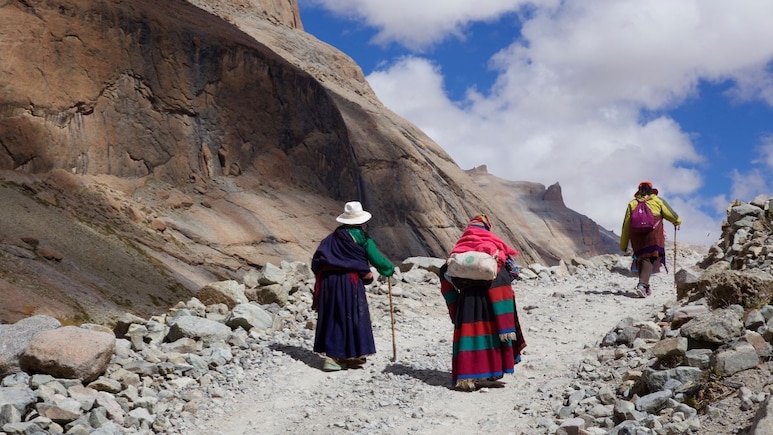
For many people, reaching Mount Kailash is a deeply personal spiritual journey, one that's not just sought after by trekkers but pilgrims. Unlike most mountains, Mount Kailash has never been climbed. However, devotees from across the world come here to walk around it. This sacred walk is known as the Kailash Parikrama, or Kailash Kora, and it is one part of the Kailash Mansarovar Yatra. It involves a challenging 3-day, 52-kilometre walk around Mount Kailash through high-altitude valleys and over the Dolma La Pass,
But what exactly is the Kailash Parikrama? How difficult is it? Where do you stay? Can you ride a horse? And what should every pilgrim know before taking the first step? Here's a complete guide.
What Exactly Is The Kailash Parikrama?
The Kailash Parikrama is a sacred 52-54 kilometre walking trek around Mount Kailash in western Tibet. Instead of climbing the mountain, which is considered forbidden because of its immense religious significance, pilgrims walk around it as an act of devotion. The journey is believed to cleanse one's sins and bring blessings.
Mount Kailash is one of the very few places in the world considered holy by four religions. For Hindus, it is believed to be the eternal abode of Lord Shiva and Goddess Parvati. Buddhists regard it as the home of Demchok (Chakrasamvara), representing supreme bliss. Followers of the Bon religion believe it is the spiritual centre of the universe, while Jains associate it with the place where their first Tirthankara, Rishabhadeva, attained liberation.
Many pilgrims also combine the Parikrama with a visit to Lake Manasarovar, where taking a holy dip is believed by devotees to symbolically wash away the sins of a lifetime.
The Two Kailash Parikramas
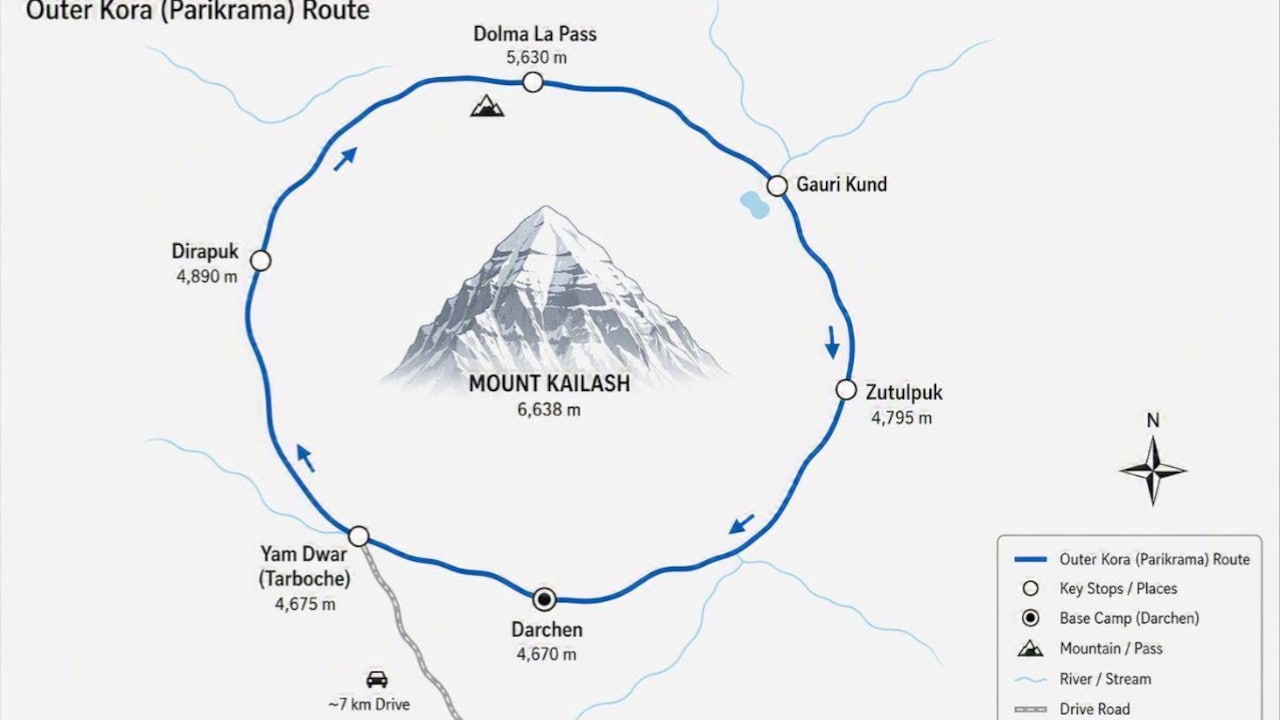
Most pilgrims complete the Outer Kora, which is the standard pilgrimage route. It runs around the entire mountain, passing monasteries, valleys, rivers, and the famous Dolma La Pass.
The Inner Kora is a more restricted route that takes pilgrims much closer to Mount Kailash, including places like Nandi Parvat and the mountain's south face. It is generally chosen by experienced pilgrims. Some pilgrims also undertake Charan Sparsh, which means trekking to the northern base of Mount Kailash to symbolically “touch the feet” of the mountain.
Also Read: Amarnath Yatra Gets Its Toughest Security Plan Yet: No Private Travel, Convoys Only
Where Does The Parikrama Begin?
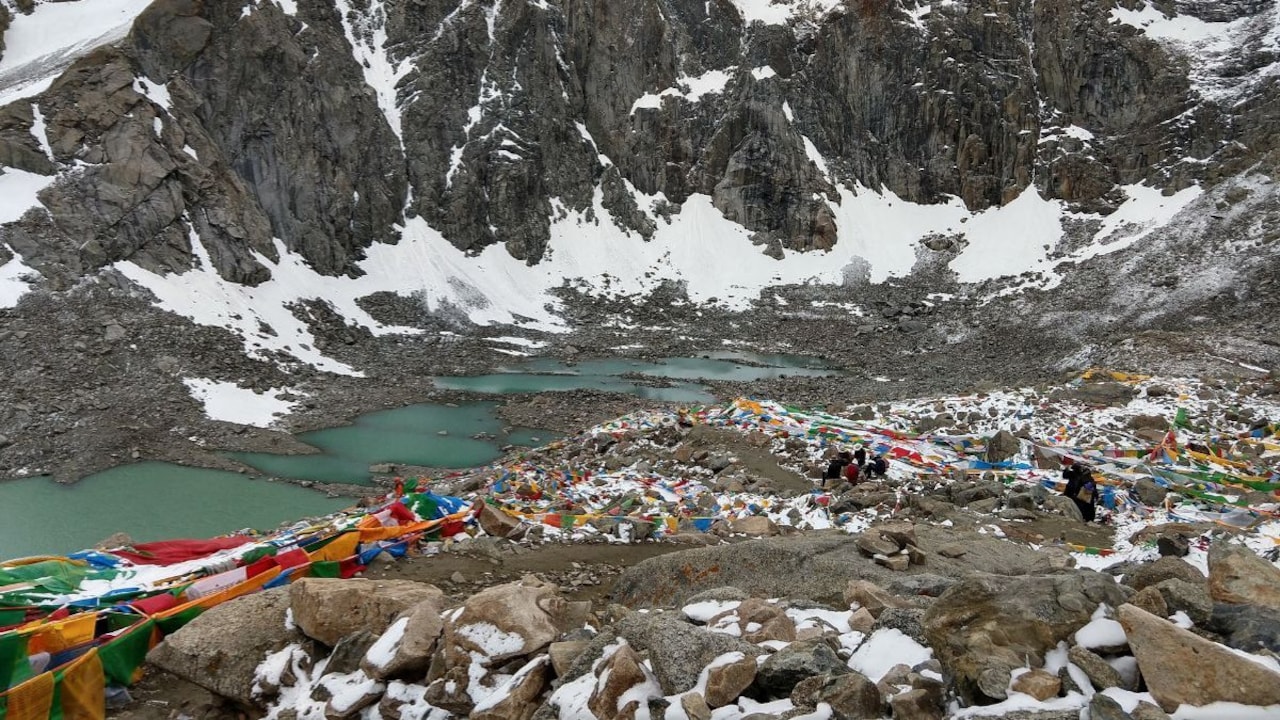
Photo Credit: Wikimedia Commons
The journey begins at Darchen, a small village at nearly 4,670 metres above sea level. It also serves as the base camp for pilgrims. Most groups first drive around seven kilometres to Yam Dwar (Tarboche). This is where pilgrims traditionally begin the sacred walk, although it is also possible to walk directly from Darchen.
From here, this is the route:
Darchen – Yam Dwar (Tarboche) – Dirapuk – Dolma La Pass – Zutulpuk – Darchen
Day 1:
- The first day is usually the easiest section of the Parikrama. Pilgrims walk for around 20-21 kilometres through beautiful valleys and open landscapes.
- Along the way, the south, west, and, finally, the north face of Mount Kailash slowly come into view.
- The day usually takes six to seven hours.
- By evening, pilgrims reach Dirapuk Monastery, located at around 4,890 metres. This is where most groups spend the night in simple shared guesthouses or dormitories.
- Many consider Dirapuk to offer the finest view of Mount Kailash.
Day 2:
- The second day involves crossing Dolma La Pass, the highest point of the Parikrama, at approximately 5,630 to 5,650 metres.
- The climb is steep, rocky, and physically demanding. Because of very little oxygen at this altitude, most pilgrims spend about five hours climbing to the pass.
- Guides usually advise pilgrims not to stay here for more than 10 minutes because of the extremely high altitude.
- Soon after crossing the pass comes Gauri Kund, a sacred landmark. According to Hindu belief, this lake is where Goddess Parvati bathed.
- The descent after Dolma La is equally challenging. The rocky path is too steep for horses, so every pilgrim must walk this section on foot.
- After walking for almost ten or eleven hours, the trail flattens out. For the rest of the day, it gets easier before reaching Zutulpuk Monastery.
Day 3:
- The route is mostly flat and takes only two to three hours. Pilgrims walk through broad valleys packed with yaks, sheep, nomad tents, and streams.
- Vehicles then take pilgrims back to Darchen, completing one of the world's most extraordinary pilgrimage circuits.
Stay, Food, And Other Logistics
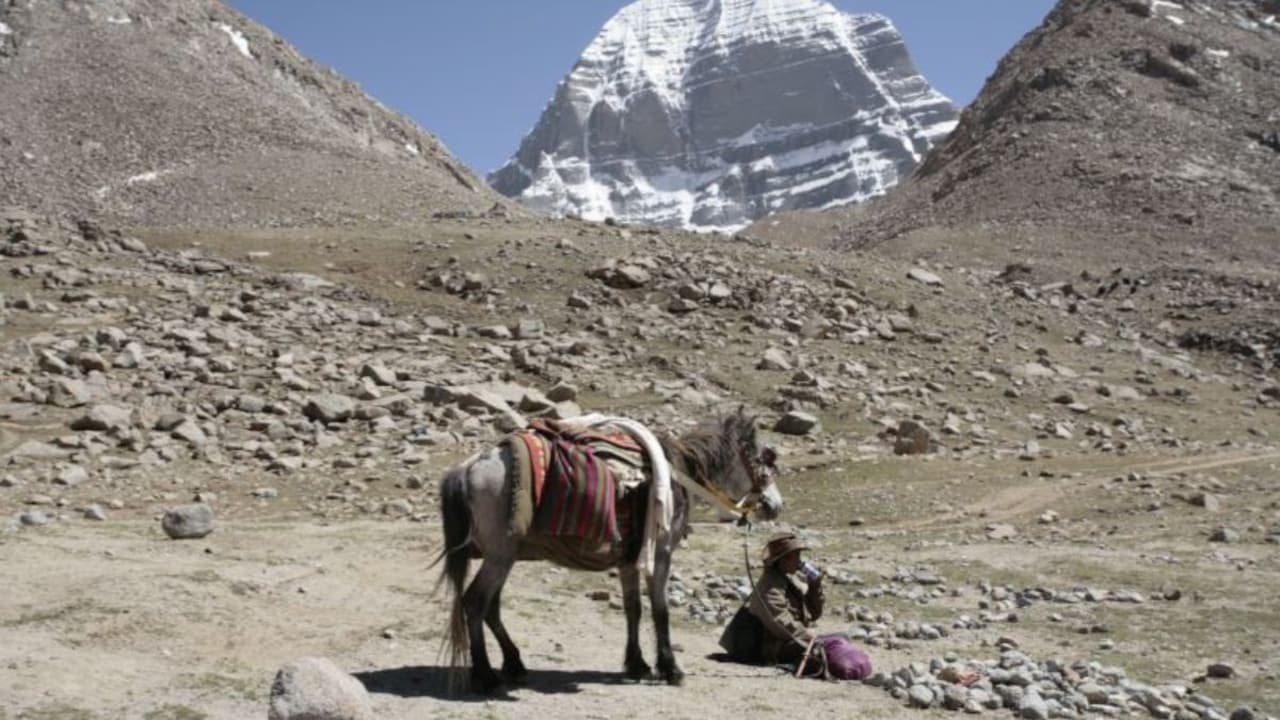
Photo Credit: Wikimedia Commons
Accommodation during the Parikrama is simple. In Darchen, basic hotels are available before and after the trek. During the Parikrama itself, pilgrims stay in shared dormitories or local guesthouses at Dirapuk and Zutulpuk. Facilities are basic, with shared sleeping arrangements, blankets, and simple meals. Bathing facilities are usually unavailable because of the freezing temperatures, although warm water for washing may sometimes be provided.
Food is simple and designed to keep pilgrims energised. Meals usually include Tibetan noodles, soups, rice, vegetables, momos, thukpa, and hot tea. Small tea houses along the route sell water, snacks, and warm drinks. Many pilgrims also carry chocolates, nuts, energy bars, glucose supplements, and dry fruits to maintain energy levels during long trekking days.
Pilgrims can hire a horse along with a local guide before starting the trek. The horse can carry riders through most sections, including the first day's trail and much of the third day. However, the sharp slope after Dolma La Pass is too dangerous for horses. Every pilgrim, even those who hire horses, must walk this rocky section on foot.
Is The Parikrama Difficult?
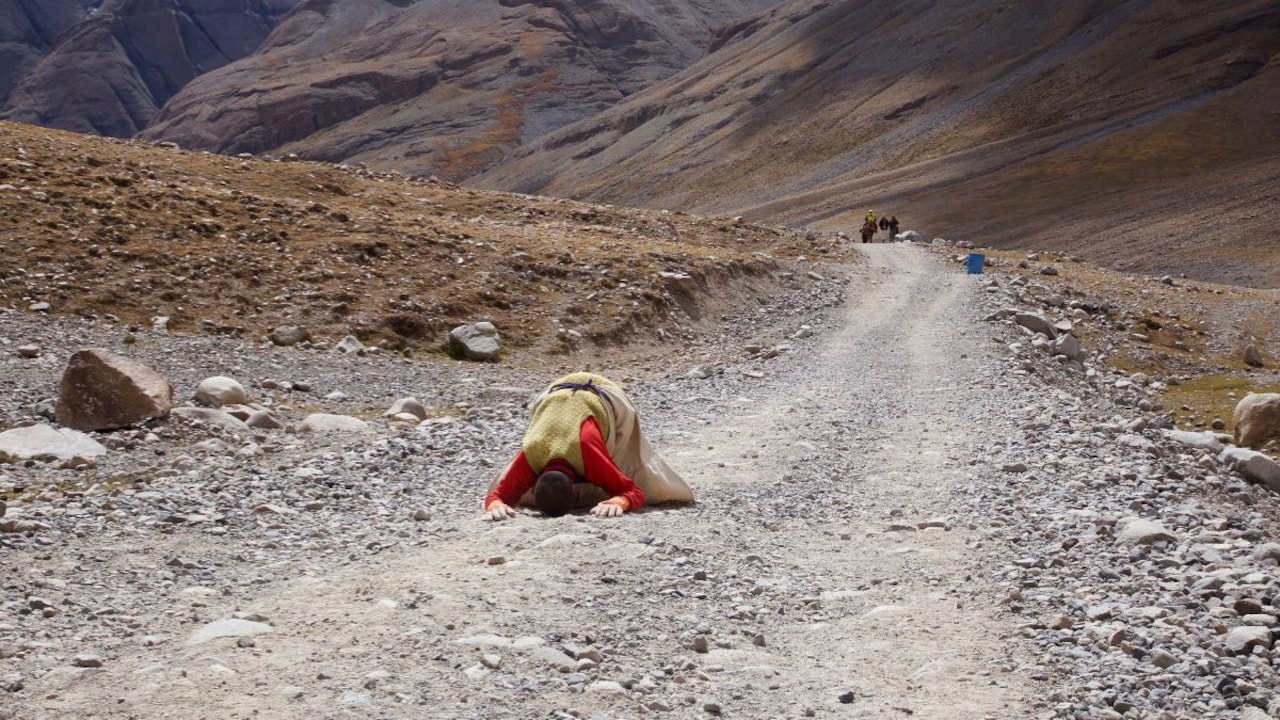
Photo Credit: Wikimedia Commons
Not distance, the biggest challenge of the parikrama is the altitude. The trek starts at nearly 4,600 metres and climbs above 5,600 metres, where oxygen levels are significantly lower than at sea level. Even experienced trekkers can experience altitude sickness. Pilgrims are generally advised to spend several days acclimatising before beginning the Parikrama
People with serious heart conditions, uncontrolled diabetes, severe high blood pressure, or other major medical issues should consult their doctors before planning the pilgrimage.
The Best Time To Go
The most popular months are May to September, when weather conditions are generally more favourable, and the trails are easier to navigate. Many pilgrims also plan their journey during the Saga Dawa Festival, one of the holiest festivals in Tibet, when thousands of devotees gather around Mount Kailash.
Track Latest News Live on NDTV.com and get news updates from India and around the world


