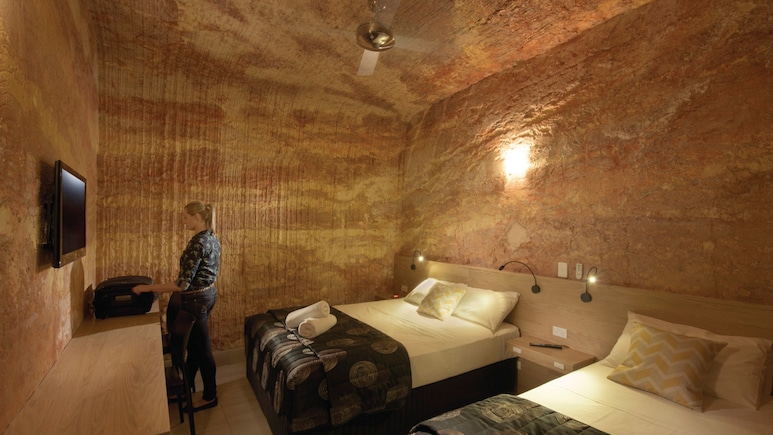
Imagine a town where you could live in a comfortable home, visit a church, check into a hotel, grab dinner at a restaurant, and browse a museum, and do all of it without once stepping into sunlight. Not because the sun has disappeared (that's a different article), but because the entire town has been built underground, carved directly into sandstone hills. This is Coober Pedy, a small, eccentric, magnificently strange settlement in the South Australian Outback, roughly 850 kilometres north of Adelaide. It is the opal capital of the world, it has appeared in multiple Hollywood films, and it contains what is almost certainly one of the most unusual communities in human history. Around half of its 2,500-odd residents live in homes dug into hillsides, called dugouts, and they have been doing so for over a century. The reason is simple and quite extreme: the heat above ground is so brutal that living on the surface is genuinely difficult. So the town went downward instead. And it is open to visitors.
Also Read: The City That Does Not See The Sun For 4 Months
Where Is Coober Pedy, and Why Does It Exist at All?
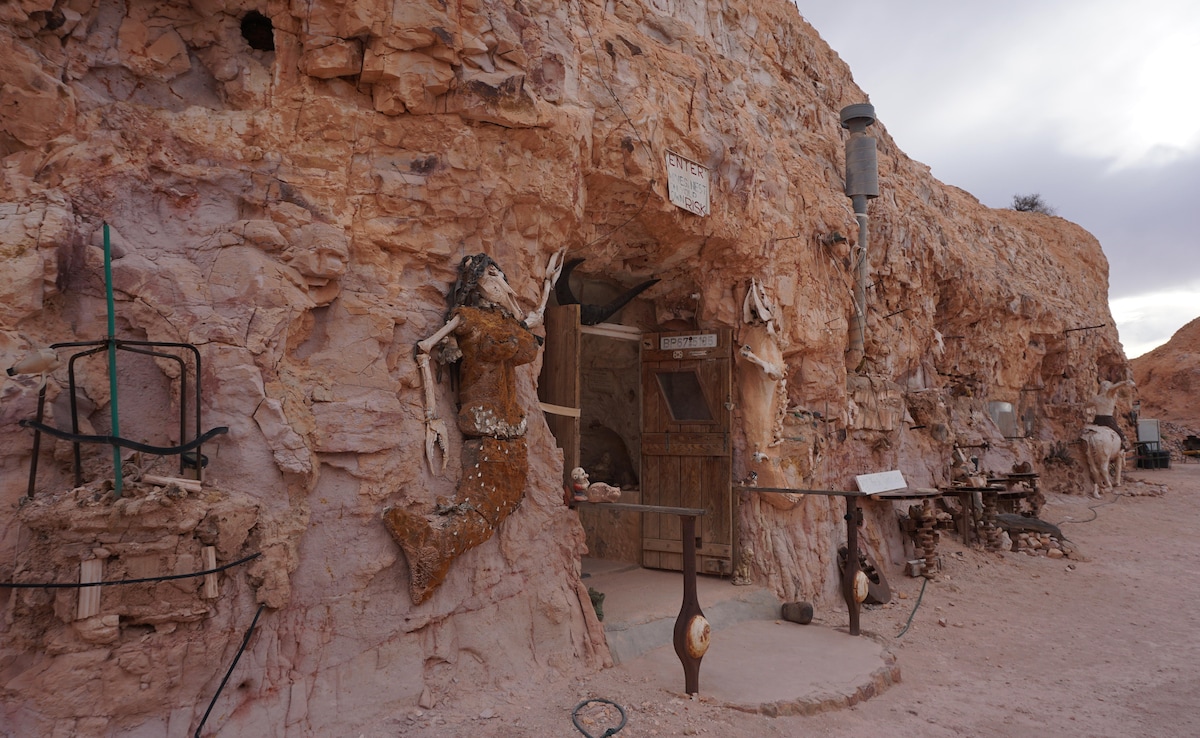
Coober Pedy, located in the far north of South Australia along the Stuart Highway, is surrounded by vast, flat, red desert, resembling Mars. The landscape features pink and ochre sandstone mounds, a relentless blue sky, and minimal vegetation. The town's name, derived from the Kokatha-Barngarla term kupa-piti, means ‘white man's hole,' referencing early 20th-century mining activities. Aboriginal communities, including the Arabana and Antakirinja peoples, inhabited the area for millennia before European arrival.
The modern era of Coober Pedy began on 1 February 1915, when 14-year-old William Hutchison discovered opals while prospecting for gold. This sparked ongoing mining, making Coober Pedy the world's largest opal-producing area, supplying 70 to 95 per cent of global opals. Opal was declared Australia's national gemstone in 1993.
Early miners faced extreme heat, with summer temperatures reaching 45 to 50 degrees Celsius and humidity rarely exceeding 20 per cent. The town receives only 144 millimetres of rain annually, one of Australia's lowest. To combat these conditions, miners dug homes underground, where temperatures remain a steady 22 to 24 degrees Celsius year-round, eliminating the need for air conditioning. “On the surface, it can feel like the hottest place on Earth. Go three metres underground and it's a pleasant 23 degrees.”
What the Town Actually Looks Like
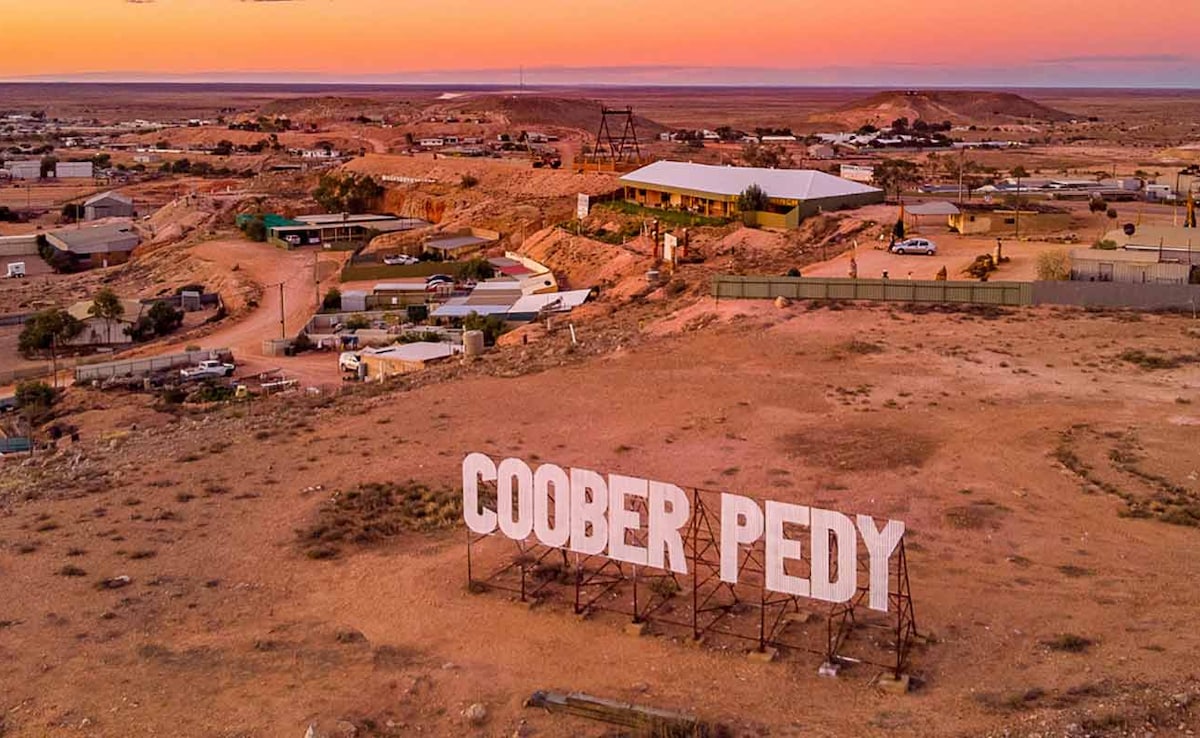
From above, Coober Pedy appears deserted, with low, reddish mounds from opal mining and iron pipes marking ventilation shafts for underground dugouts. Few buildings stand, and signs caution visitors about unmarked mine shafts, with over 250,000 entrances posing a hazard. Inside, the scene transforms. Dugouts are homes carved into sandstone hillsides, not dark caves but spacious houses with modern amenities like tiled floors, kitchens, flat-screen TVs, high-speed internet, and bathrooms. The walls, a swirling rosy-pink sandstone, are sealed to prevent dust. Residents can modify their homes easily; they can expand a lounge or add a reading nook by digging. Some even have underground swimming pools, with one former mayor reportedly owning one. A standard three-bedroom dugout costs about the same to excavate as a surface house but saves on air-conditioning bills. The main difference is the lack of natural windows; most dugouts have light shafts for daylight, though many residents live in artificial light, eventually adjusting to the absence of outside views.
The Underground Town: What's Down There
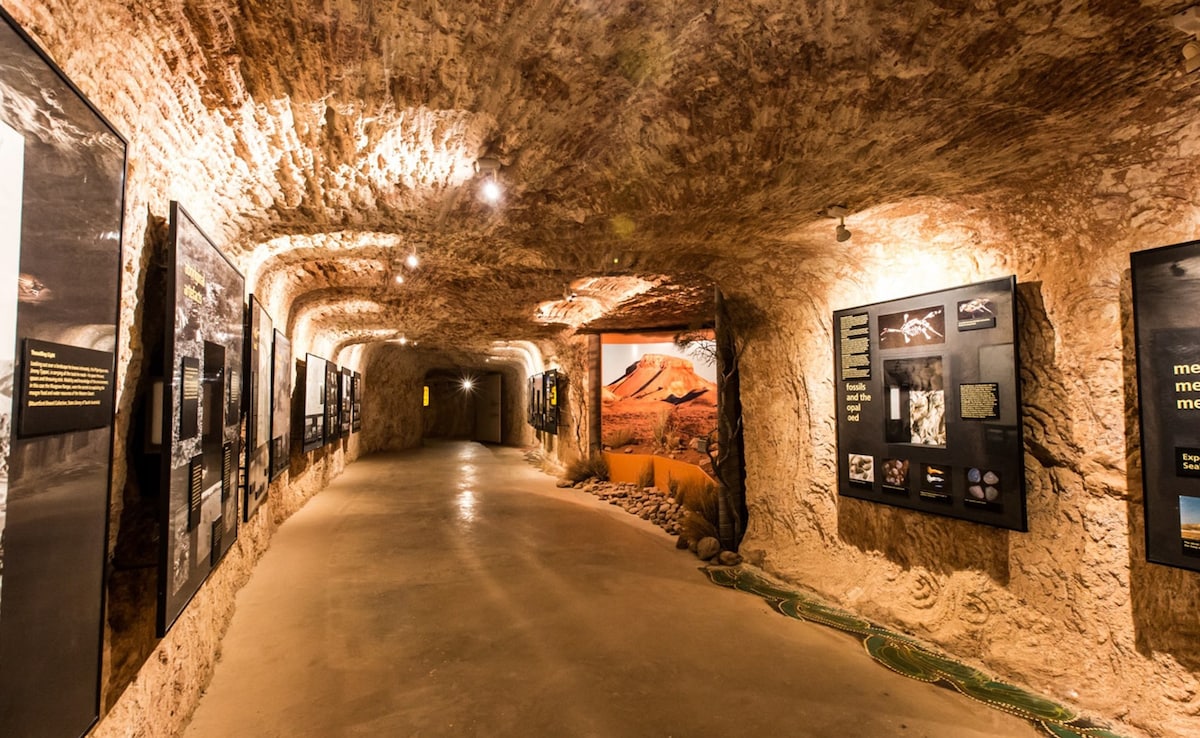
Photo Credit: cooberpeddy.com
The dugouts are not just homes. Over the decades, the community built everything underground. The result is a subterranean small town that has almost every amenity you would expect to find above ground.
The Churches
There are at least two significant underground churches in Coober Pedy, and they are extraordinary spaces. The Serbian Orthodox Church has sandstone walls carved with intricate figures of saints, the pale stone providing a warm, cathedral-like atmosphere. The St Peter and Paul Catholic Church is similarly carved, with stained glass windows that are backlit artificially, creating the same effect as light streaming through glass in a conventional church. Kneeling in prayer several metres below the surface of the Australian desert is a genuinely unusual and quietly moving experience, whatever your faith.
The Museums
The Umoona Opal Mine and Museum is the most comprehensive introduction to Coober Pedy's history, sitting alongside the town's main street. A guided tour takes you through a video on the town's origins, a walk through a dugout home, and a tour of a working opal mine, ending at a jeweller's where you can watch opals being polished. The Old Timers Mine is another excellent heritage experience, with original underground mining tunnels you can walk through and a display dugout showing how early miners lived. Both museums are very much worth the time.
Also Read: Planning A Trip To Thailand? New Visa Rules And Entry Fee You Need To Know About
Faye's Underground Home
This is a popular attraction where a resident, Faye, has opened her dugout home to tours. It gives you a sense of what upper-end underground domestic life looks like, including rooms that have been hand-carved with considerable craftsmanship and furnished with real warmth and personality. It is more personal than a museum and considerably more revealing about what it means to actually live underground.
The Golf Course
Coober Pedy's grassless golf course features hard-packed red dirt fairways. Players use artificial turf squares for shots. Due to summer heat, night rounds with glow-in-the-dark balls under floodlights are available. This unique experience is perfect for Indian golfers with a sense of humour.
The Drive-In Cinema
Built in 1965 and still operating every Saturday night, the Coober Pedy Drive-In is one of the last surviving open-air drive-ins in Australia. Its signage, not entirely in jest, requests that guests leave their explosives at home.
Coober Pedy on Film: You Have Probably Seen It
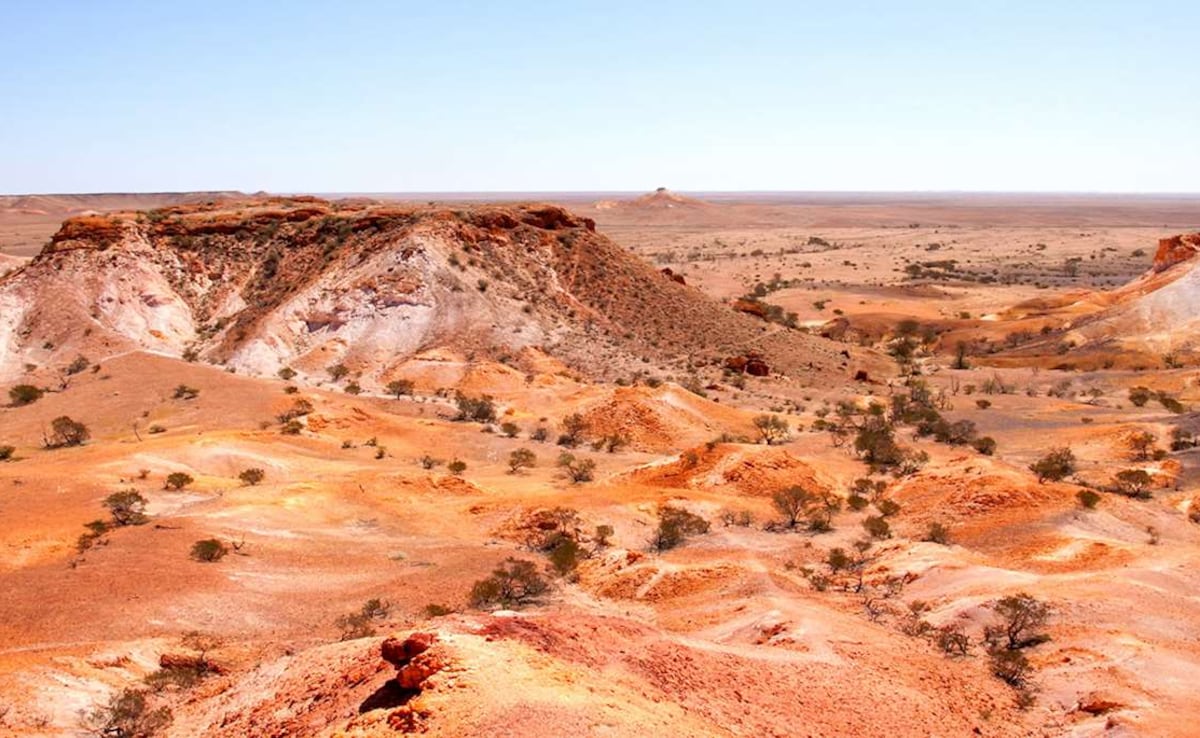
Photo Credit: cooberpeddy.com
Coober Pedy's landscape is so spectacularly otherworldly that Hollywood kept coming back. The most famous production filmed here is Mad Max Beyond Thunderdome (1985), with Mel Gibson and Tina Turner, which used the barren, crater-pocked surface of Coober Pedy's mining area as its post-apocalyptic setting. Looking at photographs of the Coober Pedy landscape, you understand instantly why no set decoration was needed. The Adventures of Priscilla, Queen of the Desert (1994) also filmed significant portions here, inside actual dugouts. The town has hosted productions from Australia, Europe, and the United States over the years, drawn by the surreal quality of a desert that looks unlike anywhere else on Earth.
Travel Guide: Getting to Coober Pedy from India
Getting There
From India, Adelaide, South Australia, is the main hub. Direct and one-stop flights connect major Indian cities to Adelaide via Singapore, Dubai, or Kuala Lumpur, with airlines like Singapore Airlines, Emirates, and Air Asia. To reach Coober Pedy, 850 km north, you can fly with Rex Airlines for about AUD 250, drive the Stuart Highway for 9-10 hours, or take the Greyhound bus for around 11 hours. The Ghan train also passes through Coober Pedy.
Visa
Indian citizens require an Australian tourist visa (Visitor Visa — Subclass 600) to enter Australia. Applications are submitted online through the Australian Department of Home Affairs website and typically take 20 to 30 days to process, though this can vary. Budget roughly AUD 150 for the application fee. An ETA (Electronic Travel Authority) is not available to Indian passport holders — the Subclass 600 is the standard tourist visa.
When to Go
This one is not negotiable: do not visit Coober Pedy between October and March. Summer temperatures can exceed 50 degrees Celsius at the surface, which makes above-ground exploration genuinely dangerous. The recommended window is May to September, which is Australian winter. Temperatures during this period are comfortable, typically between 18 and 25 degrees Celsius during the day, dropping to around 6 to 10 degrees at night. May, June, and July are the sweet spot. The shoulder months of April and September are manageable but can still be quite warm.
Where to Stay
For the full experience, book an underground room. The Desert Cave Hotel is the most comfortable option, with four-star amenities and a genuinely memorable underground atmosphere. The Comfort Inn Coober Pedy Experience offers mid-range comfort with the bonus of visible opal veins in the walls. For budget travellers, Radeka Downunder is reliable and welcoming. All are competitively priced by Australian standards, typically ranging from AUD 80 to AUD 200 per night depending on the property and season.
How Long to Spend
Two full days in Coober Pedy is enough to cover the key attractions without rushing, a day to explore the underground churches, museums, and dugout homes, and a second day for a mine tour, noodling for opals, and the evening drive-in or golf course. If you are combining Coober Pedy with an Outback road trip between Adelaide and Alice Springs, factoring in nearby attractions like the Kanku-Breakaways Conservation Park (a stunning landscape of coloured mesas about 30 kilometres from town) adds another day comfortably.
What to Buy
Opals, obviously. Coober Pedy produces the majority of the world's supply and prices here, bought directly from miners and local gem shops, are considerably more reasonable than anywhere else. White opals, crystal opals, and the rare and expensive black opals are all available. Take time to understand what you are buying — ask the seller about the stone's origin and quality rating. The opal shops along Hutchison Street are the main hub for retail gems. Bringing an opal back to India as a gift or personal purchase is entirely legitimate and always a conversation piece.
Why Coober Pedy Is Genuinely Unlike Anywhere Else
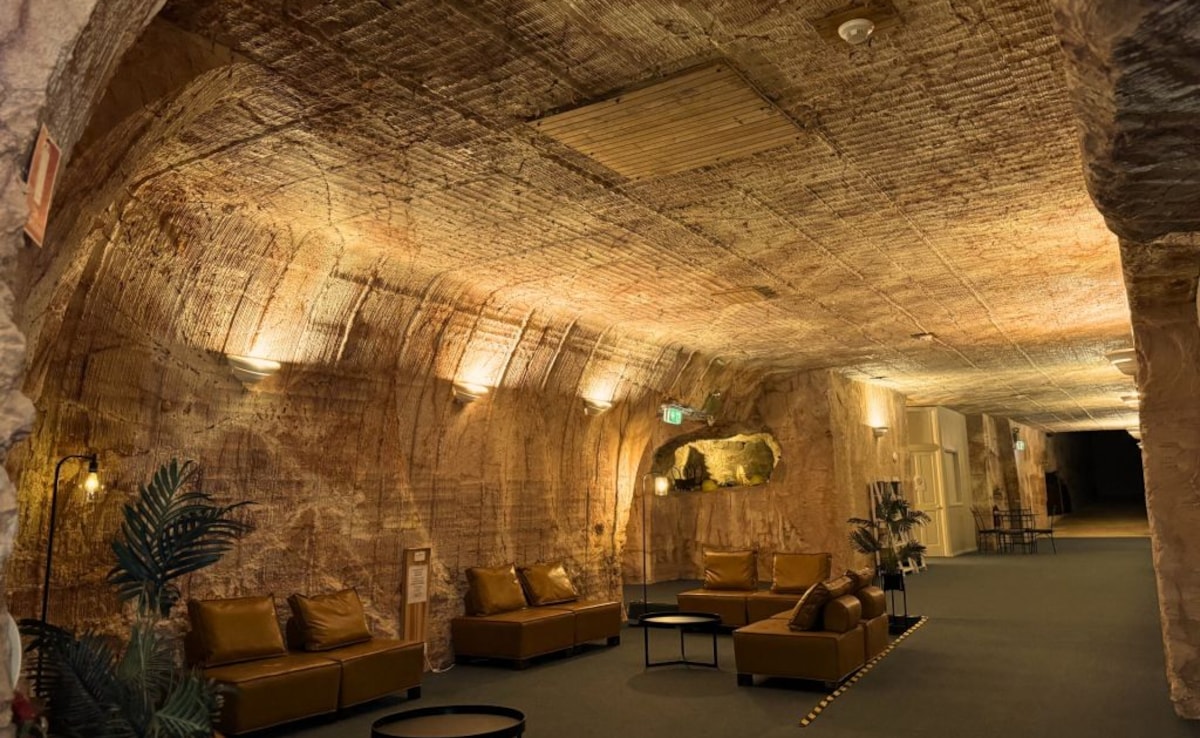
Photo Credit: Coober Pedy Experience Motel
Coober Pedy's remarkable cultural diversity stems from its 20th-century opal fields, attracting people from over 50 countries. Greek, Italian, Serbian, Chinese, Afghan, and Aboriginal communities coexist in this small desert town, featuring a Serbian Orthodox church and Greek events amidst its alien-like landscape. The local Aboriginal community, Umoona, has lived on this land for tens of thousands of years. The Umoona Opal Mine and Museum showcases this history, while the community centre offers deeper insights. Philosophically, Coober Pedy exemplifies sustainable living. In an era of climate concern, its underground homes offer natural temperature regulation, minimal cooling costs, and extreme weather protection. This practical solution, developed over a century, defines a functional town beneath the surface.
Also Read: 5 Budget-Friendly Alternatives To Famous Indian Tourist Spots
Is It Worth the Journey?
For Indian travellers who've explored the usual Australian spots, Coober Pedy offers a unique surprise. It lacks conventional beauty, no beaches or forests, but its barren, dusty landscape resembles a sci-fi film set, which it has been. Fascinating in its own way, it prompts thoughts on human ingenuity and adaptation to extreme environments. Imagine living in a home carved 50 feet underground in a desert. Coober Pedy boasts real opals, history, and a distinct weirdness. Few places can claim such uniqueness. Venture underground, and you'll return with a story worth sharing.
Track Latest News Live on NDTV.com and get news updates from India and around the world


