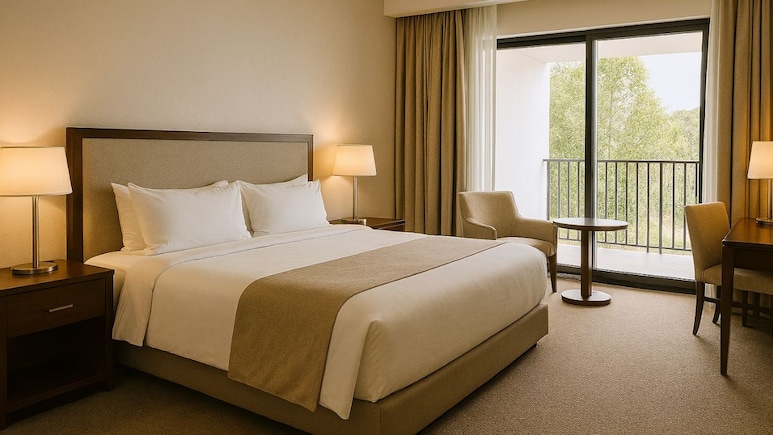
Booking a holiday should be exciting, not stressful. Yet concerns about online travel scams continue to grow. According to figures cited by the European Commission, around 66% of online hotel reservations in Europe are made through Booking.com. Meanwhile, the platform has reported a 500% rise in scam activity between 2022 and 2024.
On October 21, the European Commission opened formal proceedings to assess whether Booking.com may have breached the European Union's Digital Services Act (DSA). The investigation will examine whether the platform adequately assessed and mitigated risks linked to fraudulent listings and phishing scams.
-

-
 Best Of NDTV World Summit 2026 | Defining Conversations, Big Ideas
-
 PM Modi Says 'Parasite' Congress Hurts 'Honest' Dissent Movements
-
 "Some Dreaming Of Disorder": PM Modi's Dig At Rahul Gandhi
-
 PM Modi Highlights India's Firsts: Fast Breeder Reactor, Hydrogen Train, Asian Games Medals
-
 "UN's Limits Clearly Visible": PM Modi Presses For 'New Solutions' At NDTV Summit
-
 "World That Relied On India's Brainpower Now Trusts Its Mindpower": PM Modi
-
 Non-Oil Trade With India Went Up 50% In 3 Years: UAE Minister At NDTV Summit
-
 "Some Dreaming Of Disorder": PM's "Failed Product Of Congress" Jibe At Rahul Gandhi
-
 'Viksit Bharat Not Just For Us': PM Modi's Top Quotes At NDTV World Summit
-
 Has Indian Cuisine Arrived At The Global Stage? What Vir Sanghvi Believes
The Digital Services Act requires Very Large Online Platforms, such as Booking.com, to identify, analyse and mitigate systemic risks affecting users. It also mandates clear disclosure of advertisements. As part of the proceedings, the Commission will continue gathering evidence and assessing the platform's compliance.
The probe will focus on several key areas:
Fraudulent And Non-Compliant Listings
The Commission will examine risks associated with fraudulent accommodation listings, including non-existent properties, impersonation fraud and other non-compliant offers listed on the platform.
Phishing Scams Linked To Reservation Data
The investigation will also examine claims that malicious actors may have accessed and misused reservation and guest data. Such information could then be used to launch phishing attacks and request fraudulent payments from travellers.
Sponsored Listings And Advertising Transparency
Another area under scrutiny is whether paid-for boosted listings were clearly identified as advertisements. Under the DSA, users should be able to easily recognise when content is sponsored, understand who paid for it and know why it is being shown to them.
Also Read: Paid For A Dream Holiday, Got Lower-Category Hotels Instead. Club Faces Rs 95,000 Refund Order
According to the Commission, Booking.com may have fallen short of transparency requirements by not clearly labelling listings whose providers paid for improved visibility in search results.
If the allegations are substantiated, these failures would constitute infringements of the DSA.
The European Commission's announcement sparked widespread discussion on social media, with users sharing mixed reactions:
One user wrote, "Thanks for this, very important personal vindication for me as someone who'd never gotten scammed until this summer through Booking." Another commented, "The EU standing up against digital behemoths to protect its citizens."
"Good initiative. The platform is full of hotels which are blatant scams," wrote a third user. A fourth claimed, "Sometimes they use 4 or 5 layers of subcontractors to put responsibility on others." Not everyone could relate. "I never had a bad experience with them. Can anyone tell me what's happening?" one user asked.
Track Latest News Live on NDTV.com and get news updates from India and around the world


