
Three Indian sites have been added to UNESCO's World Heritage Tentative List: the Karst-mud-volcano Complex of Baratang, the Andaman Subduction Volcanoes and the Sirpur Cultural and Archaeological Landscape in Chhattisgarh.
The Permanent Delegation of India to UNESCO announced the additions on October 20. The sites offer three very different reasons to visit: unusual geological formations in the Andaman and Nicobar Islands, volcanic landscapes surrounded by the sea, and an ancient town known for its temples and monasteries.
-

-
 Who Is Rajiv Mehta? Lilavati Hospital Trustee To Speak At NDTV World Summit 2026
-
 Ex-CIA Director To Decode 'War In Times Of AI' At NDTV World Summit
-
 From Call Centre To Billion-Dollar Disruptor: Nikhil Kamath At NDTV World Summit
-
 'Every 5 Years, You'll See A New India': Swami Sarvapriyananda Ahead Of NDTV World Summit
-
 AI Can Think, But Can It Be Conscious? Swami Sarvapriyananda Weighs In
-
 Alain Ebobisse, Africa50 CEO, To Attend NDTV World Summit 2026. All About Him
-
 Kriti Sanon At NDTV World Summit: A Look At Her Career And Business Ventures
-
 Ex-CIA Director To Decode 'War In Times Of AI' At NDTV World Summit
-
 Who Is Vikram Rai, CEO, South Asia GE Aerospace, Set To Attend The NDTV World Summit 2026
-
 Rahul Kanwal: The World Is Changing. What Comes Next? | NDTV World Summit 2026
This move is all about putting these sites on the path towards possible World Heritage recognition.
1. Karst-mud-volcano Complex of Baratang, Andaman and Nicobar Islands
Baratang is known for two amazing geological features: limestone caves and mud volcanoes. The caves have formed over time as water dissolved the limestone, leaving behind chambers and mineral formations. Unlike conventional volcanoes that release laava when they erupt, these mud volcanoes release mud, water and gases from beneath the Earth's surface.
Andaman Islands are usually associated with beaches, but Baratang is all about bringing a different side to focus with the caves and mud volcanoes. The site is also important for scientific research. The formations inside Mahadev Gupha cave, for instance, have been studied for clues about India's summer monsoon over several centuries.
Also Read: This Canadian Lake Looks Like A Giant Polka-Dot Painting
2. Andaman Subduction Volcanoes, Andaman and Nicobar Islands
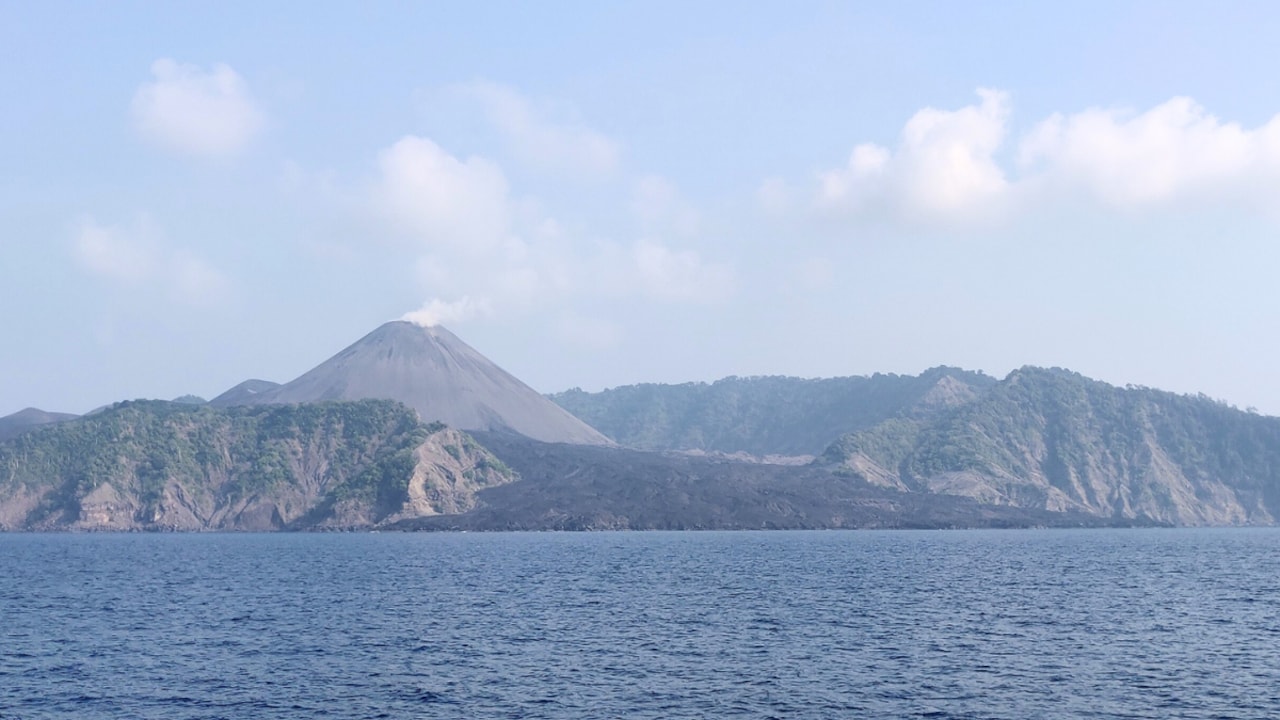
Photo: Wikimedia Commons
This proposed heritage site includes Barren Island and Narcondam, two volcanic islands with very different characteristics.
Barren Island is home to India's only confirmed active volcano. Its volcanic activity has been recorded since 1787, with more recent activity reported in 2025 and early 2026. The island's landscape has been shaped by repeated eruptions, and its surrounding waters are also known for their marine life.
Narcondam, on the other hand, is a forested volcanic island. It is home to the Narcondam hornbill, a bird found nowhere else in the world. The island also has strict access restrictions, so it is not a regular tourist destination. The islands are important for the study of volcanic activity and the ecosystems that develop in isolated environments.
Also Read: 7 Places In India Where You Can Catch Early Snowfall This October And November
3. Sirpur Cultural and Archaeological Landscape, Chhattisgarh
Sirpur, on the banks of the Mahanadi River in Chhattisgarh's Mahasamund district, was an important settlement between the 5th and 12th centuries. Its remains include Hindu temples, Buddhist monasteries and Jain structures, making it an important site for understanding the region's religious and cultural history.
One of its best-known monuments is the Lakshmana Temple, a brick temple famous for its architectural design and intricately carved doorway. Archaeological remains across Sirpur also point to a settlement with homes, markets and craft activity, rather than a cluster of religious monuments alone.
Track Latest News Live on NDTV.com and get news updates from India and around the world


