





Apple products have always been aspirational purchases. A MacBook is often bought after months of saving. An iPad is seen as an investment for studies or work. However, over the last few weeks, those dreams became significantly more expensive.
Apple has sharply increased prices across several products in India, including MacBooks, iPads, Mac Studio, Mac mini, HomePod and Apple TV. In some cases, prices have jumped by as much as Rs 70,000, while certain high-end configurations now cost nearly Rs 1 lakh more than before.
The move has surprised buyers because it comes at a time when the company is doubling down on artificial intelligence. While Apple has not officially detailed the exact reasons behind the revisions, industry experts say the answer lies deep inside the hardware powering the AI era.
Which Apple Products Have Become More Expensive?
The steepest increases have been seen across professional MacBook models, desktop Macs and premium iPads. Entry-level products have largely remained unchanged.
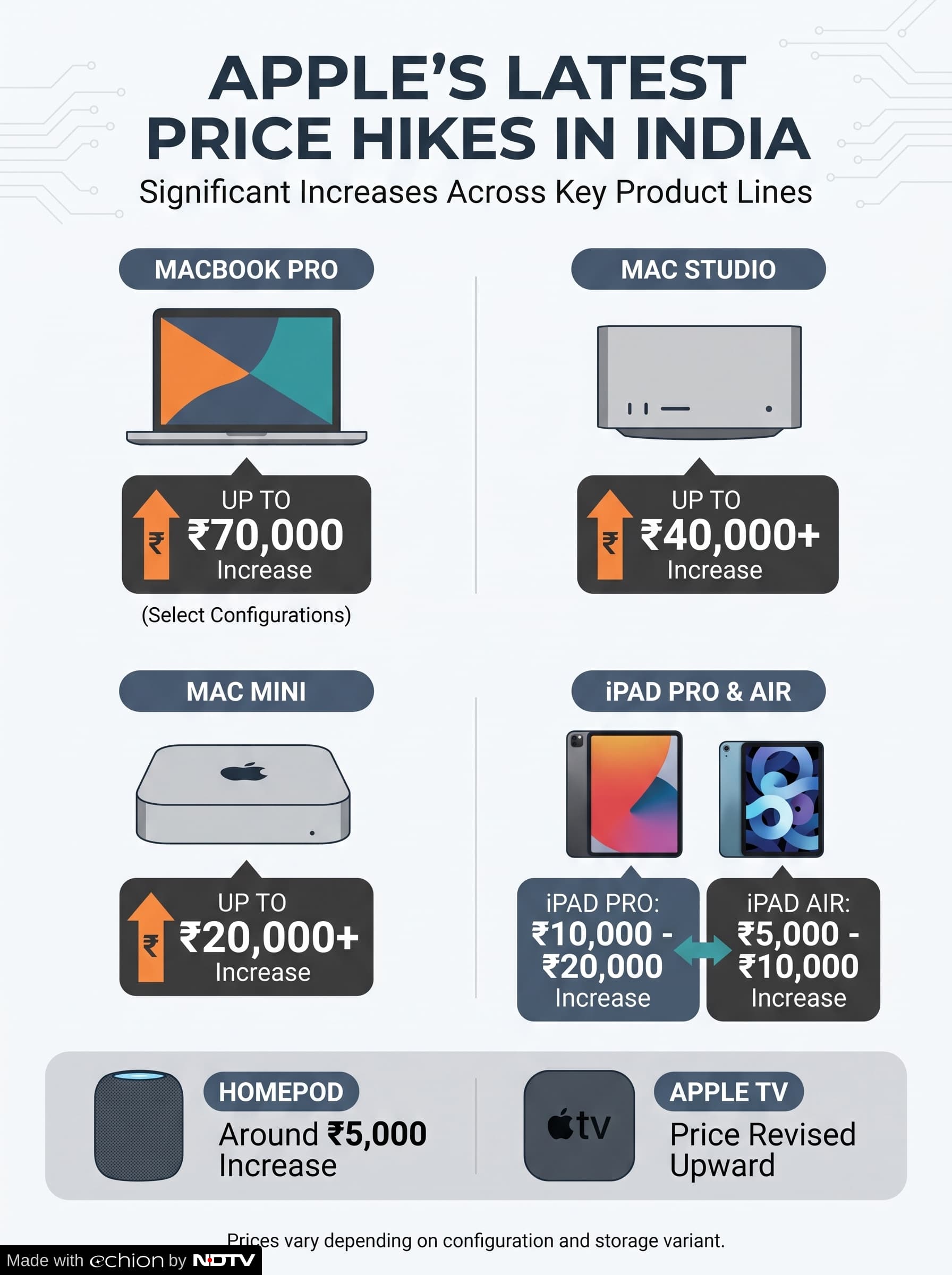
The biggest sticker shock is reserved for buyers looking at Apple's top-end professional machines. Some fully loaded MacBook Pro configurations now cost close to Rs 1 lakh more than earlier, according to multiple media reports.
AI Making Hardware Far More Expensive
The price revisions are closely tied to one of the biggest shifts underway in the technology industry: the race to build AI-first devices.
According to Siddharth Maurya, Managing Director, Vibhavangal Anukulkara Pvt Ltd, modern AI-powered gadgets require significantly more RAM, faster storage and advanced processors capable of running complex AI models directly on the device.
"Artificial intelligence gadgets demand greater RAM memory, storage, and chips, which allows them to run complex algorithms directly on the device," Maurya said.
He explained that demand for these premium components has surged, not just from smartphone makers, but also from hyperscale data centres and AI companies building massive computing infrastructure.
That has pushed component costs sharply higher.
Maurya added that manufacturers are also spending billions on AI research, custom silicon, software development and supply-chain diversification. Those investments are increasingly finding their way into the price tags consumers see.
"Alongside the cost of components, the buyers are also paying for future-proof technology allowing using of AI features via software updates," he said.
Apple Isn't Just Selling Hardware Anymore
Experts believe the higher prices also reflect Apple's growing focus on AI-powered experiences rather than just premium hardware.
Rajveer Singh of Thinkarklub said the company's pricing strategy goes well beyond manufacturing costs. "The price hike on Apple products isn't just about specs. It's about innovation and R&D," Singh said.
According to him, Apple is investing heavily in AI, custom silicon and on-device intelligence, all of which require larger memory capacities, new chip architectures and years of engineering work.
But there is another factor.
Singh believes Apple's unmatched brand value gives it significant pricing power.
"When demand is inelastic and brand equity is unmatched, Apple has pricing power. Customers aren't just buying hardware, they're buying into an ecosystem," he said.
"So yes, costs went up because of AI. But the premium also comes from positioning."
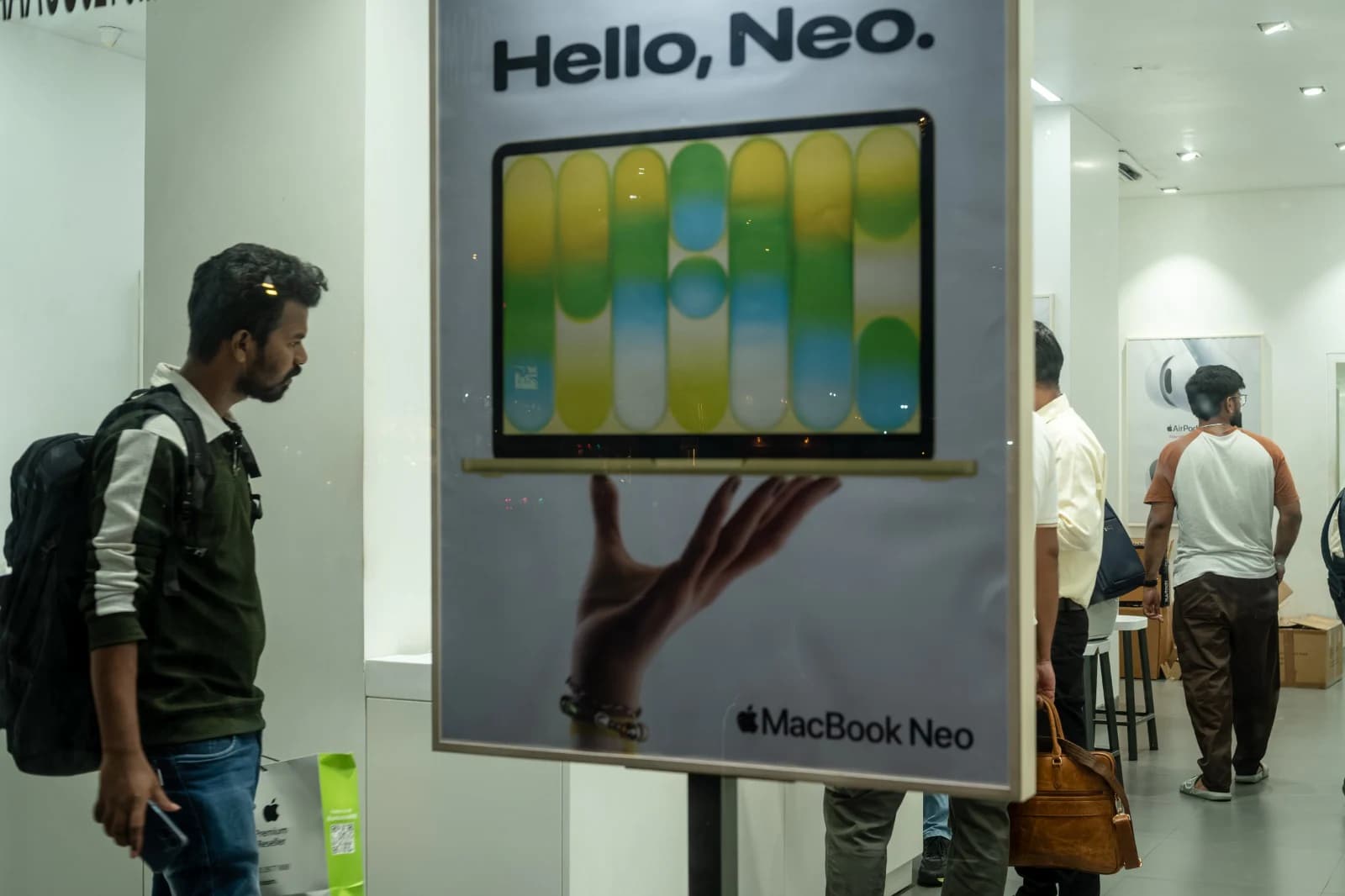
Apple's high-end configurations now cost nearly Rs 1 lakh more than before.
A Global Memory Crunch Is Changing The Economics
The AI boom has dramatically altered demand for high-bandwidth memory and advanced storage chips.
Companies building AI servers and data centres are competing with smartphone and PC makers for the same cutting-edge components. The resulting supply constraints have pushed memory prices sharply higher over the past year.
Industry analysts say manufacturers are increasingly designing devices with more RAM because on-device AI features need larger memory pools to process language models, image generation and advanced assistants without relying entirely on cloud servers.
That shift is making premium consumer electronics structurally more expensive.
The Beginning Of A New Premium Cycle
Maurya believes Apple's latest move marks the beginning of a new phase in consumer technology.
"From a business standpoint, this indicates the start of the new era of the premium technology cycle, where AI capability would play a vital role," he said.
While consumers may face higher upfront costs, companies are betting that buyers will value AI-driven productivity, personalised experiences and longer software support.
He expects AI readiness to shape pricing strategies across the broader consumer electronics industry-not just Apple's premium portfolio.
What It Means For Indian Buyers
For consumers planning to buy a MacBook or iPad this year, the message is simple: waiting may not necessarily make these devices cheaper.
Instead, AI is becoming a permanent cost driver.
The same technologies that promise smarter laptops, more capable tablets and intelligent assistants are also raising the cost of building them.
Apple's latest price hike may therefore be less about one company's pricing decision and more about where the entire technology industry is headed.
Track Latest News Live on NDTV.com and get news updates from India and around the world

