





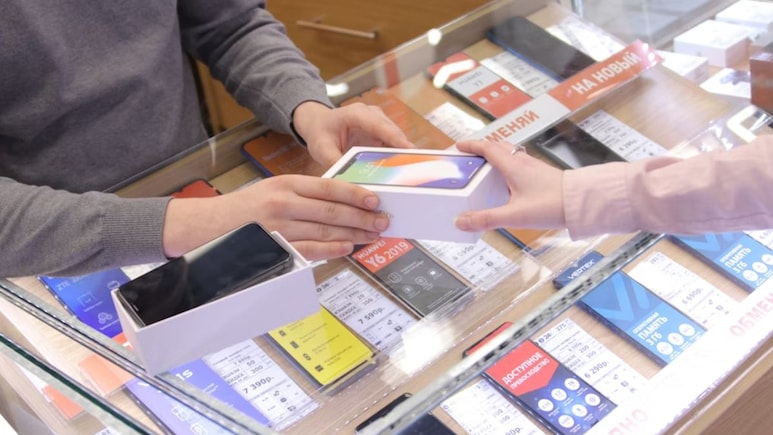
If you have been looking to buy a smartphone, you have probably compared RAM, storage and performance before making a decision. What many buyers may not realise is that the memory powering those devices has suddenly become one of the most closely watched parts of the global technology industry.
The reason has little to do with smartphones and everything to do with artificial intelligence.
As technology companies around the world race to build bigger AI models and larger data centres, demand for advanced memory chips has surged. Manufacturers are increasingly directing investments and production capacity towards AI-related infrastructure, creating concerns about future supplies for consumer electronics.
Also Read | Layoffs Are Rising In Tech, But These Skills Are Helping People Unlock Better Pay
Industry executives say the shift may not lead to an immediate price shock for consumers. But it is beginning to change how electronics companies plan products, manage inventories and think about costs. "The real concern is not the current increase in memory prices, but what it signals for the future of consumer electronics," said Sahil Aggarwal, co-founder of Robotek India.
According to Aggarwal, industry reports indicate that supplies of LPDDR4 memory -- used in smartphones, laptops, and tablets -- could fall sharply as manufacturers allocate more capacity towards AI-focused memory and server infrastructure. Analysts are also warning that memory demand could remain stronger than supply for several years.
If that happens, electronics brands may find themselves competing with AI companies for access to critical components.
For India, the issue carries particular significance. The country's consumer electronics market is projected to exceed $120 billion by 2030. Growth is increasingly being driven by consumers in tier-2 and tier-3 cities, where demand for smartphones, smart televisions, laptops and connected devices continues to expand.
At the same time, consumer expectations are rising. People want more storage, better multitasking, smarter features and longer device life cycles. Delivering those improvements becomes more difficult when key components become costlier or harder to source.
Aggarwal says the impact is often less visible than consumers expect. "What many consumers don't see is that the impact of memory inflation does not always appear immediately through higher prices."
Instead, companies may adjust product configurations, scale back promotional activity, delay upgrades or accept lower margins for a period of time. This means the effects can show up in multiple ways -- not just through a higher price tag.
The concern is being echoed across the industry. "The reality is, what we're witnessing with memory chip prices is unprecedented in recent times," said Vijay Sharma, Managing Director of Optoma Technology India.
According to Sharma, the AI boom has created supply pressures that are being felt by electronics brands across categories. While companies are trying to absorb part of the increase, he says sustained rises in the prices of Dynamic Random-Access Memory (DRAM) eventually move through the value chain.
This does not necessarily mean every gadget becomes significantly more expensive overnight. But it does mean manufacturers have less flexibility when it comes to pricing, promotions and product planning.
The implications stretch far beyond consumer electronics. "Semiconductors quietly power almost everything we use today, from cars and medical devices to factory machines and smartphones," said Rajeev Gautam, President of HORIBA India.
| Gadget | Price Last Diwali | Price Now | Expected Price Next Quarter |
| Entry-level 5G smartphone | Rs 10,000 | Rs 13,000-Rs 14,000 | Rs 17,000-Rs 18,000 |
| 32-inch TV | Rs 6,500 | Rs 8,500 | Rs 10,000 |
| 3-star 1.5-tonne AC | Rs 32,000 | Rs 34,000-Rs 37,000 | Rs 40,000 |
When supplies tighten, manufacturers face higher costs and longer lead times. Industries ranging from automotive to healthcare can feel the impact.
For some executives, the bigger story is that the industry may be entering a new phase. "What we're seeing today isn't just a supply chain issue; it's a structural challenge that's quietly reshaping how industries price their products and plan their futures," said Atul Vivek, CEO of NXTCELL Mobility.
In a market like India, where affordability remains central to technology adoption, that presents a difficult challenge. The success of India's electronics market has been built on making technology accessible to millions of consumers. Any sustained increase in component costs makes that balancing act harder.
However, industry leaders also see the current situation as a wake-up call. "The AI boom is creating unprecedented demand for memory and compute resources, exposing vulnerabilities in the global semiconductor supply chain," said Ramya Chatterjee, CEO of Solitaire Brand Business and Director at Prointek Global Innovations.
According to Chatterjee, the answer lies in building greater resilience through diversified manufacturing, additional fabrication capacity and stronger collaboration between semiconductor companies, governments and device makers.
Companies are already responding by broadening supplier networks, improving demand forecasting and building larger inventory buffers.
India, too, is trying to strengthen its position through semiconductor manufacturing initiatives aimed at reducing long-term dependence on imports.
"The good news is that companies aren't sitting still," Gautam said, pointing to efforts to diversify supply chains and expand local manufacturing capabilities.
For consumers, there is no immediate cause for concern. Smartphones, televisions and laptops are not suddenly disappearing from store shelves.
But behind the scenes, one of the industry's most important components is becoming more strategic than ever before.
Track Latest News Live on NDTV.com and get news updates from India and around the world

