





Tech billionaires who are trying to extend their lives indefinitely are "wasting their time", according to physicist Professor Jim Al-Khalili. In an interview with The Guardian, Al-Khalili said people who spend large amounts of time and money trying to defeat ageing may be missing the value of the time they already have.
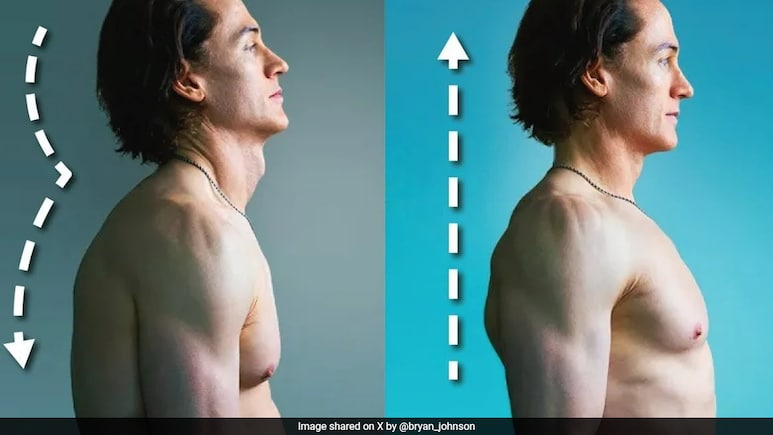
Some wealthy people are turning to treatments and experiments aimed at slowing ageing. Tech entrepreneur Bryan Johnson, for example, has previously tried injecting plasma from his 17-year-old son, although he later said he saw no benefit from it.
Al-Khalili, who will deliver this year's Royal Institution Christmas lectures on the subject of time, said humans have only a limited period in the universe.
"We have a finite interval of time in which we exist in the universe. And the more I study the nature of time, the more I think about it, the more I realise that I just want to make the most of the time that I have," he said.
"We're [here for] a blink of an eye compared with the age of the universe. If I spend that blink of an eye trying to extend it to two blinks of an eye, I'm not sure if that is actually a worthwhile thing to be spending my life doing."
What is time?
Al-Khalili has been interested in the nature of time since childhood. He said his father, an engineer, once told him that nobody really understood what time was.
"I had no idea what he was talking about," he said. "It was only after training as a physicist you realise that, actually, the notion of time - our commonsense view of time - somehow it is very far removed from the way we think about time in physics in particular."
According to The Guardian, Al-Khalili will also explain how Albert Einstein's theories changed our understanding of time.
"What I might call a second would be longer than a second for you if I was flying past you with my clock in a rocket," he said. "I'll say, look, it's ticking by one second. And you'll say, no, actually, five seconds have gone by. You're doing everything in slow motion."
Gravity also affects how time passes.
"That for me is the most spine-tingling aspect to it, that time runs at different rates depending on how strong gravity is."
Could time travel be possible?
Al-Khalili is also planning to discuss time travel during his Christmas lectures. He said that, mathematically, travelling backwards in time is possible under certain conditions.
"Mathematically, it is possible to travel back in time," he says.
He compared the idea with a rollercoaster travelling forward while somehow looping back to its starting point.
"You're travelling forward along the rollercoaster, but what's happening is you're doubling back on yourself and arriving back at your starting point. It's the same sort of thing [with time travel]. What's called a closed time-like curve in relativity, is somewhere in space-time which is so warped and curved by gravity that you're travelling what you regard as forward in time, but in fact you're looping back through space-time to a moment before you started," he said.
"But the problem, of course, is most physicists think 'surely that is impossible', because time travel into the past leads to all sorts of paradoxes."
Travelling into the future is theoretically easier. It could happen by travelling close to the speed of light or by being near an extremely strong gravitational field, such as that surrounding a supermassive black hole.
The mystery of time
The physicist will also address one of the biggest questions about time: why it appears to move in only one direction.
"Things decay, batteries run out, balls roll downhill, we grow older, your children's bedroom gets more messy, not more tidy - unless you intervene," he said. "All those things point to a directionality to time, and yet fundamentally our equations say there is no preferred direction in time."
Al-Khalili says he believes he has found an explanation for this so-called arrow of time. The Guardian reported that he plans to reveal his explanation during the Royal Institution Christmas lectures.
"In the lectures, I'm going to give an explanation for how to solve that problem," he said. "I won't give any spoilers, that's for the Christmas lecture. I have solved the problem of the arrow of time."
Track Latest News Live on NDTV.com and get news updates from India and around the world

