





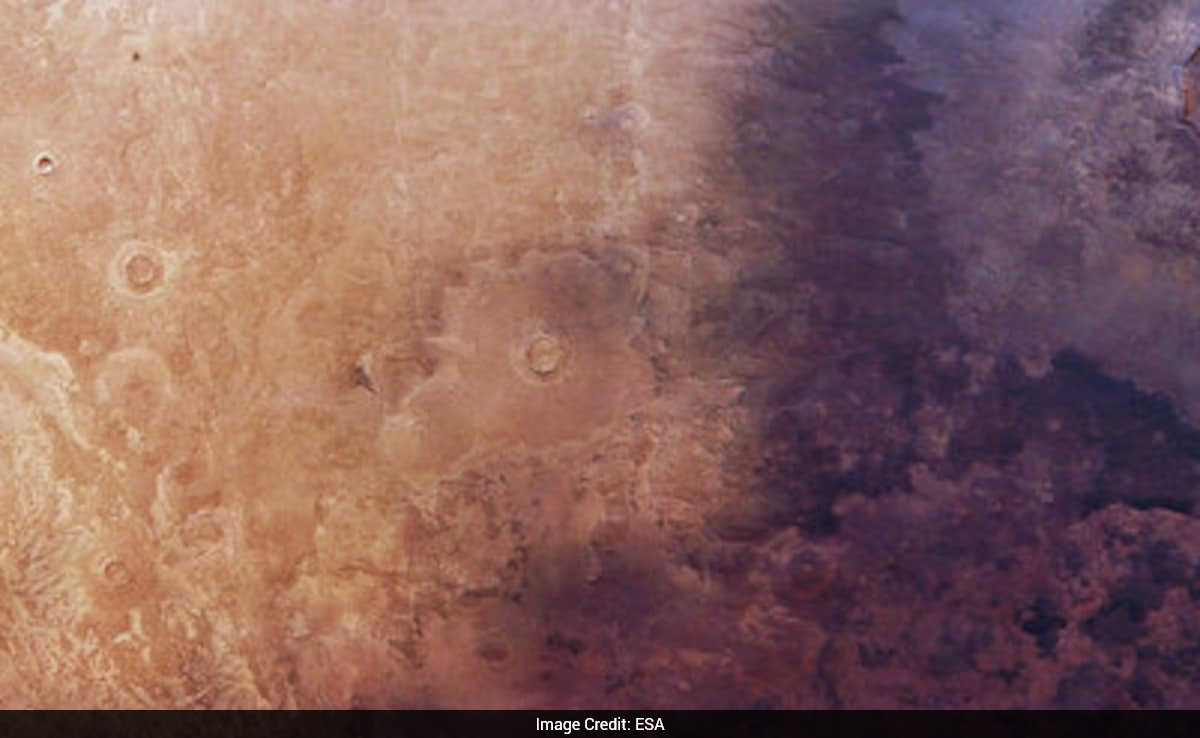
European Space Agency (ESA) has shared a striking new image from the Mars Express spacecraft, revealing a surface of two halves: bright, tan sands clashing against dark, moody volcanic ash. "Mars has a known history of volcanic activity; it even hosts the largest volcano in the Solar System, Olympus Mons, which stands at more than double the height of the largest on Earth (Mauna Kea)," ESA wrote on its website.
The image taken by Mars Express's High Resolution Stereo Camera (HRSC) shows how the Red Planet has changed in a short amount of time. When NASA's Viking orbiters first photographed this same spot in 1976, the dark ash was barely visible.
When it comes to dark material, it is thought to have been made and distributed by volcanoes. The dark material is rich in 'mafic' minerals that form at high temperatures, olivine and pyroxene.
Also read | Astronomers Share New Insight About Origins Of Interstellar Comet 3I/ATLAS
See the post here:
Scientists believe either the winds have spread the ash across the landscape, or the winds have stripped away the lighter dust that used to hide the dark volcanic material.
At the top of the photo, a 15 km-wide crater sits in the middle of the dark ash. It is surrounded by a “blanket” of lighter material that was blasted out of the ground when a space rock hit the surface.
Inside the crater, researchers spotted "squiggly lines". These are signs of icy material slowly creeping across the crater floor over many years.
Also read | Man Claims Using Indian Surname In "Fake" Resume Increased Job Chances, Sparks Debate
To the right, the ground is covered in "scalloped depressions" - rounded pits that look like wavy-edged bowls. These form when underground ice turns into gas or melts, causing the ground above to collapse.
The bottom half of the image features a series of massive, shadowy ditches. These trenches are roughly 20 km long and 2 km wide.
"These ditches are formed when the surface cracks, either because layers of wet sediments form weak points or because of tectonic activity," ESA wrote.
Track Latest News Live on NDTV.com and get news updates from India and around the world

