





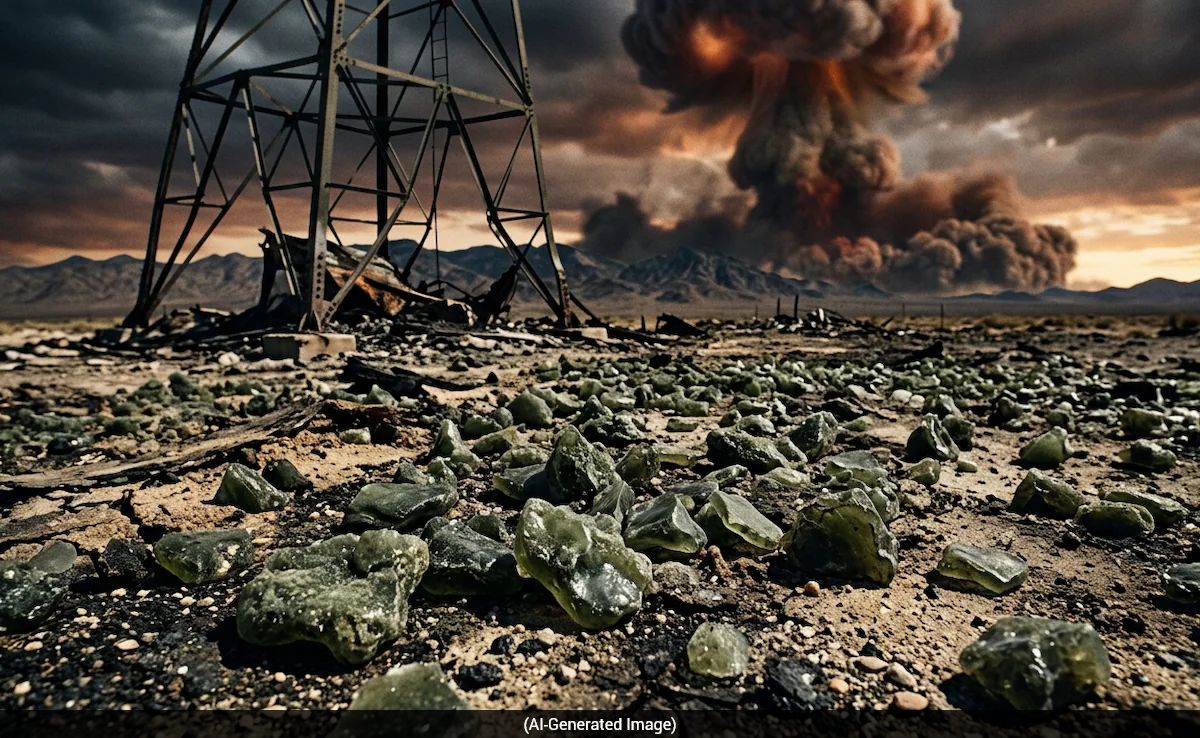
In a chilling reminder of the destructive power of nuclear weapons, scientists continue to study a rare radioactive mineral that was accidentally created during humanity's first-ever atomic bomb test in 1945. The mineral, known as "trinitite", was formed after the United States conducted the historic Trinity nuclear test in the deserts of New Mexico on July 16, 1945. The explosion generated temperatures so intense that the desert sand melted instantly, cooling later into a strange green glass-like substance that remains radioactive even today.
According to a Forbes report, the blast released energy equivalent to nearly 20,000 tons of TNT, creating conditions never before witnessed on Earth. The resulting material contained melted sand, bomb fragments, tower metal and radioactive isotopes fused together into a completely new mineral formation.
The report noted that trinitite was initially collected as a souvenir by visitors unaware of its radioactive dangers. Authorities later banned removal of the material from the Trinity site after radiation risks became widely understood.
Researchers say trinitite is more than just radioactive debris - it is a geological marker of the beginning of the nuclear age. Modern studies have also identified unusual crystal structures and previously unknown compounds inside samples collected from the blast site.
Forbes further reported that traces of radioactive isotopes such as Cesium-137, Americium-241 and Cobalt-60 are still present in many samples decades after the explosion. Scientists believe the material could survive for millions of years, effectively preserving evidence of humanity's first nuclear detonation in Earth's geological record.
The Trinity test eventually paved the way for the bombings of Hiroshima and Nagasaki during World War II, events that changed global history forever. Today, trinitite stands both as a scientific curiosity and a haunting reminder of the consequences of nuclear warfare.
Track Latest News Live on NDTV.com and get news updates from India and around the world

