




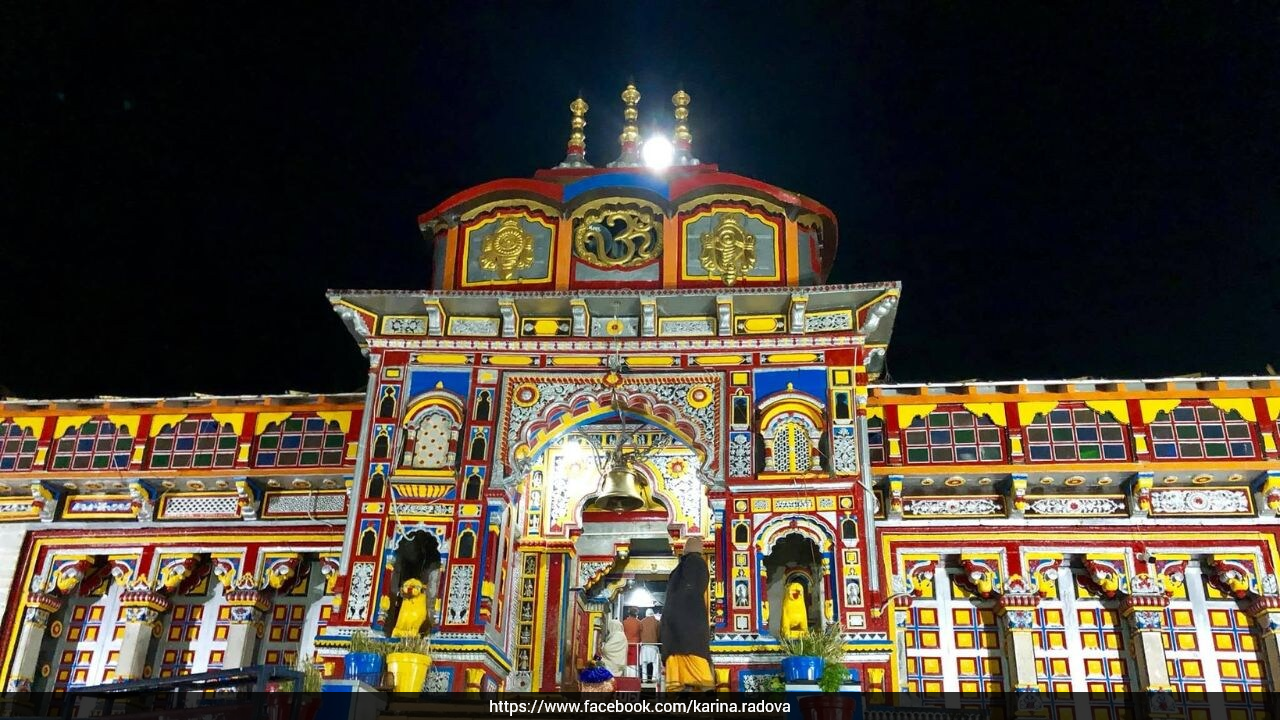
A new scientific study has warned that ice avalanches from hanging glaciers above Badrinath Township in the central Himalayas could expose hundreds of buildings and key infrastructure to danger, and has urged authorities to act early.
The research, titled "Vulnerability assessment of hanging-glacier avalanches in Badrinath Township, Central Himalayas, India", looked at three hanging glacier sites surrounding the holy town. Researchers used remote-sensing data and model-based methods to estimate where ice could break off and how much of it might fall. They then used the Rapid Mass Movement Simulation (RAMMS) model to show how such avalanches might travel downhill.
The scientists ran the simulations under low, medium and high mobility conditions by changing the friction values within ranges based on terrain and elevation. The study says flow behaviour was "primarily influenced by release volume, glacier slope, and downstream terrain". Larger release volumes and steeper slopes generally led to stronger flow and longer runout.
The high-mobility condition consistently produced the most severe results. However, the gap between the low and high conditions was fairly small. According to the study, the shift from low to high mobility changed maximum height by "2.3 to 6.7 per cent", pressure by "2.9 to 3.8 per cent", deposition by "0.9 to 7.4 per cent" and velocity by "1.3 to 1.8 per cent" across the three sites.
Among the three locations, Site 2 emerged as the most dangerous for Badrinath.
Under the high-mobility scenario at Site 2, the assessment indicates that about "398 buildings" could be exposed, along with "2.66 km of transportation infrastructure", "3.87 ha of agricultural land" and "15.57 ha of forest cover". Critical facilities, including a helipad and parking areas, also fall within the exposed zone.
The study also makes an important point about how avalanches behave. It notes that runout "is not controlled solely by release volume". Favourable channel shape and downstream terrain can keep an avalanche moving even when the amount of ice released is comparatively smaller.
The authors say the findings show an "urgent need" for detailed, site-specific hazard assessments. They also call for early warning systems, stronger land-use planning and better awareness among local communities to reduce the risk of future ice avalanches in the region.
Badrinath is one of India's most important pilgrimage towns and draws large numbers of visitors every year, which makes preparedness especially important.
Track Latest News Live on NDTV.com and get news updates from India and around the world

