




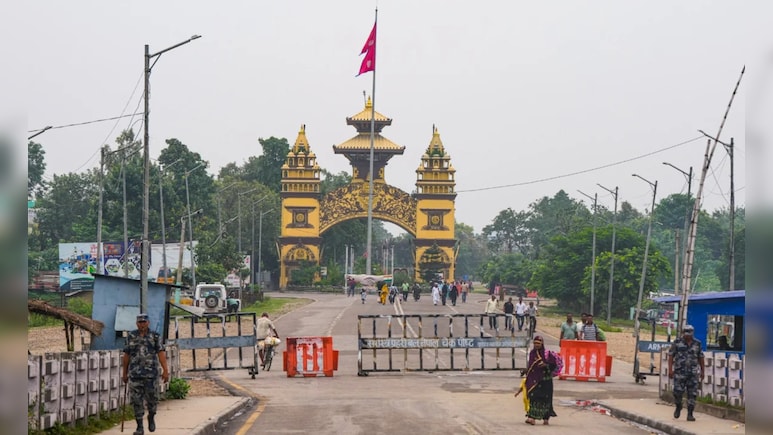
Nepal is all set to vote tomorrow for its first election since the September 2025 'Gen Z' protests and the third after the promulgation of the 2015 constitution. The candidates will compete for 275 parliamentary seats, of which 165 members will be selected through the direct first past the post system (FPTP), whereas 110 will be selected through the proportional representation system. Of the 120 parties which had initially registered, 68 fielded their candidates, with a total of 3,406 candidates contesting in the direct FPTP election. The elections are happening almost two years before their previously scheduled date of November/December 2027 owing to the Gen Z protests which led to the resignation of the then Prime Minister, K.P. Sharma Oli from the helm and spearheaded an overarching overhaul in how politics is practiced in the country. As the 18,903,689 voters prepare to vote tomorrow, expectations abound about the extent to which these elections will change the trajectory of Nepal's politics.
What's At Stake?
Politics in Nepal has generally been characterised as a 'game of musical chairs', a reflection of power switching hands amongst the three major parties and their leaders- the Communist Party of Nepal (Maoist Centre) [CPN (MC)], led by Puspa Kamal Dahal Prachanda, the Communist Party of Nepal ( Unified-Marxist Leninist) [CPN (UML)] and its leader K.P. Sharma Oli and the Nepali Congress (NC) led by Sher Bahadur Deuba. Over the last three and a half decades, these parties and their leaders have hatched fragile coalitions with each other, hinged on flimsy and self-aggrandizing power-sharing arrangements in order to retain their control on the government. In 2017, the CPN (UML) emerged as the biggest party whereas 2022 saw the NC rising to the top. Ultimately by July 2024, the CPN (UML) and the NC were leading a coalition government with Oli as the Prime Minister. It was this government which was overthrown after the Gen Z protests. Previously, much of the discussions preceding the elections would focus on the formation of pre-poll alliances which would quickly dismantle once a particular party gained the highest votes. These making and breaking of coalitions has led to a situation where no one Prime Minister has successfully completed their five-year term in office.
This saturation with the same set of leaders and their failure to bring in any reforms in the country also led to the emergence of certain new actors in the last elections in 2022. The Rashtriya Swatantra Party (RSP) under Rabi Lamichhane emerged as the fourth-largest party. But the mood before the elections this year is different.
The political battlefield is now starkly different yet distinctly similar to how it used to be in previous elections. Of the established parties, only the CPN (UML) has failed to bring in a fresh change in leadership, with Oli retaining his position as the chair of the party and its prime-ministerial face. He is contesting from his home constituency Jhapa-5, where he has previously won six times. When the protests broke out last year, Oli had framed them as an external attempt to destabilise his government and threaten Nepal's sovereignty and integrity. He maintained his strong rhetoric and refused to take responsibility for the violent crackdown on the protestors which led to the death of 19 people on day 1 of the protests. He subsequently resigned, but in the period between his resignation and the elections, he kept his tempo high about the ulterior motive of the conspirators who conducted the protests. He rejected the dissolution of the House of Representatives and urged the Supreme Court to restore it while calling the interim government illegal. Despite this, he is now contesting the elections in hopes of retaining the prime ministerial seat even as the anti-incumbency sentiment in the country is at its peak.
The NC on the other hand has seen some degree of change, with the party's leader, Sher Bahadur Deuba, who is no longer contesting from his home constituency of Dadeldhura being pushed to the backseat and the emergence of Gagan Thapa as the party chair. The senior Deuba, and his wife, Arzoo Rana Deuba who was the foreign minister in the previous government came under the ire of the protesting groups last year. The acrimony between Deuba and Thapa had been going on for a while, particularly since the NC's decision to align with the CPN (UML). Deuba's reticence to hold a special convention despite support from his party members and Thapa's decision to organise a special convention despite that, the validity of which was upheld by the Supreme court as well, led to his ascendance in the party as the prime ministerial candidate. The Maoists under Prachanda have also lost much of their leverage after the protests. His CPN (MC) has formed another political party called the Nepali Communist Party (NCP), composed of around 10 other smaller parties, including CPN (Unified Socialist) under Madhav Kumar Nepal.
The Emergence Of RSP
Beyond the established parties, the RSP has emerged as a major contender, banking on the popularity of the former Mayor of Kathmandu, Balen Shah who is now the party's prime ministerial candidate. His decision to contest from the Jhapa-5 constituency, against Oli, will see a clear competition between the old and the new faces of Nepal's politics. His tenure as a mayor was popular for his action-oriented approach and his focus on urban infrastructure and health services, reasons for which he was also considered as the potential interim PM after the protests broke out. But reservations about his ad hoc and unilateral ways of working still persist, even as the optimism surrounding his candidature remains high. Other smaller parties with a focus on nonideological, technocratic issues are the Ujaylo National Party (UNP), founded by the former chief of the Nepal Electricity Authority, Kulman Ghising. The Rashtriya Prajatantra Party (RPP) is also in the fray, albeit less popular.
When the protestors came out on the streets last year, their grievances were all-encompassing. They were done with the elite capture of power which had persisted over the years, the widespread corruption, lack of employment opportunities and unceasing political instability. The then government's decision to outrightly ban 26 social media sites was thus the final strike, a distinctive moment which compelled the people to speak up for their rights.
Nepal ranks 107 out of 180 countries in the Transparency International's corruption perceptions index of 2024. As per the World Bank, the level of unemployment in the country is 10.7 percent, with youth unemployment alone being 20.7 percent. People falling in the 15-34 age group make up 36 percent of the total population and 47 percent of the total working population. In Nepal, over 7 million citizens have migrated outside the country in the last three decades, and remittances make up 26.4 percent of the country's GDP as of 2024 according to the World Bank. The constant changes in the governments and the hatching of different coalitions makes it impossible for any one party to prioritise working on these long-term, structural issues afflicting the country.
While the election documents and manifestos of the parties touch upon these issues, there is a consensus that their approaches lack a proper plan of action in terms of how they attempt to achieve these targets. There is also no clear articulation of how the grievances made by the GenZ groups will find a mention in their policy priorities if they assume power. Of the total candidates running for the direct election, only 31 percent are between the ages of 25-40, while 56 percent are between the ages of 41 and 60. The percentage of women candidates is also dismal, just 388 (11.4 percent)even as 51 percent of the country's population is female and most are running as independents.
The results of this election will have a major bearing on Nepal's politics in the coming years despite who assumes power after tomorrow. Even as the RSP wave has gained momentum in this election, questions about whether the popularity of rapper-turned mayor Balen Shah could translate into votes await answers. The nature of Nepal's electoral system precludes the possibility of a single party gaining the majority, which would also raise questions about possible coalition, a never-ending cycle in the country's short democratic history. Even as more sobering analyses highlight the bleak chances of the political system seeing a complete transformation, Nepal's traditional leadership have come to realise that they can't continue to enjoy power without taking the younger generation along with them.
(The writer is a Junior Fellow with ORF's Strategic Studies Programme. Her research focuses on India's neighbourhood, with particular emphasis on Nepal, Afghanistan, and Pakistan.)
Disclaimer: These are the personal opinions of the author

