






Like everything else, the landscape of global cricket has also changed over the decades. And like in most things of modern life, change has (amongst other things) ushered in heavy doses of chaos, anxiety and bad blood. Gone are the days when a cricket rivalry meant only an on-field battle of skills and nerves between two very talented groups of players. When people would gather in living rooms, in clubs, at roadside tea stalls, in college grounds, etc, to talk about which batter is in red hot form, or which bowler has the skills to torment an opposition batting line-up, or which captain has more tricks up her or his sleeve. Now, the 'rivalry' that is mainly talked about and makes headlines, often well before a tournament commences, is the off-field clashes between countries, cricket boards and officials. Sure, the purists still exist, but they are outnumbered. Trying to keep sports separate from politics is now a futile exercise.
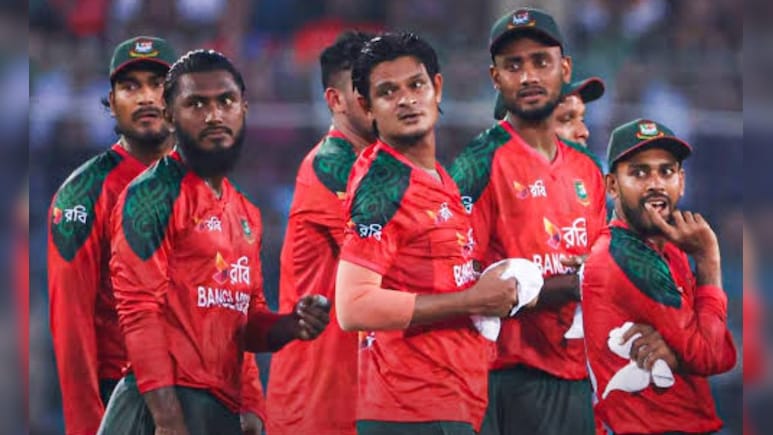
In the upcoming ICC men's T20 World Cup, cricketers of a talented team which had officially qualified have been robbed of a chance to play and entertain fans on the biggest stage of them all. Along with that, the almost 18 crore people of that country, where cricket has become an intrinsic part of national identity, will now not get to see their heroes in action. Bangladesh were drawn with England, the West Indies, Nepal and Italy, in Group C of the upcoming World Cup, which will be played in India and Sri Lanka. The Bangla Tigers are the third-highest ranked team in that group and in the extremely fickle T20 format, they could have potentially made it to the Super Eight stage, with one good day's worth of cricket. Beyond that, who knows what could have happened. Now, all that is just a hypothesis, which is a crying shame.
India and Sri Lanka were announced as co-hosts in November 2021 as part of the ICC's 2024-2031 cycle of men's tournaments. There were credible reports of the Hindu community in Bangladesh being targeted from August 2024.
So, timing-wise, the biggest questions that need to be asked are...
- If the Bangladesh Cricket Board (BCB) and the Bangladesh government thought that there was a genuine security threat to their players in India, why weren't these concerns raised earlier?
- Why did their interim government direct the BCB to ask the ICC for a venue change for their matches scheduled to be played in India exactly a day after the Kolkata Knight Riders released Bangladesh fast bowler Mustafizur Rahman from their IPL 2026 squad (Mustafizur was released on January 3, 2026 and the BCB asked for a venue change on January 4)?
- Did the BCB confer with the BCCI about this directly?
- Why did the interim Bangladesh government ban all IPL broadcast and promotions indefinitely - what possible connection does this have with player security in India? Though the reason given for this was "in public interest", this was widely seen as a tit-for-tat retaliation to Mustafizur, the only Bangladeshi player in IPL 2026, being told he can't play in the IPL this season.
At this end, could the entire Mustafizur episode have been handled better? Absolutely. Everyone knew just how volatile the situation was in Bangladesh ever since the first anti-establishment protests began against Sheikh Hasina's government in July 2024, which quickly spiralled from peaceful demands to violent clashes. The safest thing to do, to avoid public backlash of any kind in India against Bangladeshi players, would have been not to include Mustafizur in the player auction. Instead, he was included, the Kolkata Knight Riders spent as much as Rs 9.20 crore to buy him, and then the franchise was asked to release him. Bangladesh clearly viewed this as being extremely humiliating. It also made things worse in terms of the diplomatic standoff. So, could this entire fiasco be avoided? It would have been unfair to Mustafizur himself, of course, but it would have been infinitely better to explain things to him at that stage instead of telling him, after he had secured a team and good money, that he couldn't play.
However, what the Bangladesh regime also needed to understand was that they cannot turn this into an ego battle, for the health of their cricket. There was just too much at stake. Despite being given assurances by the ICC of heavy security for their players and staff, while in India, and an ICC internal security assessment that showed no specific threat to their team, Bangladesh risked a bit too much by sticking to their stance of threatening to pull out of the World Cup. And ironically, at the end of the day, their attempt to salvage lost pride has backfired spectacularly and only meant more humiliation, with the ICC promptly replacing them with Scotland in the tournament. Those in Bangladesh who are taking these decisions need to understand the reality of the times we live in. The ripple effects, financial and otherwise, are going to be enormous. According to reports, there is the participation fee of $3 million or approximately 36.33 crore Bangladeshi Taka that they will not receive, along with any prize money that the team and the players would have potentially earned. The big blow will be the cut of ICC's central revenue. Bangladesh receives a 4.46% cut of ICC's annual revenue pie, which translates to about $27-30 million, going by recent projections. That's almost 60% of BCB's annual income that they have jeopardised. Also, by deciding to stick to their guns and not play the World Cup unless their last-minute demands for change of venue for their matches are met, Bangladesh will also be hit with a $2 million fine by the ICC. Under the ICC Member Participation Agreement, any member nation that withdraws from a tournament without any justified cause will be hit with this fine. Add to that the almost 300 crore BDT loss for the host broadcaster in the country, other losses in advertisement revenue and Bangladeshi players potentially losing endorsement deals with Indian companies. After all, in the modern game, visibility is the sponsors' holy grail.
Time heals almost everything, and perhaps the BCB will somehow tide over the financial repercussions. But what they have also severely risked is India's future bilateral cricket association with their neighbours, or, in other words, millions more in cricketing and broadcast revenue.
Regardless of which direction strictly diplomatic relations between the two countries are headed, cricketing relations going forward could well be strained. India are scheduled to tour Bangladesh later this year (the white-ball tour was postponed from August 2025 to September 2026). Will that go ahead, as planned?
The Bangladesh Sports Advisor, Asif Nazrul, while addressing a press conference in Dhaka, was quoted by a local Bangladeshi newspaper as saying that the ICC apparently flagged three things that could potentially translate into security threats at the World Cup: Mustafizur's participation in the World Cup, the Bangladeshi fans wearing their national jerseys and with the Bangladesh elections approaching (on February 12), there could be a heightened security threat. This, however, was refuted by an ICC source. PTI quoted the source as saying, "...What Asif Nazrul said is a complete lie. ICC's communication never mentions that Mustafizur's selection will be an issue. It's complete falsehood...There is no such advisory in formal communication."
So, the next question that has to be asked is, if there indeed was no such communication from the ICC to the BCB, at least as far as Mustafizur's presence is concerned, why state an untruth? Was it that important to stick to their stance, regardless of assurances and with so much at stake?
(The author is a former sports editor and primetime sports news anchor. He is currently a columnist, features writer and stage actor.)
Disclaimer: These are the personal opinions of the author

