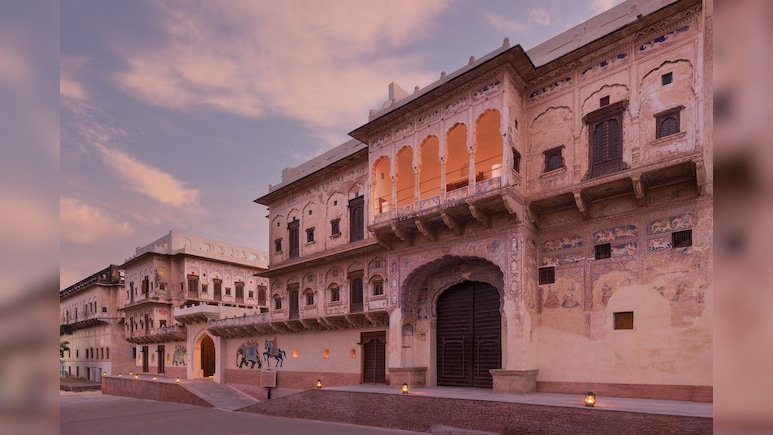
There's something wildly humbling about arriving in Mandawa after six hours on the road from Delhi and immediately being told to bow your head before entering your room.
Not metaphorically. Literally.
At Gulab Haveli, the 150-plus-year-old heritage mansion in Rajasthan's Shekhawati region, the doors are intentionally built low.
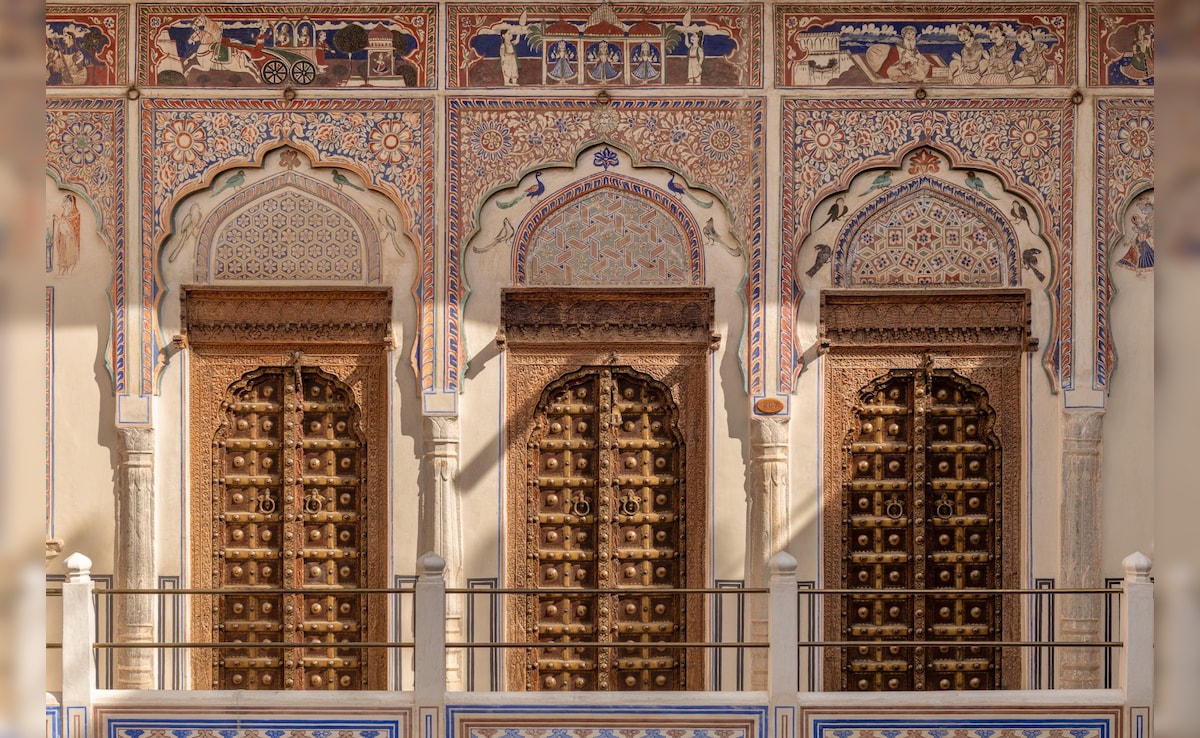
Frescoes across Gulab Haveli capture everything from royal processions and hunting scenes to stories of war, trade and changing times. Photo: Gulab Haveli
"In olden times, everyone entered with their head slightly bowed as a mark of respect," the duty manager told me while opening the giant wooden door carved with fading floral patterns and brass detailing.
Two minutes later, I was standing in the middle of a courtyard where folk music floated through sandstone corridors, frescoes climbed up every wall in sight, and somewhere above me, hidden behind painted balconies and maze-like staircases, was a wedding room covered entirely in gold.
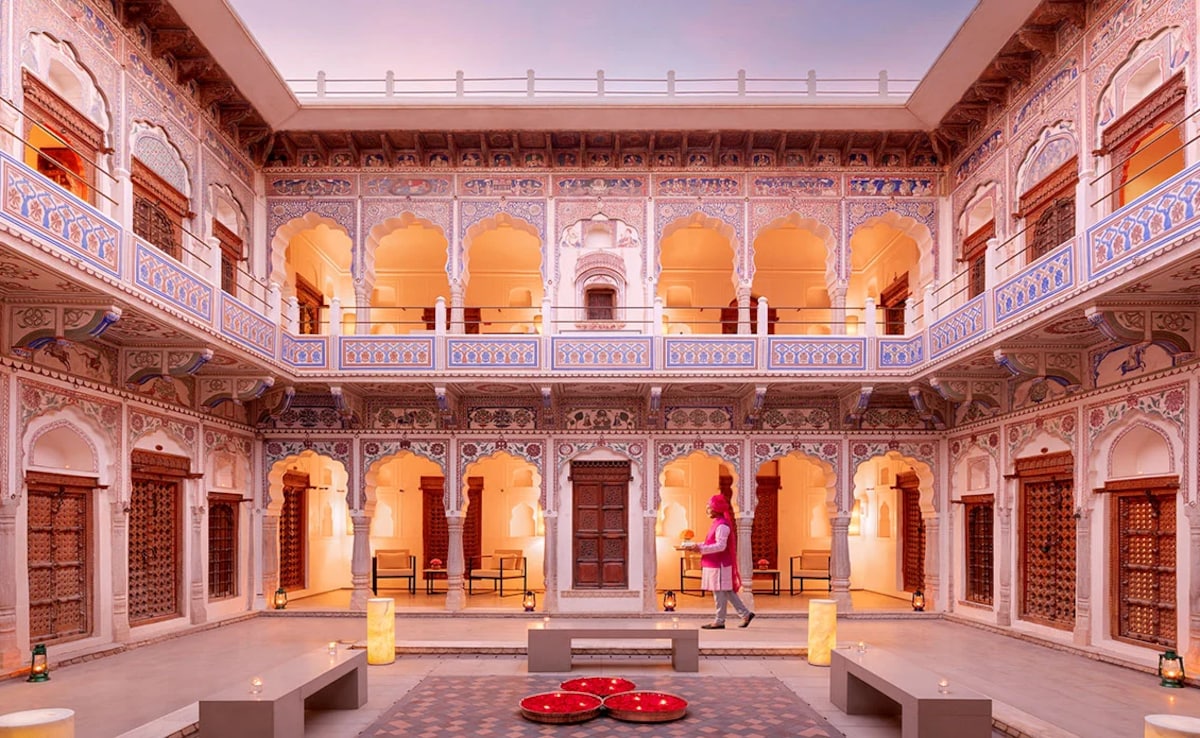
Built in the 1870s by Chief Trader Gulab Rai Ladia, the haveli emerged during the golden age of Shekhawati's merchant wealth. Photo: Gulab Haveli
Suddenly, the long drive felt worth it.
Mandawa Feels Like A Film Set, Because It Basically Is One
Often called the world's largest open-air art gallery, the Shekhawati region is dotted with more than 2,000 painted havelis.
Before I even got to the haveli, Mandawa already looked familiar.
The dusty roads, old havelis, painted walls and rugged lanes have appeared in films like Bajrangi Bhaijaan, PK, Jab We Met and Mimi, besides the series Dahaad.
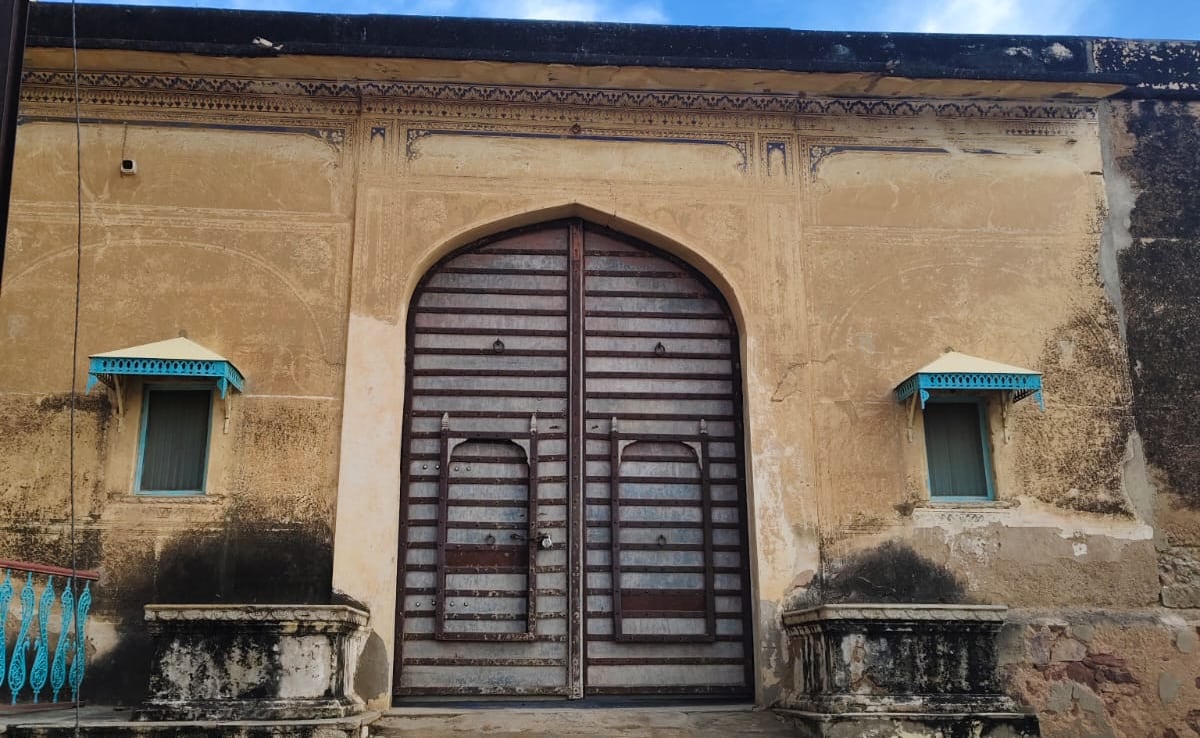
A filming spot from Bajrangi Bhaijaan. Photo: Author
And once you arrive here, it becomes obvious why filmmakers love it.
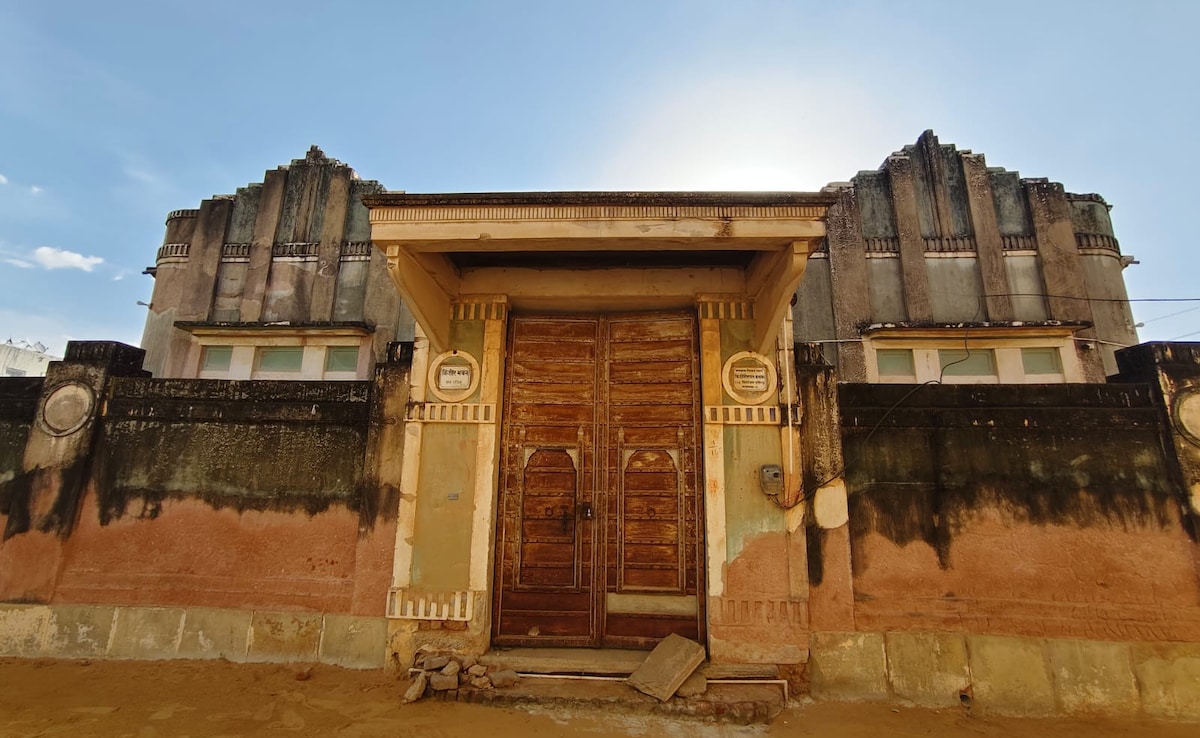
The haveli where Mimi was shot. Photo: Author
Mandawa does not feel polished or curated for tourists. It feels textured. Lived-in. The lanes are lined with fading frescoes, sleepy shops, wandering camels and giant merchant mansions.
It did not feel like entering a tourist town. It felt like walking into a forgotten chapter of India's merchant history.
In the middle of all this sits Gulab Haveli, now restored as IHCL SeleQtions Gulab Haveli: a 19th-century merchant mansion, once owned by chief trader Gulab Rai Ladia, one of Mandawa's wealthiest businessmen during the peak of the Silk Route trading era.
It has now been painstakingly restored into a heritage property that somehow manages to feel luxurious without sanding away its soul.
And honestly? The haveli itself is enough reason to visit Mandawa.
The Haveli Is Basically A Maze Of Secrets
A shower of flower petals, tikka, garlands and chilled welcome drinks introduced me to the haveli's quieter, softer rhythm.
The moment I stepped inside, Gulab Haveli stopped feeling like a hotel and started feeling like a giant storybook.
Built around the 1850s-1870s during Shekhawati's booming trade era, the triple-storeyed mansion belonged to chief trader Gulab Rai Ladia, whose business empire dealt in silk, spices, cotton and opium.
Back then, wealthy Marwari merchants competed with each other through architecture. Bigger haveli, richer frescoes, grander courtyards, it was essentially the 19th-century version of a billionaire flex.
And Gulab Haveli still carries that energy.
The property revolves around two traditional courtyards. The outer courtyard, called the Mardana, was where business meetings, guests and all public interactions happened.
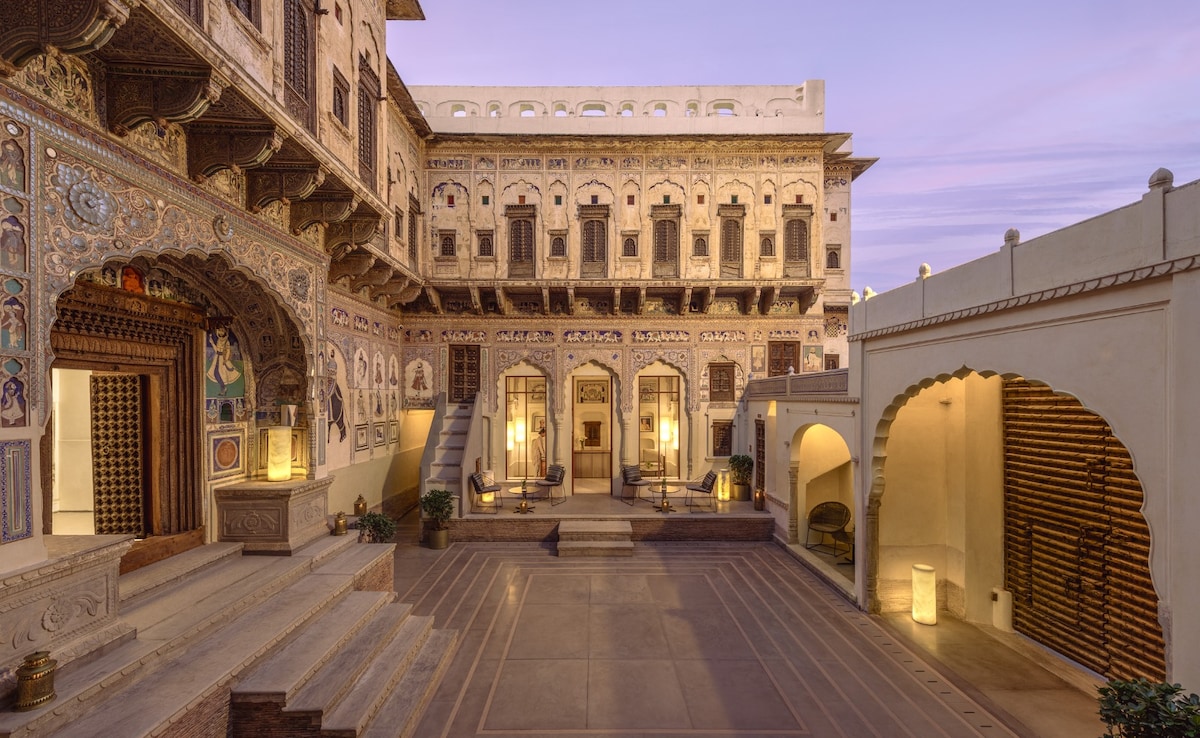
The Mardana courtyard. Photo: Gulab Haveli
Today, it transforms into the social heart of the haveli with folk performances, puppetry, evening drinks and guests lounging on charpoys under fairy lights.
Then comes the quieter Zenana courtyard, once reserved for women of the household. Narrow corridors, carved jharokhas and hidden corners make the whole haveli feel deliciously labyrinthine, like every staircase leads somewhere unexpected.
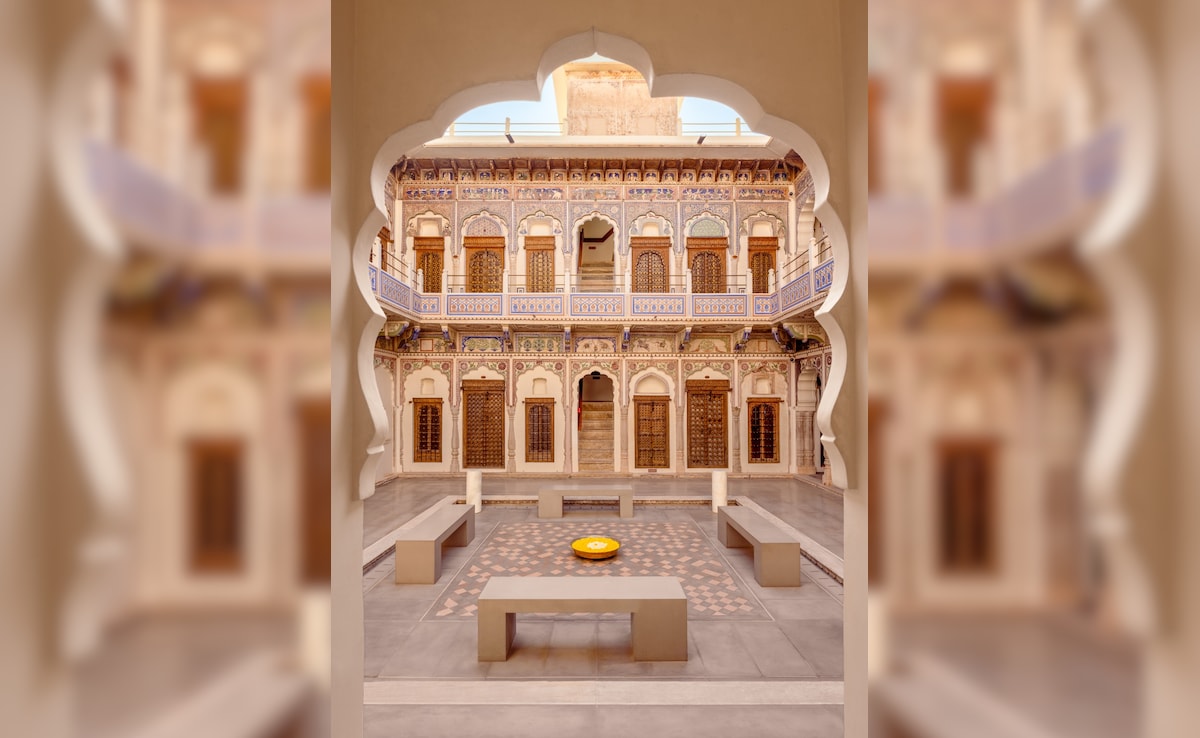
Gulab Haveli's towering frescoed facade rises quietly through Mandawa's narrow lanes like a painted memory from another century. Photo: Author
Even getting to my room became an experience.
You don't walk through straight corridors here. You pass tiny alcoves, painted walls, antique baithaks, hidden balconies and arches carrying fading floral artwork.
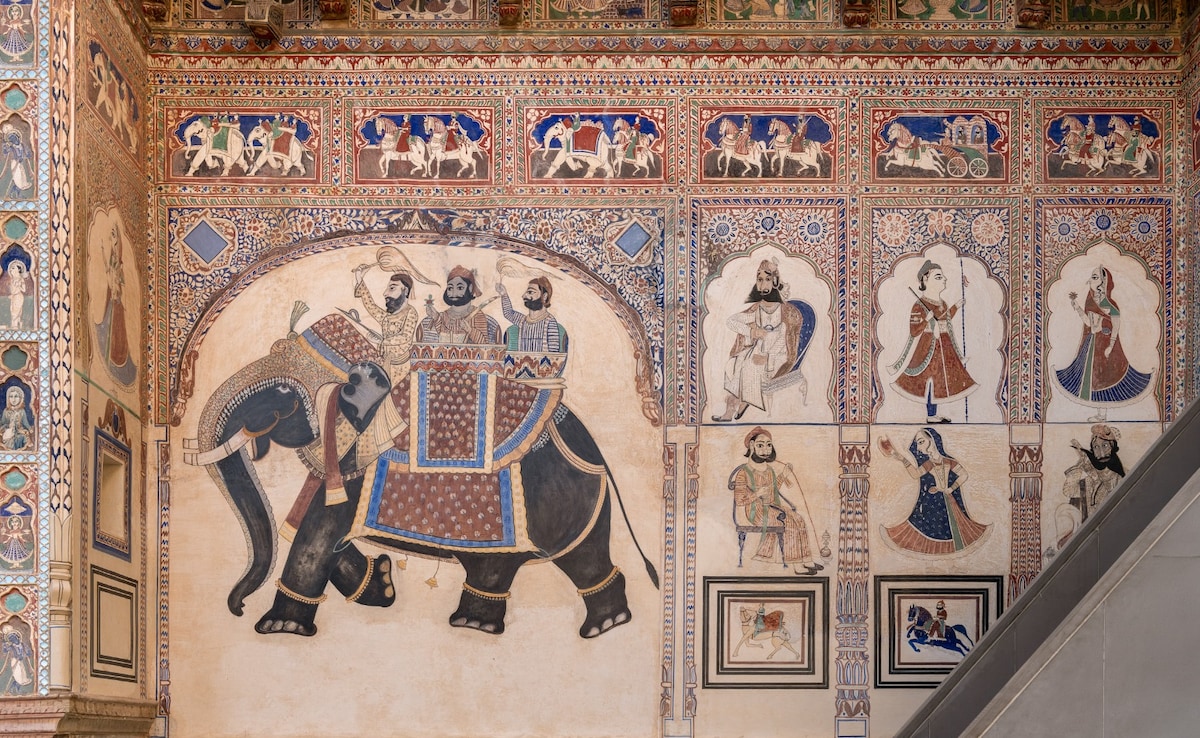
Frescoes depicting royalty, hunting and war. Photo: Gulab Haveli
Every few feet, somebody tells you, "This room used to be..." followed by a fascinating story.
One chamber apparently functioned as a "girls' gossip room" back in the day.
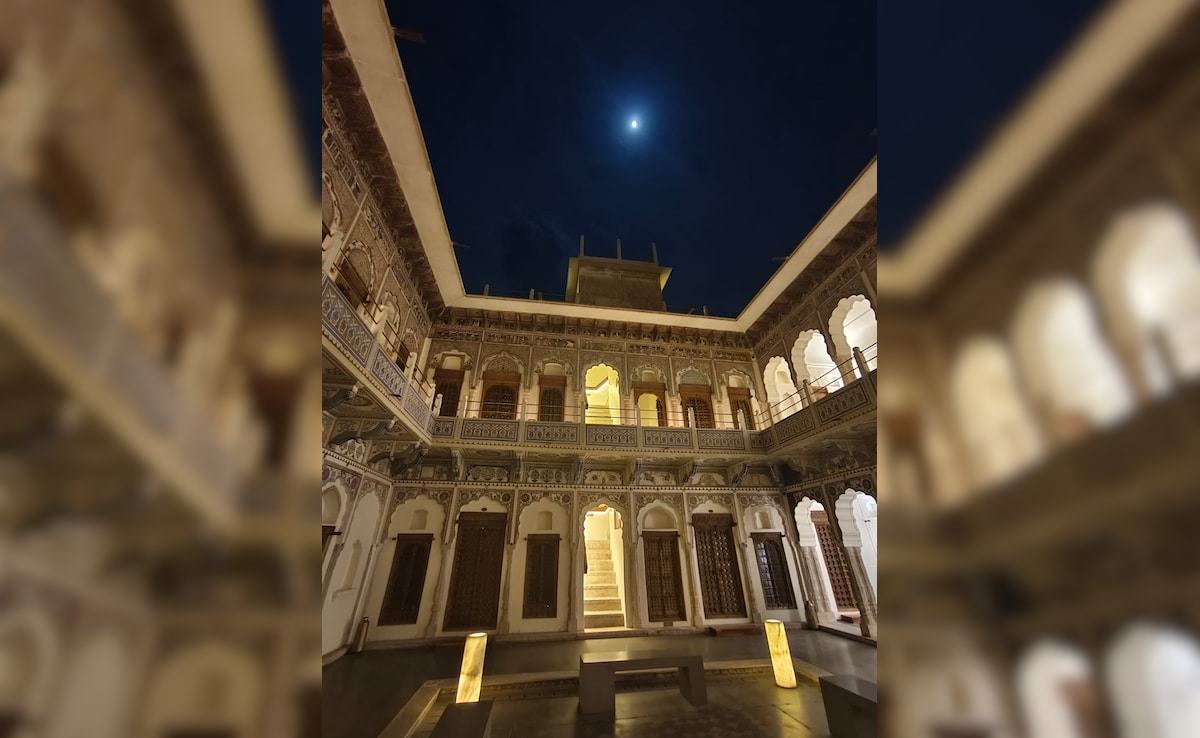
During the night, Gulab Haveli glows softly under lantern light, with its courtyards and frescoes looking even more magical. Photo: Author
Another had deaf attendants manually operating fans during brutal Rajasthan summers to ensure absolute privacy for the family.
And then there's the room everyone whispers about.
The Gold Painted Room Is Completely Insane
I thought people were exaggerating about the Gold Painted Room.
They were not.
Hidden on the upper floor of the haveli is what might genuinely be one of the most spectacular heritage rooms I've ever seen in India.
The room was gifted by Gulab Rai Ladia to his grandson for his wedding night, and no expense was spared while creating it.
The walls shimmer with gold detailing. The ceilings are embedded with thousands of tiny convex mirrors. Frescoes wrap around every surface: mythological scenes, miniature-style artwork, floral patterns and even erotic illustrations inspired by the Kama Sutra because, well, this was literally a nuptial chamber.
At one point, someone switched on the lights softly, and the mirrors began catching tiny reflections everywhere. The room glittered like jewellery.
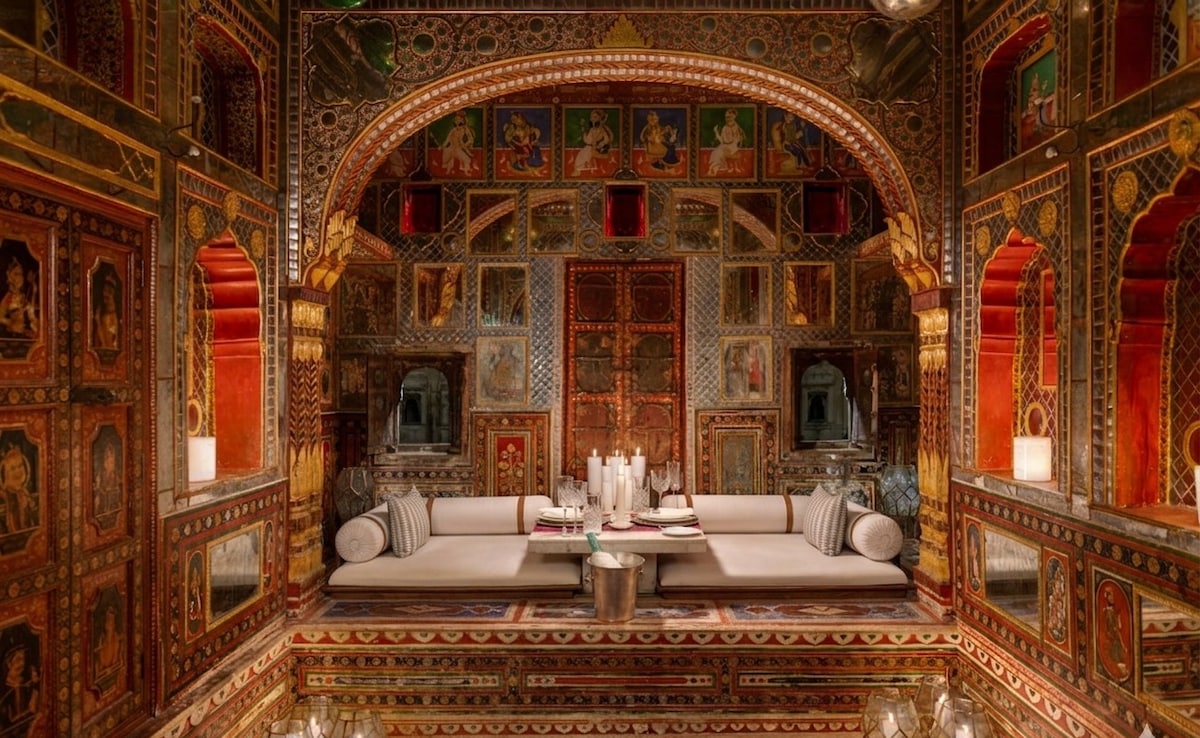
Inside the breathtaking 'Wedding Room' with gold inlay, mirror work and miniature-style paintings. Photo: Gulab Haveli
What fascinated me most was how personal it felt despite the extravagance. This wasn't some royal durbar hall built for public display. It was intimate. Romantic. Slightly theatrical in the most old-world way possible.
And unlike many restored heritage spaces that feel over-renovated, this room still carries the texture of time.
The floor itself, painted in trompe l'oeil, was designed to resemble a traditional dhurry carpet and still survives. The mirrors aren't perfectly polished. The frescoes have softened around the edges. It feels preserved.
Right beside it sits the Sheesh Mahal, now used as a gathering and event space layered with mirrorwork, coloured glass and arches that glow beautifully in the evening light.
The Rooms Make You Feel Like You're Living Inside History
Gulab Haveli has just 17 rooms and suites, divided into Superior Rooms, Deluxe Rooms and Luxury Suites.
What I loved most is that the restoration doesn't scream luxury every five seconds.
Yes, there are elegant bathrooms, plush beds, modern lighting and all contemporary comforts. But the original personality of the haveli remains untouched. The walls still carry restored frescoes. The limestone textures remain intact. Antique furniture sits naturally beside modern additions.
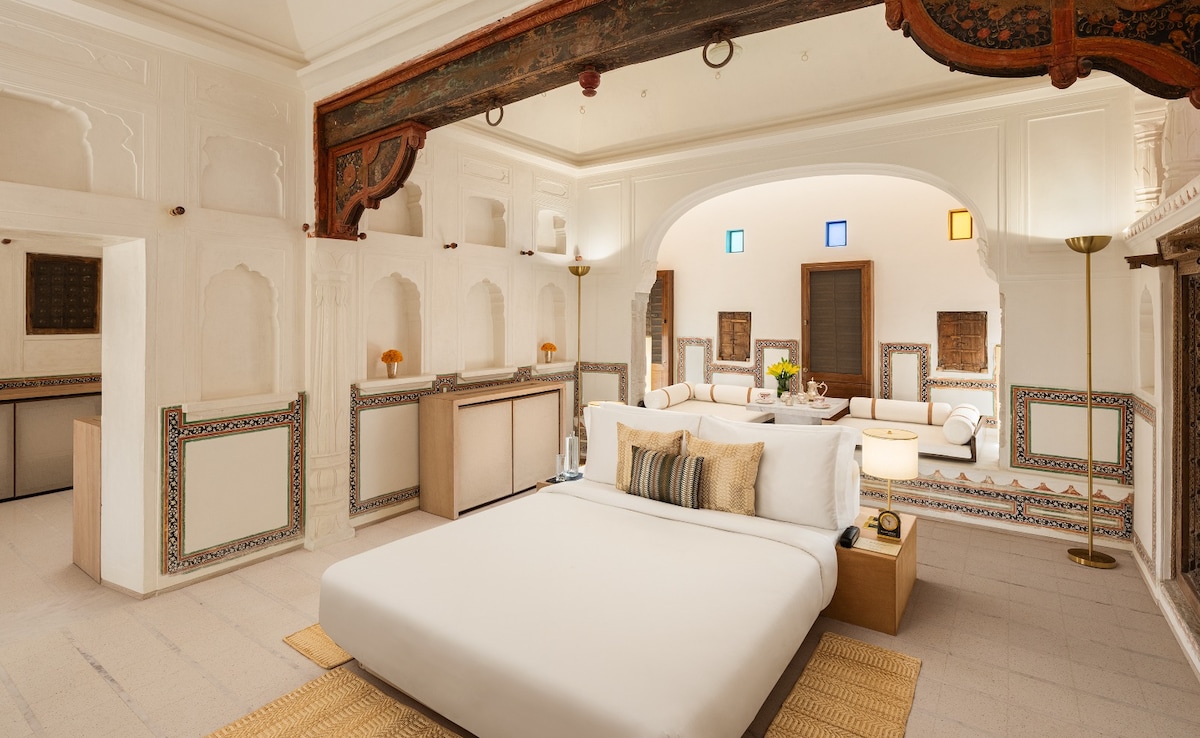
A luxury suite with traditional baithak seating. Photo: Gulab Haveli
Even the wiring and plumbing were hidden beneath floors during restoration to avoid disturbing the original structure.
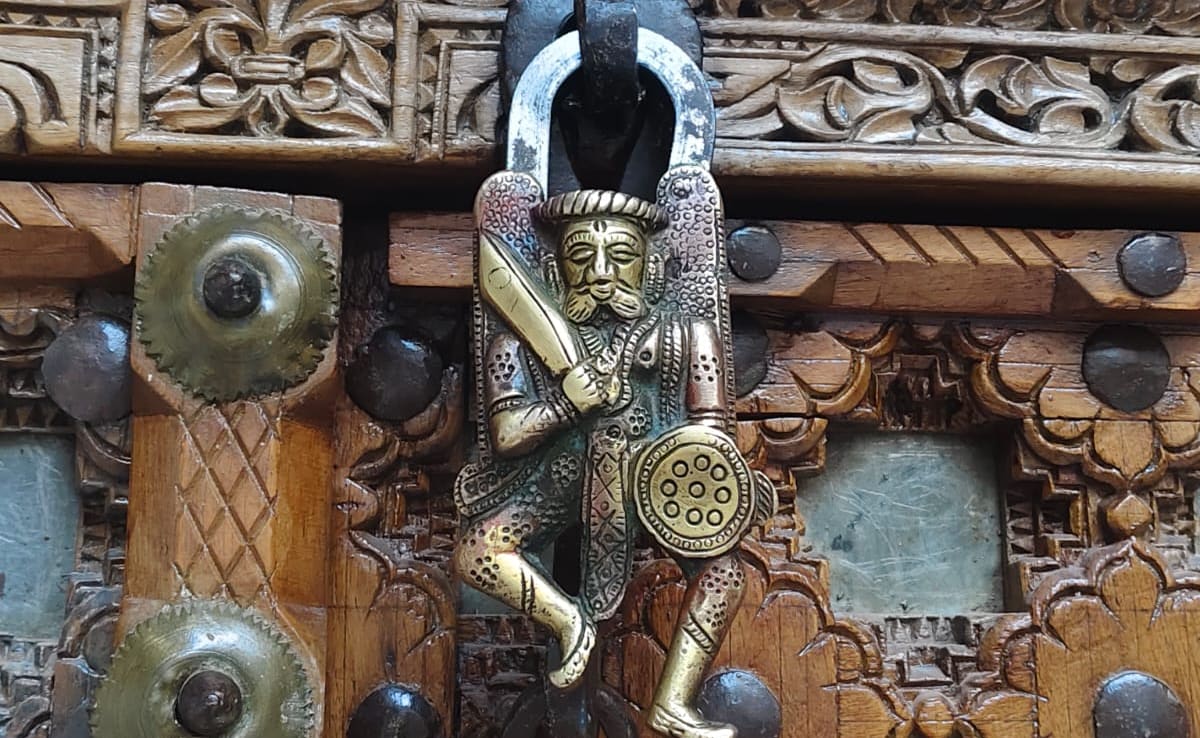
Even the vintage lock on the room door at Gulab Haveli feels like a small surviving piece of another era. Photo: Author
My room opened into the courtyard, and evenings there became my favourite part of the stay. Musicians performed Rajasthani folk songs while guests gathered around the courtyard, sipping drinks. Somewhere nearby, puppets danced under lantern light.
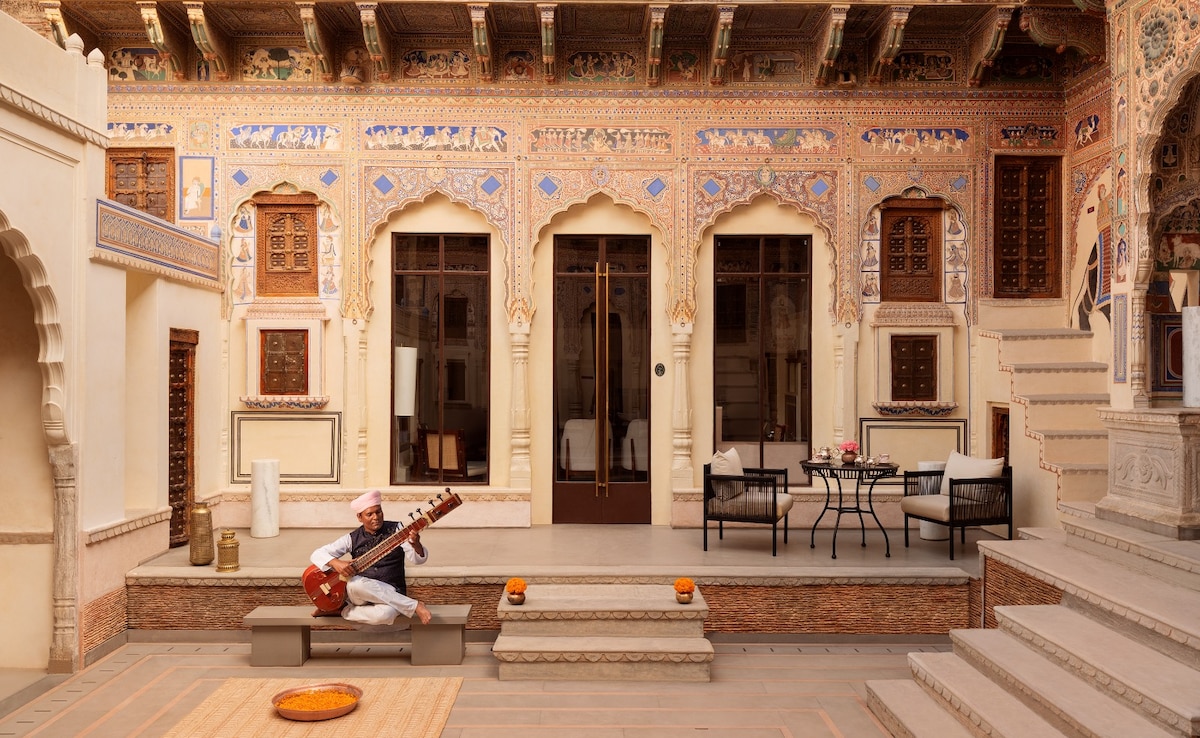
The Mardana courtyard, once reserved for trade, conversations and visiting merchants, now comes alive with music and evening gatherings. Photo: Gulab Haveli
The haveli felt alive at night.
The Shekhawati Thali Nearly Defeated Me
I knew Rajasthan took its food seriously. I was not prepared for the Shekhawati thali that Gulab Haveli served me.
The meal arrived in waves. One evening, I was served an elaborate Shekhawati thali so expansive it nearly covered the entire table.
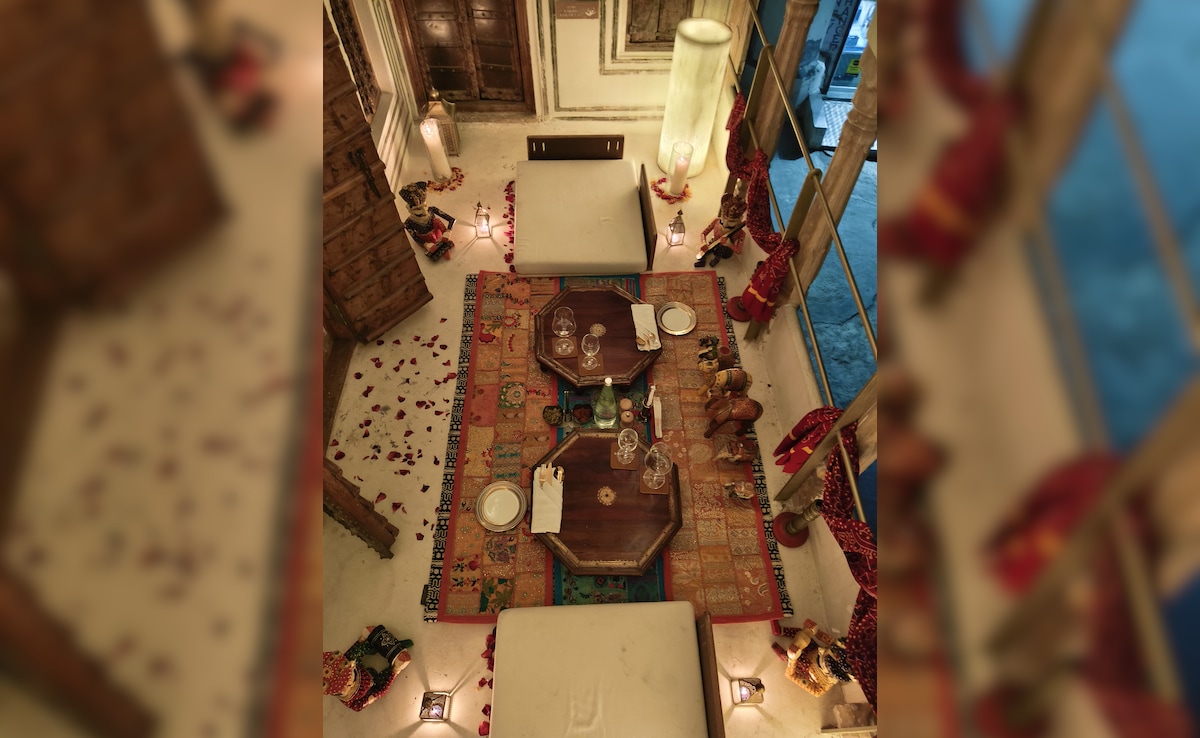
A traditional Shekhawati dining experience served chaupad-style, with the thali placed over a bajot beside intricately carved jharokhas. Photo: Author
There was dal-baati drowning gloriously in ghee, smoky churma, ker sangri cooked with desert spices, gatte ki sabzi, bajra rotis, missi rotis, spicy lehsun chutney sharp enough to wake every sense, local vegetables, pickles, papad, chaas and desserts.
I had already mentally given up on finishing halfway through the meal. And yet somehow I kept eating.
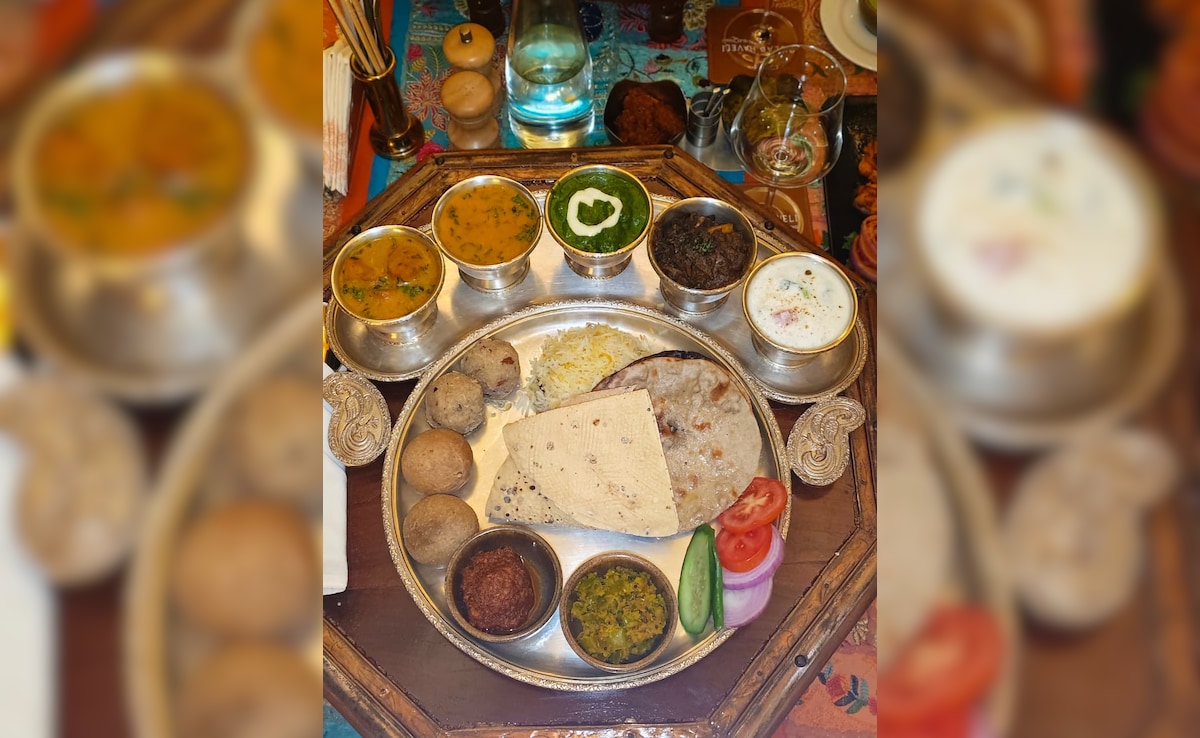
The elaborate Shekhawati thali at Gulab Haveli. Photo: Author
The food here doesn't feel curated for tourists trying "ethnic cuisine." It feels deeply local and comforting. At Resham, the haveli's all-day dining restaurant inspired by Silk Route flavours, the menu swings between regional dishes and globally influenced plates inspired by ancient trade routes.
One meal brought saffron-smoked paneer with rose petal chutney. Another included millet khichda and baklava.
The property's bar, Amal, meanwhile, became my late-evening escape after long walks through Mandawa.
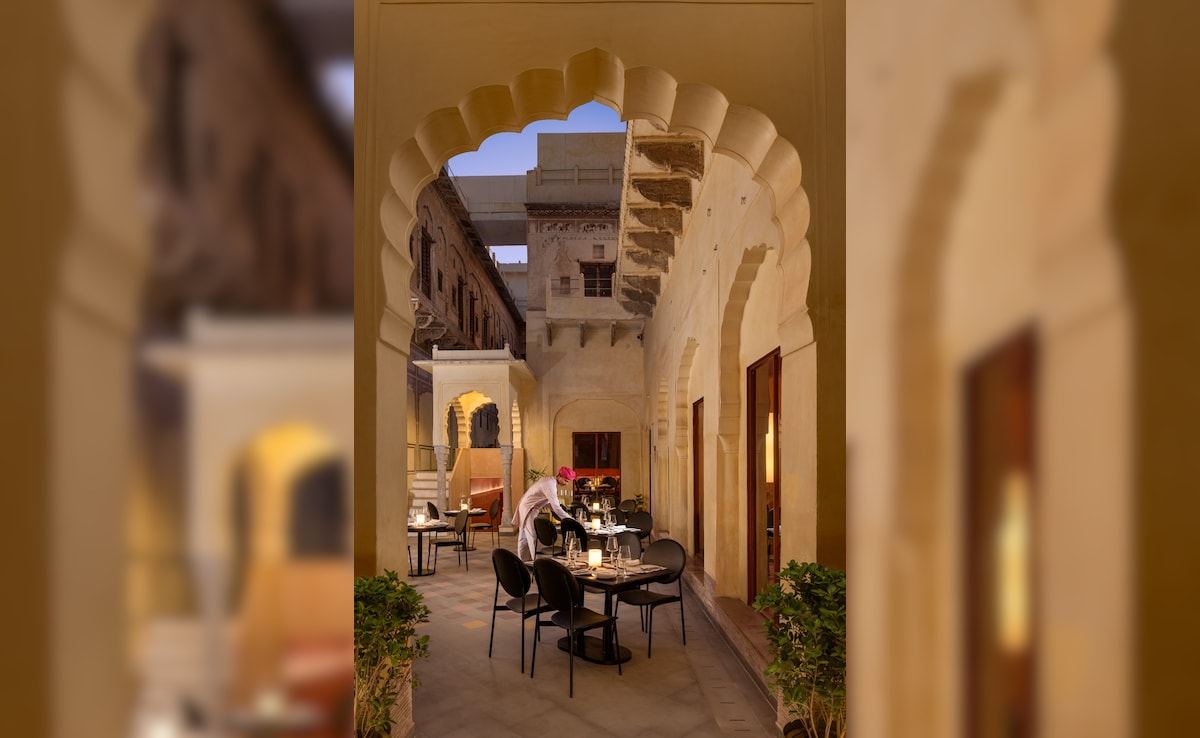
Resham, the haveli's all-day dining restaurant inspired by Silk Route flavours. Photo: Gulab Haveli
Inspired by old Marwari hospitality traditions, it has cosy corners, mezzanine seating and enough atmosphere to make you lose track of time.
Mandawa Is Best Explored Slowly
One afternoon, I climbed onto a camel and rode through Mandawa's narrow lanes while the town slowly turned golden around sunset.
Honestly, there is no elegant way to get onto a camel. But once the awkwardness ends, the experience becomes strangely calming.
From atop the camel, Mandawa looked even more cinematic: painted havelis glowing amber, children running through narrow lanes, old men sitting outside shops and walls covered in fading frescoes depicting everything from Hindu mythology to trains and British officers.
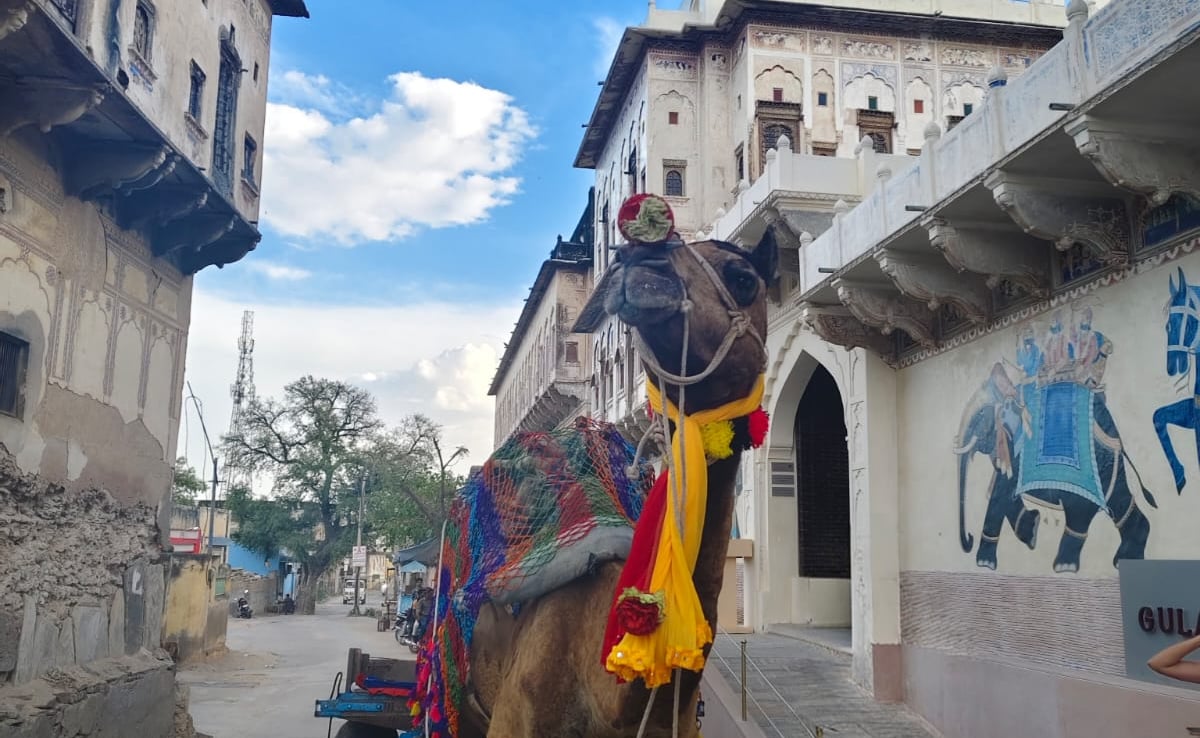
Camel rides through Mandawa's sandy lanes remain one of the most charming ways to experience the old-world rhythm of Shekhawati. Photo: Author
During a heritage walk, guide Deepak Sharma decoded the paintings like a walking historian with excellent comic timing. He explained how frescoes evolved over time, mythology eventually making way for gramophones, telephones, cars and colonial imagery as merchant families travelled across India.
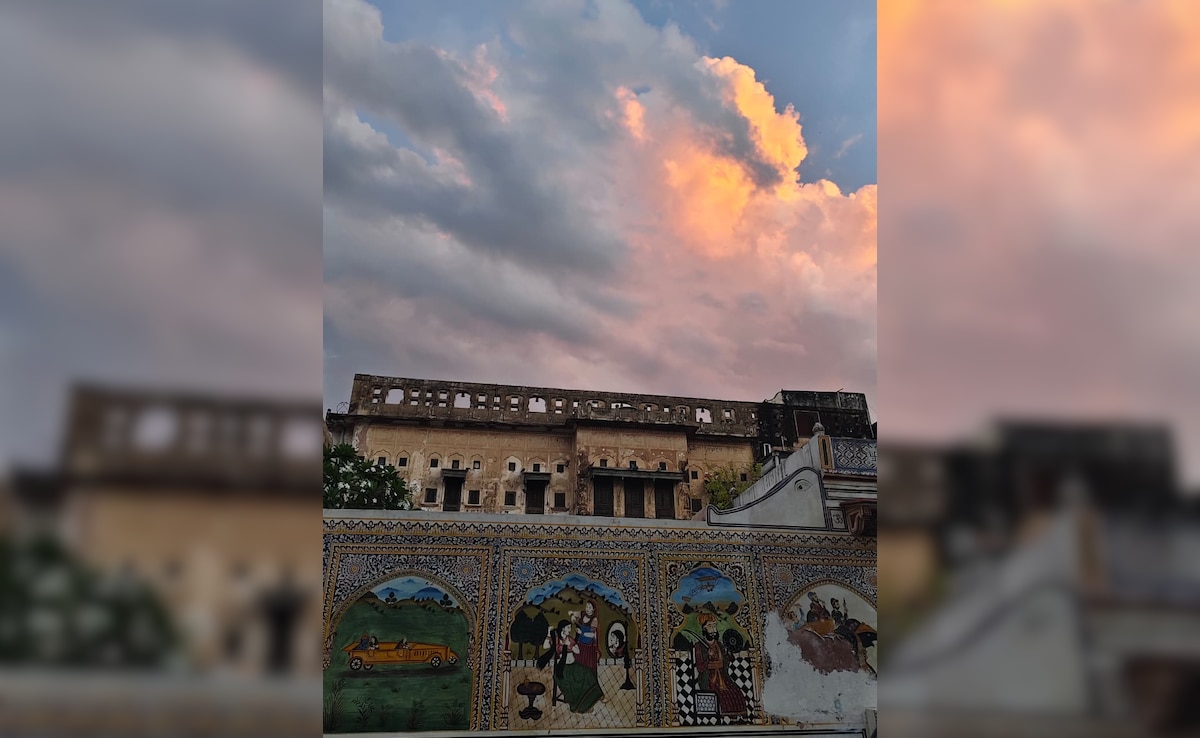
Shekhawati's iconic hand-painted havelis. Photo: Author
But somewhere between all the stories, he casually said something that captured Mandawa better than any fresco could.
"This is a place where Hindus celebrate Muslim festivals, and Muslims celebrate Hindu festivals," he told me proudly. "People here still know each other. That's why the crime rate is zero."
And weirdly, you believe him while walking there.
There's a softness to the town despite all its grandeur.
Beyond Mandawa, Shekhawati Keeps Unfolding
Gulab Haveli also became my base for exploring nearby towns like Nawalgarh and Jhunjhunu.
Nawalgarh felt like another giant outdoor gallery packed with painted mansions, including the famous Podar Haveli Museum and Morarka Haveli. Frescoes appear everywhere here: on walls, ceilings, gateways and balconies, depicting gods, merchants, British officers and scenes from everyday life.
Jhunjhunu carried a different energy altogether with its temples, old havelis and the striking Khetri Mahal, often linked to the inspiration behind Jaipur's Hawa Mahal.
Even driving between these towns became part of the experience - mustard fields, camels crossing highways, roadside chai stops and forgotten havelis appearing unexpectedly in the middle of nowhere.
Gulab Haveli Gets One Important Thing Right
A lot of heritage hotels feel overly manufactured now. Too polished. Too eager to remind you every five minutes that you are "experiencing royalty."
Gulab Haveli doesn't try that hard.
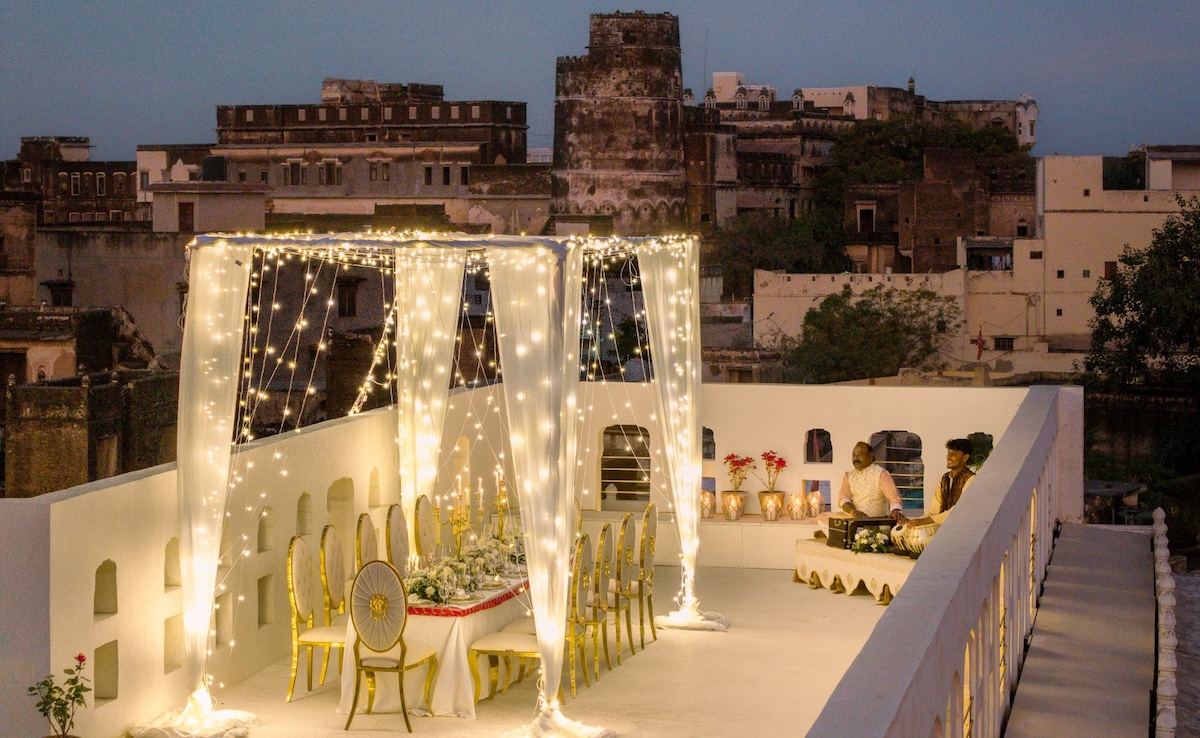
A candlelit dinner beneath the stars at Gulab Haveli. Photo: Gulab Haveli
Its walls still feel old. Its corridors remain uneven. Its frescoes fade naturally in places. Wind still moves through the courtyards exactly as it must have over a century ago.
And maybe that's what makes the experience linger.
Not because the haveli is perfect.
But because it still feels real.
Also Read: More From NDTV Luxury
Track Latest News Live on NDTV.com and get news updates from India and around the world
