





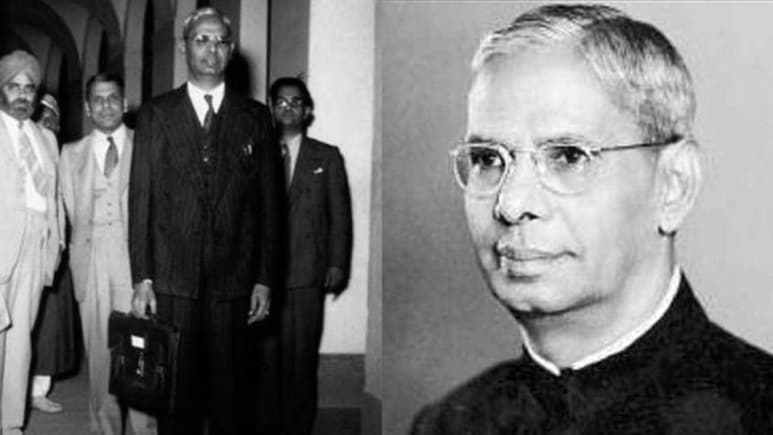
As India gears up for Union Budget 2026, it is worth looking back at where it all began: The country's very first Budget after Independence in 1947.
Like every year, people are looking for relief from inflation, possible tax cuts, and announcements that could ease the burden on households. But in 1947, the priorities were very different.
-

-
 Will Deliver 3,200 Engines Over Next Decade: CEO Of GE Aerospace South Asia To NDTV
-
 India's Global Moment: How Should New Delhi Navigate A Changing West?
-
 "India Greatly Supported Us": Sri Lankan Minister On "Difficult Years"
-
 How Chef Himanshu Saini Handles Pressure Of Running 3-Michelin-Star Restaurant
-
 "Indian Food Is Not Just Butter Chicken": Samyukta Nair At NDTV World Summit
-
 "AI Chatbots Horrible For Learning": Andrew Ng At NDTV World Summit
-
 Has Indian Cuisine Finally Arrived On The Global Stage?
-
 Chatbots Could Be Damaging Adult Learning Too: Andrew Ng
-
 Swami Sarvapriyananda Asks On AI Alignment; Andrew Ng Flags Risks Of Overhyping AI Fears
-
 "Keep Learning New Skills, Jobs Will be There": Andrew Ng On 'AI Jobapocalypse' Fear At NDTV World Summit
India's First Budget
India's first Budget was not presented after Independence but during British rule on April 7, 1860. This budget was presented by James Wilson, the finance member of the Indian Council. At the time, the objective of the Budget was less about public welfare and more about meeting the needs of the British administration.
First Budget After Independence
RK Shanmukham Chetty, the first finance minister, presented independent India's first Budget on November 26, 1947. It was an interim Budget.
The 2025-26 Budget projected an expenditure of Rs 50.65 lakh crore. Compared to today's budgets running into thousands of crores, Independent India's first budget was just Rs 171.15 crore.
Looking at the key figures of the first budget, the total expenditure was Rs 197.29 crore, and the fiscal deficit was Rs 26 crore. About half of the total expenditure was spent on defence alone.
Purpose of Independent India's first budget
India had just emerged from nearly 200 years of British rule and was struggling with the immediate challenges of Partition, including food shortages, economic consequences, and large-scale displacement. At that time, the government's focus was on protecting the interests of ordinary citizens.
"Whatever might be the immediate political justification of partition, its economic consequences must be fully appreciated if the two dominions are to safeguard the interests of the ordinary man in both new states," Chetty said at the time.
Track Latest News Live on NDTV.com and get news updates from India and around the world

