





Former Prime Minister HD Deve Gowda has written to senior Congress leader Sonia Gandhi expressing deep concern over what he described as rising disorder and disruptions inside parliament and in its premises during the ongoing Budget Session.
In a detailed letter dated March 16, the 92-year-old leader said he had been disturbed by the atmosphere of confrontation and repeated protests, which he believes risk weakening the foundations of India's parliamentary democracy. The former prime minister said he had initially refrained from writing in the hope that the situation would improve with time, but he now sees no signs of correction.
Drawing from his long political career, Gowda noted that he has spent about 65 years as a legislator and parliamentarian, with nearly ninety percent of that time on the Opposition benches. Despite being in opposition for most of his public life, he said he never resorted to entering the well of the House to stage protests either in parliament or in the state legislature.
"I have spent nearly ninety percent of my time in the Opposition benches. You, yourself have spent long years in Opposition, and while there, you have conducted yourself with grace and maturity," he noted in his two-page letter.
Gowda said he believes Congress MPs, led by the Leader of Opposition, have been responsible for frequent disruptions, slogan shouting and demonstrations in recent days. According to him, the practice of staging dharnas and blockades outside parliament has become increasingly visible and unprecedented in scale.
"I strongly feel that Congress parliamentarians, led by the Leader of Opposition, have provoked far too many disruptions inside parliament and its premises. Their dharnas and blockades outside parliament are unprecedented. Parliament in recent times has witnessed an excess of slogan shouting, display of placards and name calling. There has been an attitude of non-seriousness, which has assaulted ,y very idea and construct of parliament and parliamentary democracy," he said.
Deve Gowda's son, HD Kumaraswamy, is Minister of Heavy Industries and Public Enterprises in the ruling BJP-led National Democratic Alliance government at the Centre.
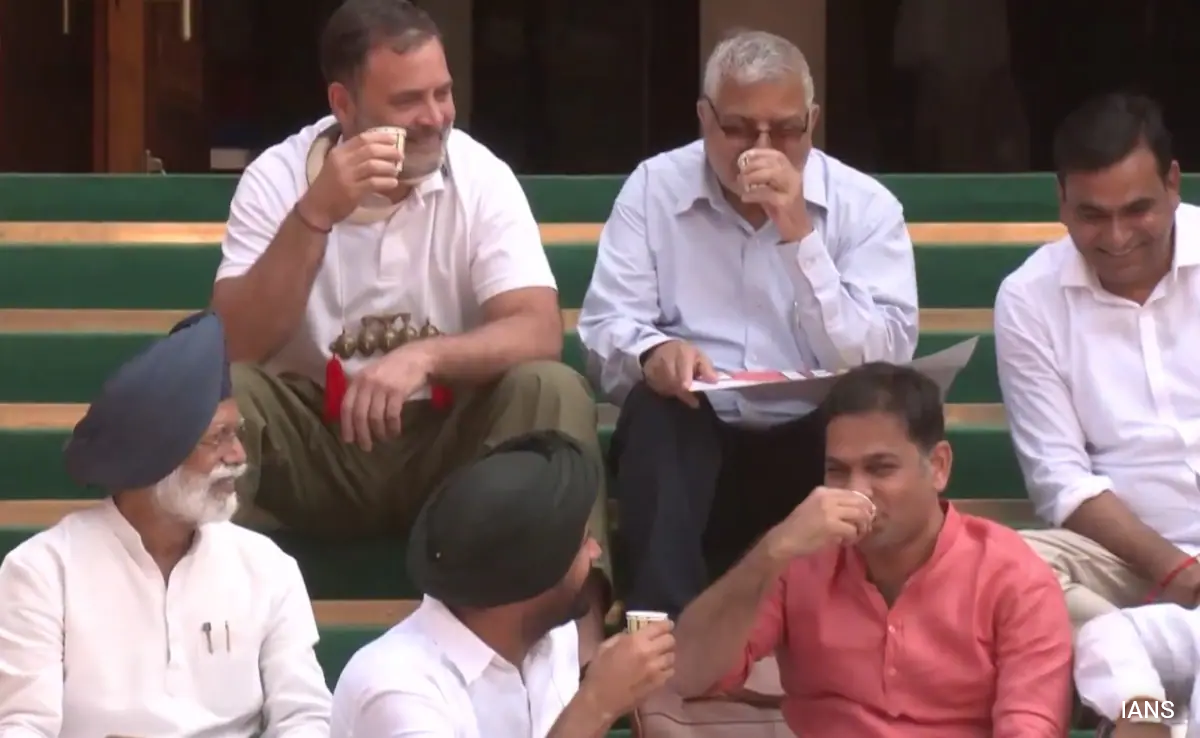
The veteran leader also criticised what he described as an emerging culture of casual protests within the Parliament complex. Referring to recent demonstrations, he said protests that resemble informal gatherings, including members sitting on the steps of parliament and ordering tea, biscuits and pakodas, diminish the dignity of the institution.
On March 12, Rahul Gandhi, Leader of the Opposition in the Lok Sabha, joined a protest at the Makar Dwar entrance to parliament. Photos and videos went viral showing him casually sharing tea and snacks with colleagues.
Gowda said his understanding of parliamentary democracy has been shaped by the ideals and guidance of India's founding leaders such as Jawaharlal Nehru, Vallabhbhai Patel, BR Ambedkar and Abul Kalam Azad. In his experience, he wrote, parliament has never witnessed the level of chaos and casualness that he believes has emerged in recent times.
Acknowledging that the role of the Opposition is to hold the government accountable, Gowda said protest is a legitimate democratic tool. However, he emphasised that such protests must remain within established parliamentary rules and traditions so that the dignity of the institution is preserved.
Appealing directly to Sonia Gandhi, whom he described as one of the most senior leaders in the Opposition ranks, the former prime minister urged her to speak to party leaders and encourage a return to parliamentary decorum. He said he hoped her political experience and guidance could help restore restraint and responsibility in parliamentary conduct.
"I urge you, who is the eldest in the ranks of the Opoosition, to speak to your party leaders and others, drawing from the wealth of your political experience and maturity. You can perhaps ask them not to harm themselves, their casue and their political futures in the long run," he said.
Gowda ended his letter by saying the Opposition must continue to raise issues and protest where necessary, but in a way that does not damage institutions built over more than seventy five years of democratic practice.
Track Latest News Live on NDTV.com and get news updates from India and around the world

