





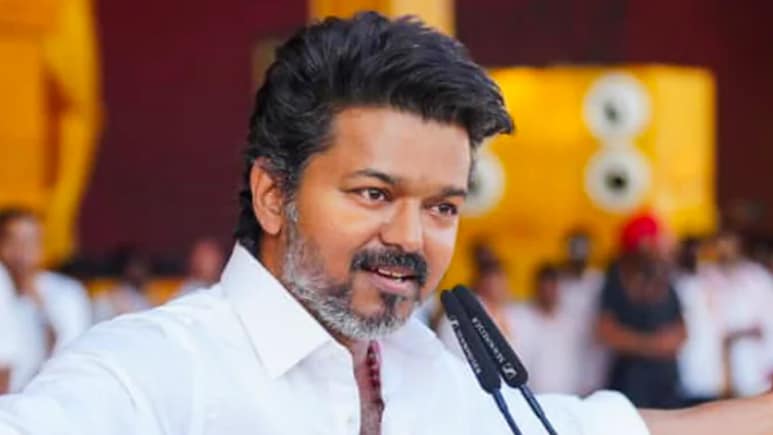
- Fan clubs evolved into welfare groups, creating direct voter relationships
- In 2021, fan members won 115 local elections as independents without a party
- Corporate-style screening selected responsible cadre for leadership roles
Vijay's TVK is closing in on the 118-seat simple majority mark in Tamil Nadu, pushing the DMK alliance down to 70 and AIADMK to 51, but this outcome was not born in this election cycle. It was rehearsed, refined and built in layers over years.
Phase one: when fandom became infrastructure
What Vijay began with was scale. Lakhs of followers organised into rasigar mandrams across Tamil Nadu. What he built was something else.
These units moved beyond film promotions into structured welfare. Blood donation camps, relief work, student felicitation, community outreach. Not one-off gestures, but repeated presence.
In cities such as Coimbatore, fan clubs grew into thousands and took on organised service roles. Over time, this created a direct, non-political relationship with households. Voters were not being approached for the first time during elections.
Also read: MK Stalin's Shock Defeat Puts Nail In DMK's Coffin. But Who Beat Him?
Phase two: the quiet election before the real one
In 2021, Vijay tested the system without formally entering the arena.
Fan association members contested local body elections as independents. No party launch. No full campaign push. But the network was activated.
Around 169 candidates contested. 115 won.
This was a structural breakthrough. It showed the network could handle candidate selection, booth management and vote mobilisation. More importantly, voters backed them without needing a party symbol.
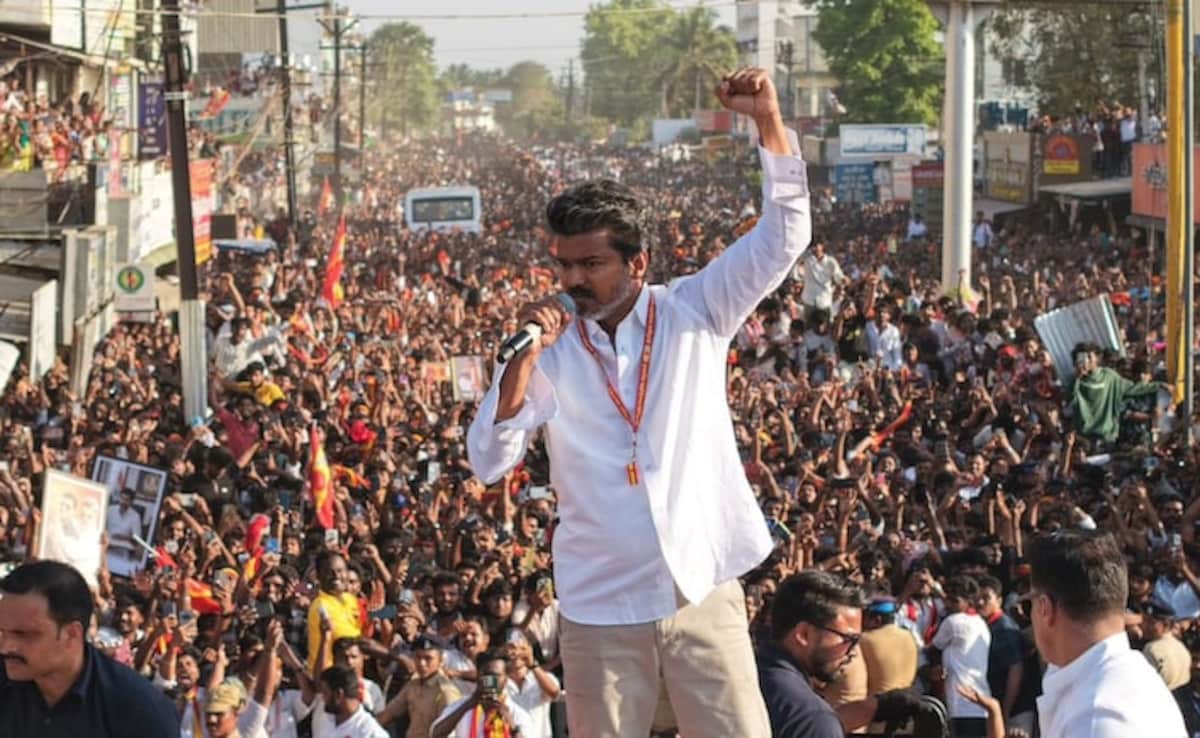
Photo Credit: Ndtv
Phase three: from mass following to filtered cadre
The run-up to 2026 was not about adding more people. It was about choosing the right ones.
TVK introduced corporate-style screening. Interviews, background checks, defined roles. Fan enthusiasm alone no longer qualified someone for responsibility.
Ward in-charges, booth agents, constituency coordinators were identified through process, not popularity.
The movement retained its emotional depth but gained organisational discipline.
Phase four: when a symbol became a signal
The whistle symbol was designed to travel fast and replicate easily.
It moved from banners into homes. Women began drawing whistle-shaped kolams outside their houses, turning neighbourhoods into visible maps of support. This spread online and offline, coordinated by the same local units that had once handled film events.
It looked organic. It was system-driven.
Phase five: the network beneath the campaign
Behind the visuals sat a pre-built machine. WhatsApp groups that existed for years became campaign pipelines. Volunteers handled flags, transport, turnout and daily outreach. Door-to-door mobilisation was not built from scratch. It was activated.
At the top, Vijay centralised control. Closed-door meetings with local leaders created a feedback loop. Booth-level insights moved upward. Messaging moved downward, focused on corruption, welfare and youth.
The structure combined decentralised execution with tight strategic control.
Phase six: the identity that carried through it all
Through every phase, the supporters themselves carried a distinct identity. They were often called "Anil" a term rooted in Tamil political memory. The word "Anil" means squirrel.
During the 2011 Tamil Nadu election, when Vijay and his Vijay Makkal Iyakkam backed J. Jayalalithaa and the AIADMK alliance, he or his father S. A. Chandrasekhar drew a comparison to the Ramayana squirrel that helps Lord Rama build the bridge to Lanka. The idea was simple. Small contributors, working collectively, can enable a larger victory.
Rival camps picked up "Anil" as a mocking label online. But over time, the name stuck, evolving into a shorthand for Vijay's supporters themselves.
Track Latest News Live on NDTV.com and get news updates from India and around the world

