





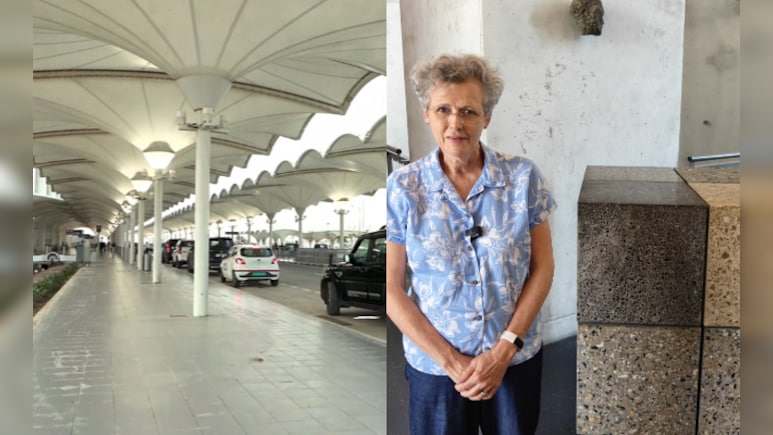
India's newest airport is not just a gateway to global travel, it is also becoming a symbol of how science and sustainability can reshape infrastructure.
The Noida International Airport at Jewar has achieved a significant milestone by becoming India's first large scale civil engineering project to build with low carbon Limestone Calcined Clay Cement or LC3. Developed through a global scientific collaboration anchored in Switzerland and implemented also in India, this technology could change how the world builds its cities while tackling climate change.
At the heart of this story lies a remarkable international partnership that brought together researchers from the Indian Institutes of Technology in Delhi and Madras, Switzerland's Ecole Polytechnique Federale de Lausanne (EPFL), Switzerland and other global institutions. Over more than a decade of research, scientists worked to develop a cement that could drastically cut carbon emissions without compromising strength or durability.
Today, that research has moved out of the laboratory and into one of India's most ambitious infrastructure projects.
Speaking to NDTV in Lausanne, Switzerland Professor Karen Scrivener of EPFL, a pioneer of LC3 technology, confirmed that the use of this cement at the Noida airport is not experimental but a full scale deployment. "This was certainly a full scale use," she said. "We usually say about a 40% reduction in CO2."
Her words underline the scale of what is being attempted. Cement production is one of the largest contributors to global greenhouse gas emissions, accounting for roughly 8% of the world's total emissions due to the energy intensive process of making clinker, the key ingredient in conventional cement.
LC3 works by replacing a large portion of this clinker with calcined clay and limestone. This simple yet powerful change reduces both the energy required during production and the carbon dioxide released.
"It's a low carbon cement," Professor Scrivener explained to NDTV, adding that the main innovation lies in "replacing as much as possible of what's called clinker by other materials."
The impact of this substitution is far reaching. The new cement requires a much lower production temperature, about 800 degrees Celsius compared to around 1450 degrees Celsius for traditional Portland cement. This translates into significant energy savings and reduced emissions.
In Prof Karen's EPFL laboratory one of the researchers leading the charge of developing more environment friendly cements is Kashmir born civil engineer Dr Mehnaz Dhar who says LC3 cement is the environment friendly need of the day for India.
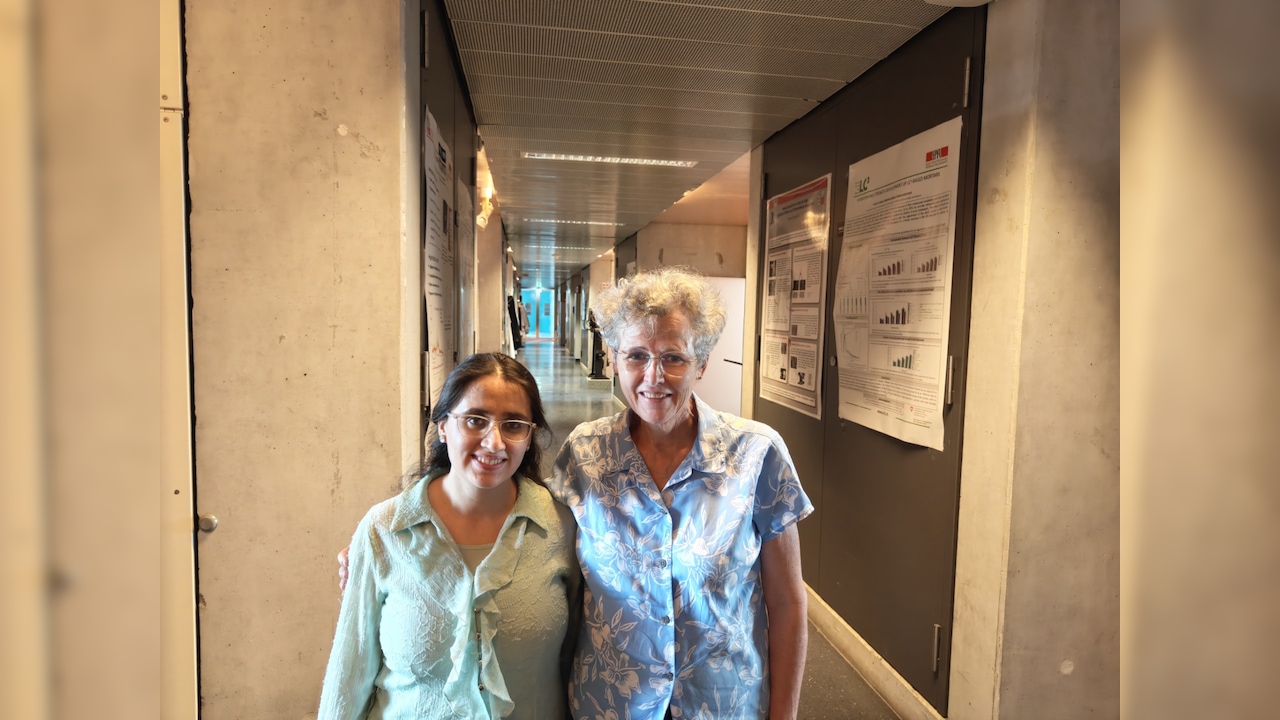
Prof Karen Scrivener and Dr Mehnaz Dhar at the EPFL laboratory.
Photo Credit: Pallava Bagla
The Noida International Airport project is using this technology across both buildings and airside infrastructure, including the runway. According to Professor Scrivener, LC3 can be used in all applications without limitations. "You can use this in all applications. I think they are using it for the runway, but you can certainly use it in the building," she said.
This is important because cement concrete is the most widely used material on Earth after water. Globally, over 30 billion tonnes of concrete are produced every year, forming the backbone of modern infrastructure. As Professor Scrivener pointed out, materials based on cement make up nearly three quarters of all materials used by humans today across planet Earth.
The environmental stakes are therefore enormous.
"If we use technologies like LC3, we could maybe cut global emissions by around 2%, and combined with other measures perhaps up to 5%," she said.
For India, which is one of the world's largest producers and consumers of cement, the implications are even more significant. The country produces hundreds of millions of tonnes of cement every year and spends vast sums on building infrastructure from highways and bridges to airports and smart cities. The construction sector is among the biggest drivers of economic growth, but it also adds to the nation's carbon footprint.
In this context, the adoption of LC3 at the Noida airport signals a shift towards greener construction practices.
Major Indian cement companies including UltraTech, Dalmia Bharat, JK Cement, Shree Cement and JK Lakshmi Cement have already moved towards commercial production of LC3. This means the technology is not confined to research institutions but is ready for industrial scale deployment.
Yet a key question remains. Can this new cement match the performance and durability of conventional materials in demanding applications like airports? Professor Scrivener is confident. "Of course it will last. We expect the durability to be better than existing concrete," she told NDTV very emphatically. She added that extensive testing has already been carried out. "We have made all the tests on the durability and have every confidence this will last extremely well."
Her assurance addresses one of the primary concerns in the construction industry, where safety and longevity are non-negotiable.
Further, she pointed out that India is uniquely positioned to benefit from this technology. The country has abundant supplies of low grade limestone and clay, which are essential raw materials for LC3. At the same time, many older cement plants can be retrofitted at relatively low cost to produce the new cement.
"India has progressed very fast in building new cement plants. This means a lot of older plants could very cheaply be converted to producing this calcined clay," she observed.
This opens the door for rapid scaling up of LC3 production across the country without the need for massive new investments.
Back at the Noida International Airport, the project is also aligned with a broader vision of sustainability. The airport aims to achieve net zero emissions and is being designed with energy efficient systems and environmentally responsible materials at its core.
Officials associated with the project say that using LC3 demonstrates how large infrastructure developments can take the lead in adopting new technologies and setting industry standards.
The collaboration between Switzerland and India in deploying LC3 also highlights the power of global scientific partnerships. From laboratory research in Lausanne to real world application in Noida, the journey of LC3 reflects how innovation can cross borders and deliver tangible benefits.
Professor Scrivener summed it up simply. "So far, we are very happy," she said about the performance of LC3 at the airport site.
While LC3 in India emerged from years of scientific research led by Professor Shashank Bishnoi at IIT Delhi and Professor Manu Santhanam at IIT Madras, its adoption at scale required extensive field validation, industry engagement, and ecosystem building.
Dr Soumen Maity, Chief Technology Officer for Technology and Action for Rural Advancement (TARA) played a big role in partnership with JK Lakshmi Cement, JK Cement, and UltraTech Cement, helping bridge the gap between research and commercial production, enabling the mainstream adoption of LC3 in construction. The success of LC3 in India reflects the power of collaboration between research institutions, technology incubators, and industry partners.
As India continues to build at an unprecedented pace, the success of this project could determine whether low-carbon cement becomes the new norm. The question now is not whether the technology works, but how quickly it can be adopted across the country and the world.
For now, the Noida International Airport stands as a landmark, not just in aviation, but in the future of sustainable construction.
A connection between Lausanne and Noida has quite literally been cemented, with a material that could help build a cleaner and greener future.
Track Latest News Live on NDTV.com and get news updates from India and around the world

