





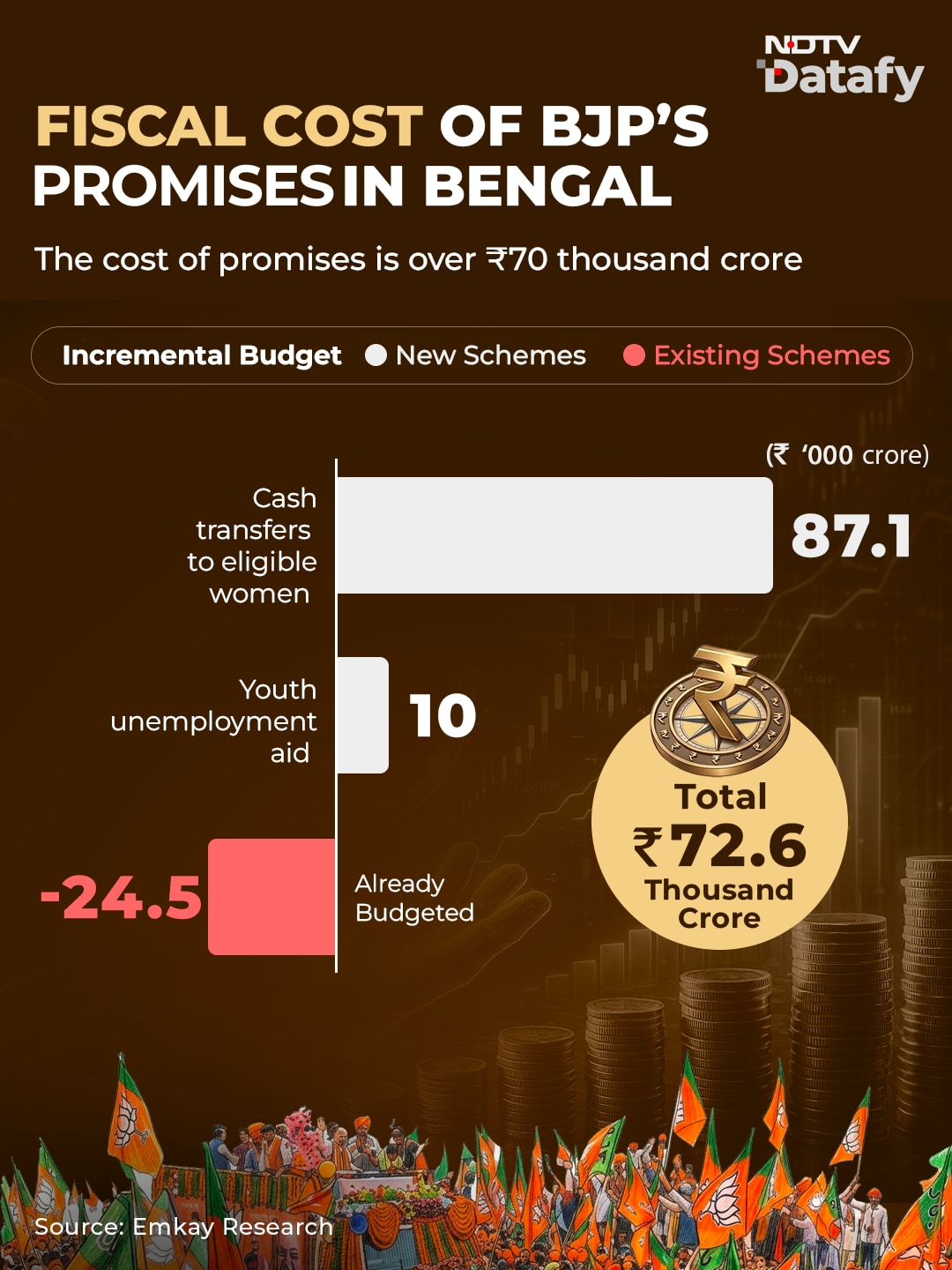
- It may cost West Bengal Rs 72,600 crore or 3.4% of GSDP to fund promises made during the election campaign
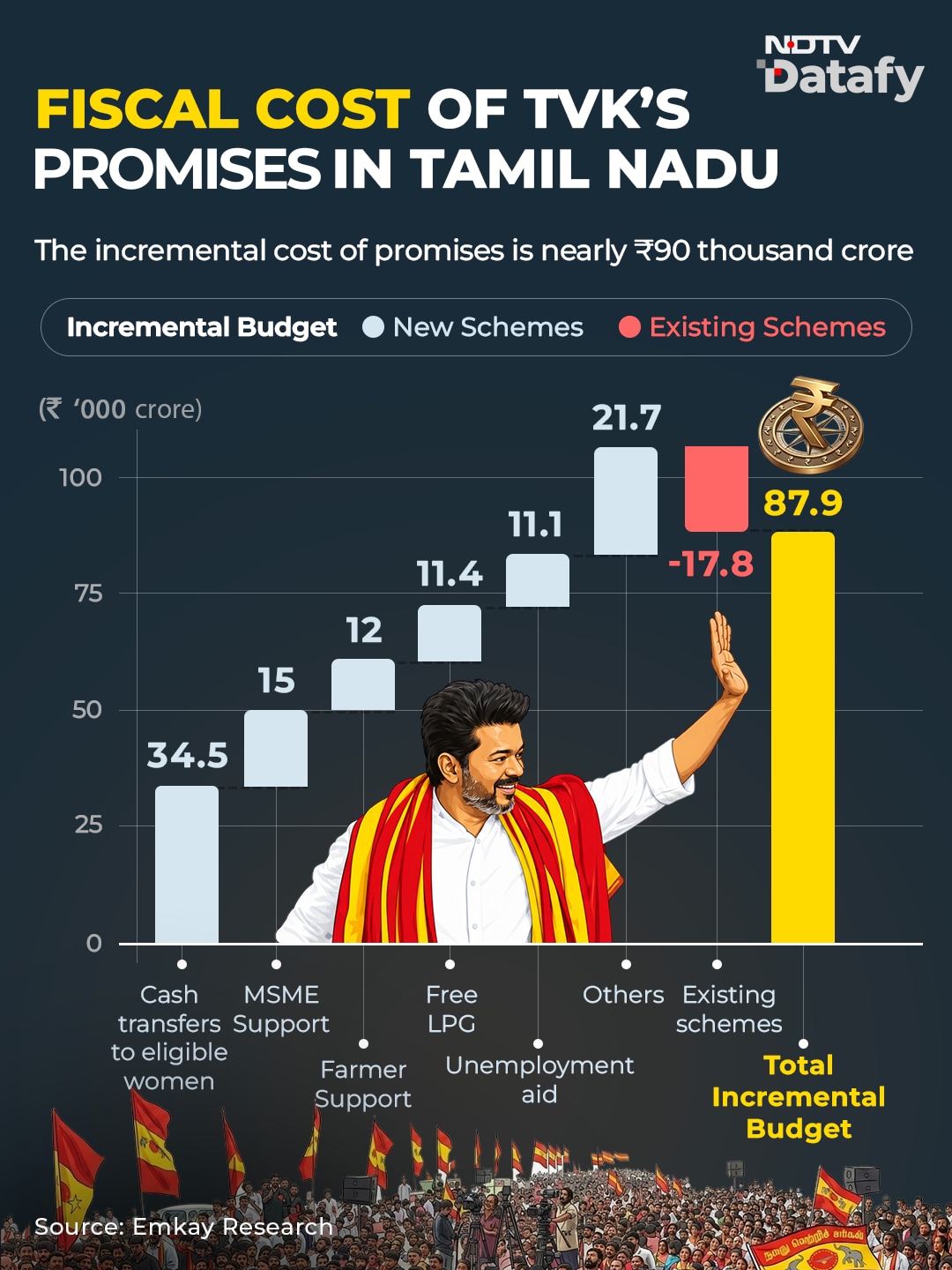
- In Tamil Nadu, the estimated cost of promises made ahead of the election is Rs 87,900 crore or 2.2% of GSDP
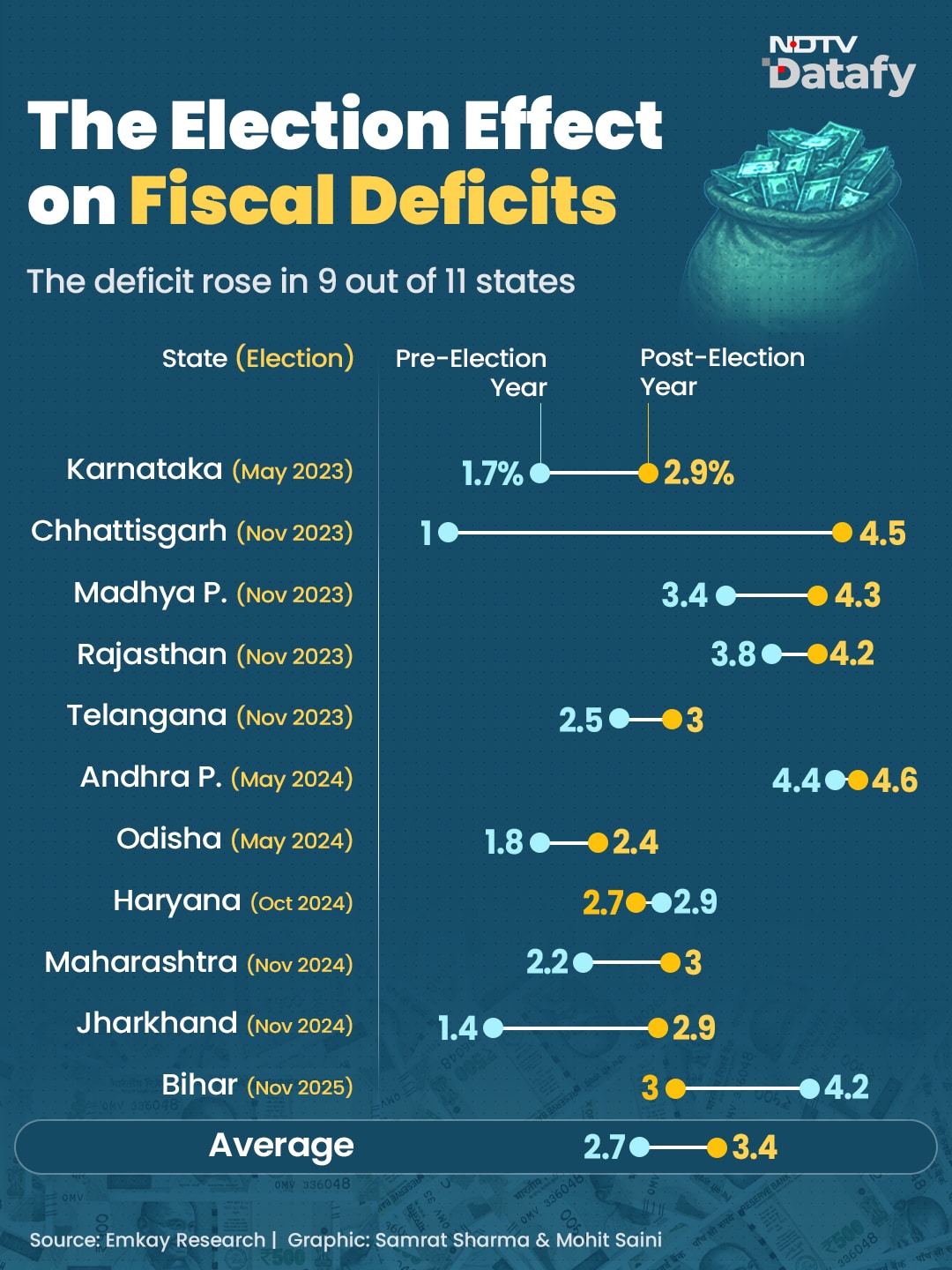
- Trends show post-election fiscal deficit rose from 2.5% to 3.4% in nine of 11 states
Elections in West Bengal and Tamil Nadu have ended. The BJP achieved a historic win in the east, and in the south the new party TVK became the single-largest party. We look at the fiscal picture of the two states by taking into account the announcements made by leaders during campaigning.
West Bengal
Estimates suggest an incremental cost of programmes in West Bengal by the BJP is Rs 72,600 crore or 3.4 per cent of the GSDP. These include cash transfers of Rs 3,000 per month to eligible women and youth unemployment aid of Rs 3,000 per month.
"We believe a BJP-led governance in states, particularly West Bengal, could improve Centre-state alignment and accelerate administrative approvals for central projects, benefiting regional industrial growth in the medium term," said Madhavi Arora, Chief Economist at Emkay Global.
However, the immediate challenge lies in maintaining fiscal discipline against the backdrop of spending trends, which have proven to be a winning electoral formula, but threaten the long-term fiscal health of states and their productive spending, she added.
Tamil Nadu
The incremental budget for programmes announced by the TVK in Tamil Nadu is estimated to be Rs 87,900 crore or 2.2 per cent of the GSDP, according to Emkay Research. This includes cash transfers of Rs 2,500 per month to women under 60, six free LPG cylinders per year, and Rs 15,000 per year investment assistance for land-owning farmers, etc.
Fiscal Trends
The announcements of election-linked programmes have an effect on the fiscal deficit in the post-election year compared to the pre-election year, data from recent elections show.
After the elections in Bihar, Jharkhand, Maharashtra, Haryana, Odisha, Andhra Pradesh, Telangana, Rajasthan, Madhya Pradesh, Chhattisgarh and Karnataka, the average fiscal deficit in the pre-election year was 2.5 per cent, which rose to 3.4 per cent in the post-election year.
Except in Bihar and Haryana, the deficit rose in nine out of the 11 states.
Recommended Fiscal Deficit
Fiscal deficit rising above 3 per cent may weigh heavy on state finances.
"We have recommended that States' fiscal deficit should continue to be capped at 3 per cent of their respective GSDP," according to the 16th Finance Commission for 2026-31.
To ensure the stability of the debt of a state government, this should be strictly enforced as per the provisions of clause (3) of Article 293 of the Constitution, it added.
Both West Bengal and Tamil Nadu have recorded a fiscal deficit of more than 3 per cent in the last six years.
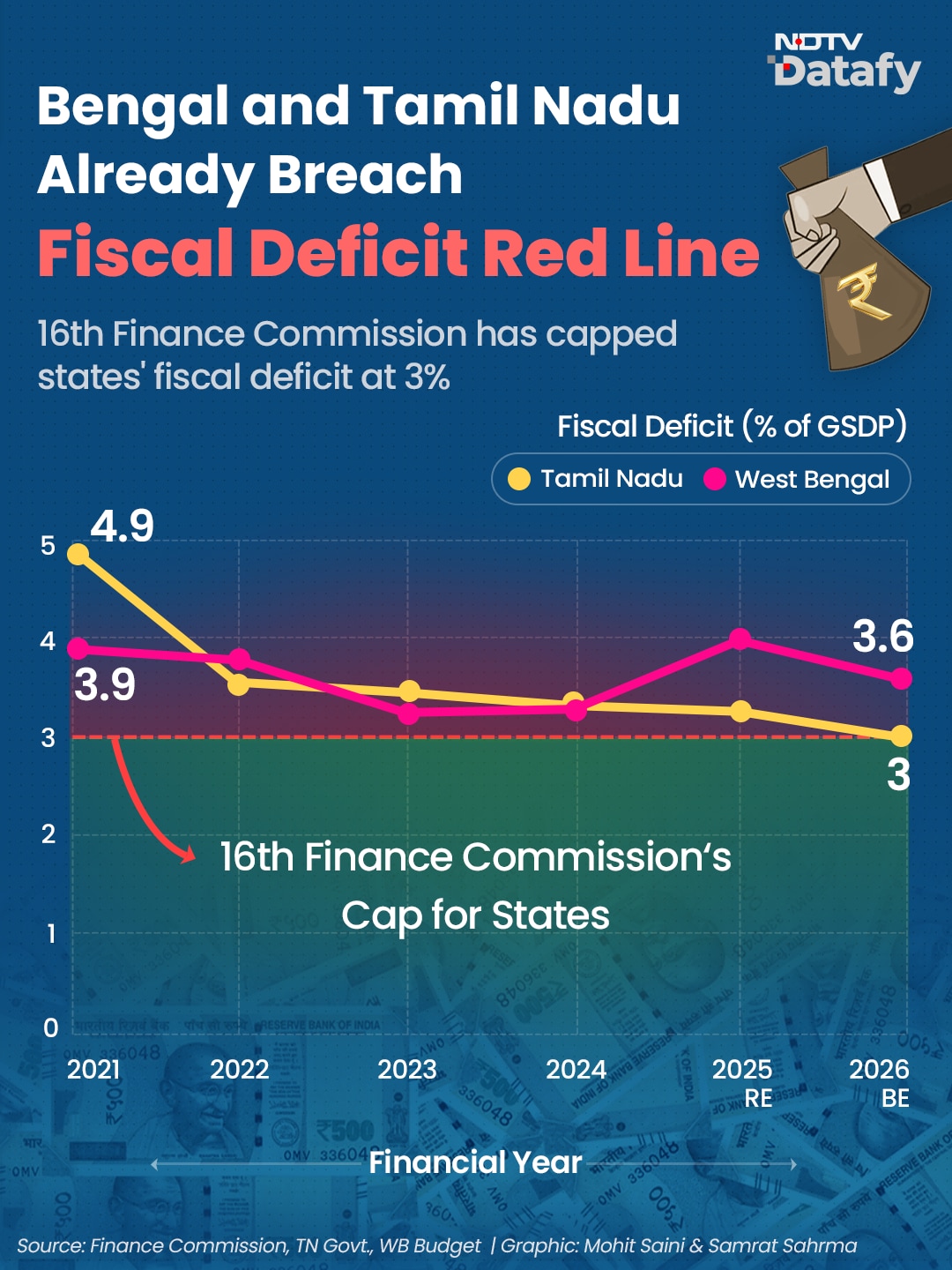
The incremental budget will add pressure on state finances, new investments and capacity addition, at least in the near-term.
Track Latest News Live on NDTV.com and get news updates from India and around the world

