





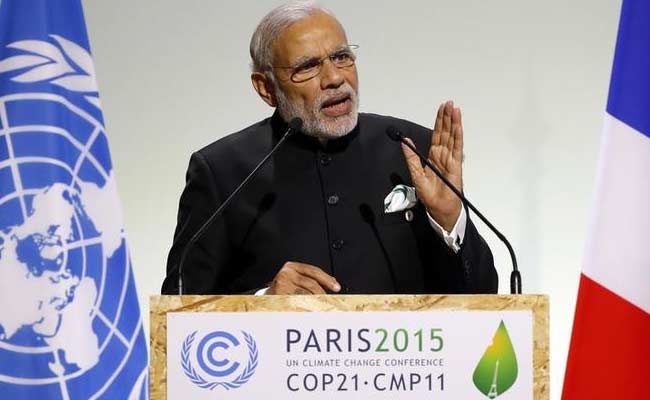
Over a decade after the Paris Agreement reshaped the global climate agenda, an uncomfortable reality is emerging for many wealthy economies. While some of the world's richest nations are struggling to stay on course, India appears to be moving closer to the climate commitments it made under the landmark accord.
A new study by the Council on Energy, Environment and Water (CEEW) has found that major developed-country blocs, including the European Union (EU), the Umbrella Group, and the Environmental Integrity Group, are collectively projected to miss both their 2030 and 2035 climate targets. In contrast, countries in the BASIC grouping -- Brazil, South Africa, India and China -- are showing stronger alignment with their climate commitments.
The findings challenge a long-held assumption that developed economies are automatically leading the global climate race.
Rich Nations Falling Behind
According to the CEEW study, the EU, Umbrella Group and Environmental Integrity Group are projected to emit 9 per cent more than their 2030 targets and 19 per cent more than their 2035 targets if current trends continue.
The gap is significant.
To meet its 2030 commitment, the EU would need to almost quadruple the pace of its annual emissions reductions. The United States and Canada would also need to sharply accelerate their decarbonisation efforts.
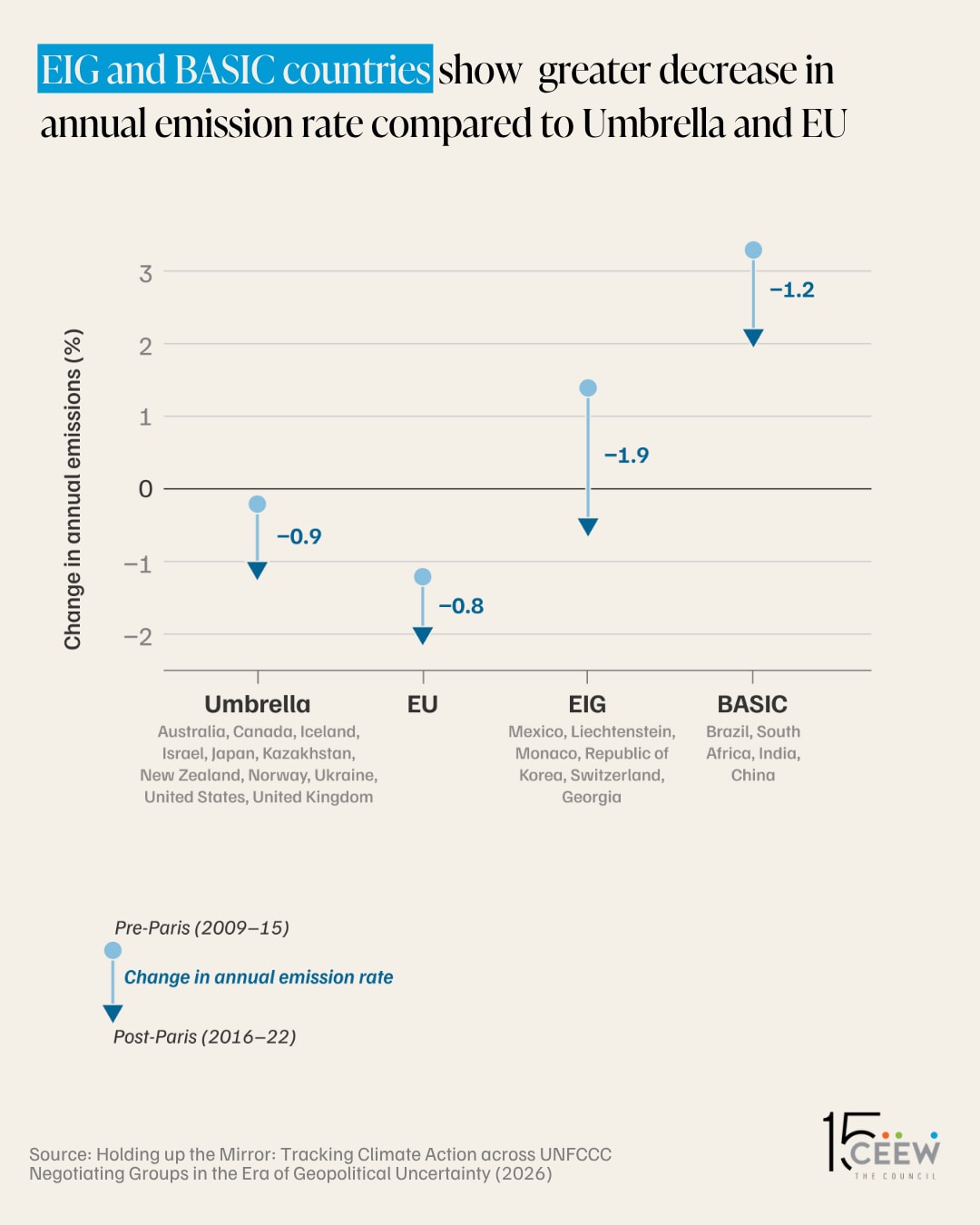
Photo Credit: CEEW Study
"Ten years after Paris, the world cannot keep measuring climate leadership by announcements alone. Delivery remains the ultimate test," said Ravi S Prasad, Distinguished Fellow at CEEW and former Chief Climate Change Negotiator for India.
India's Progress Stands Out
The report paints a different picture for India.
The country has already achieved its target of having 50 per cent of its installed electricity capacity come from non-fossil fuel sources ahead of schedule. India has also reduced the emissions intensity of its GDP by around 37 per cent and created an additional carbon sink of nearly 2.4 billion tonnes of carbon dioxide equivalent.
To recall, under the Paris Climate Agreement, Prime Minister Narendra Modi promised that India would take its non-fossil energy capacity to 500 GW and meet 50 per cent of its energy requirements from renewable energy by 2030
These achievements come despite India having lower historical responsibility for global emissions and continuing development challenges.
Experts say one of the biggest reasons behind India's progress has been its rapid expansion of solar energy.
Mayur Misra, Director and CEO of Corrit Private Limited, believes geography has given India a major advantage in the clean energy transition. "India receives nearly 300 days of strong sunlight every year, making it one of the most attractive markets globally for solar power generation," Misra said. "This allows projects to generate higher output and deliver stronger returns on investment."
He added that the government's aggressive renewable energy push has accelerated adoption across industries. "From Uttar Pradesh and Punjab in the north to Tamil Nadu in the south, industries are increasingly meeting their electricity needs through solar installations. The momentum is visible across almost every state," he said.
Policy Support Has Made a Difference
Beyond geography, India's policy framework has also played a crucial role.
Industry experts point to supportive regulations from the Ministry of New and Renewable Energy, expanding open-access mechanisms, and state-level reforms that have made renewable energy more accessible for businesses.
According to Misra, even companies without suitable rooftop space can now participate in the clean energy transition through open-access solar projects.
This flexibility has helped broaden adoption beyond large corporations and into a wider range of industrial consumers.
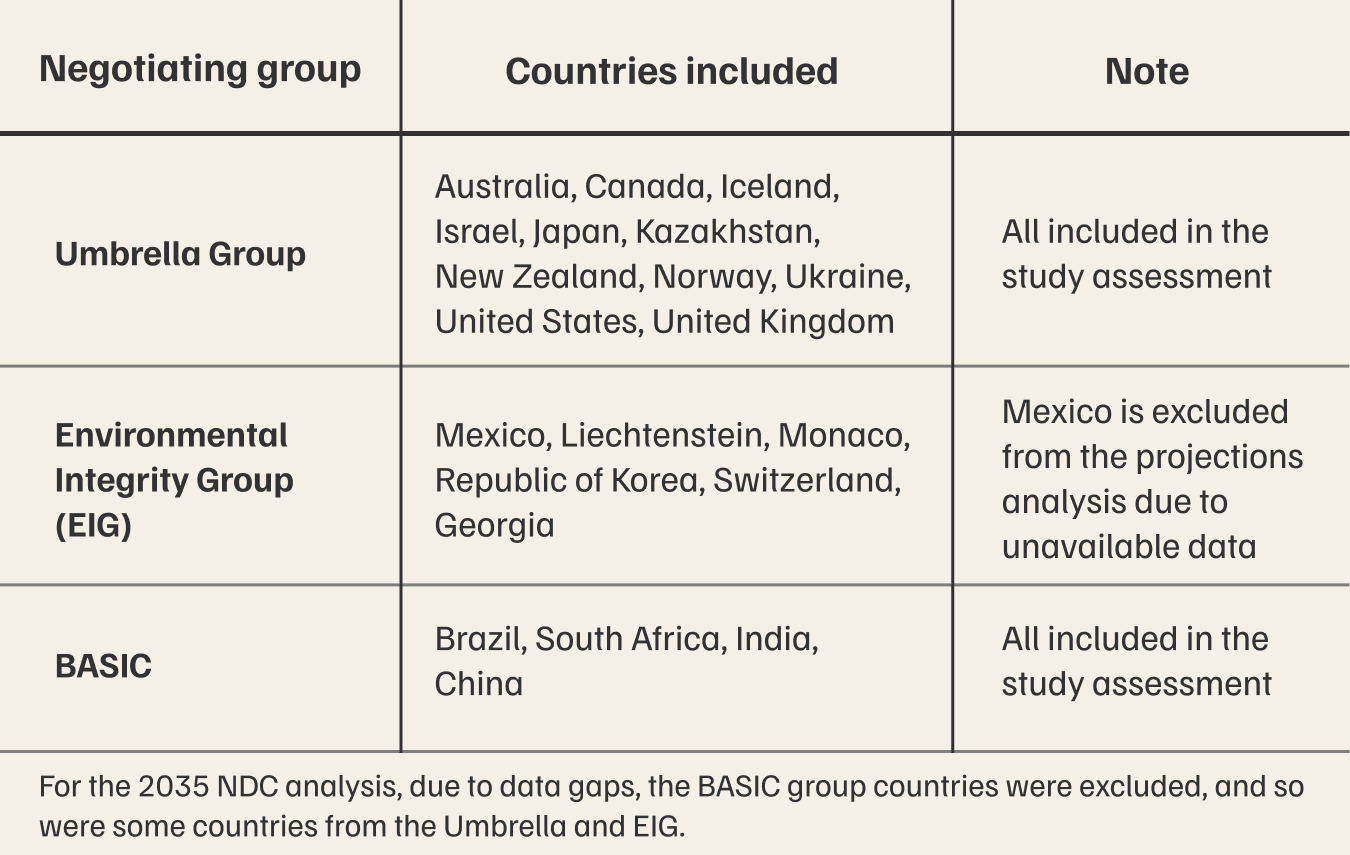
Photo Credit: CEEW Study
Investors Are Taking Notice
The economics of solar power are becoming another powerful driver. Misra noted that investors often see faster returns from solar projects in India than in many developed markets.
"A lot of investors from Western countries are choosing India for renewable energy investments because the internal rate of return is significantly higher compared to many parts of Europe," he said.
That investment momentum is helping expand India's renewable energy capacity while supporting broader economic growth.
Climate Leadership Is Being Redefined
The CEEW report also found that BASIC countries collectively emitted 8.5 gigatonnes less carbon dioxide equivalent between 2016 and 2022 than they would have if pre-Paris emission trends had continued.
By comparison, the developed-country blocs assessed in the study reduced emissions by 3.7 gigatonnes over the same period. The findings suggest that climate leadership may increasingly be judged by implementation rather than ambition on paper.
While India still faces major challenges on its path to net zero, a decade after Paris Summit, it is among the few major economies that can point to measurable progress rather than missed milestones.
Track Latest News Live on NDTV.com and get news updates from India and around the world

