





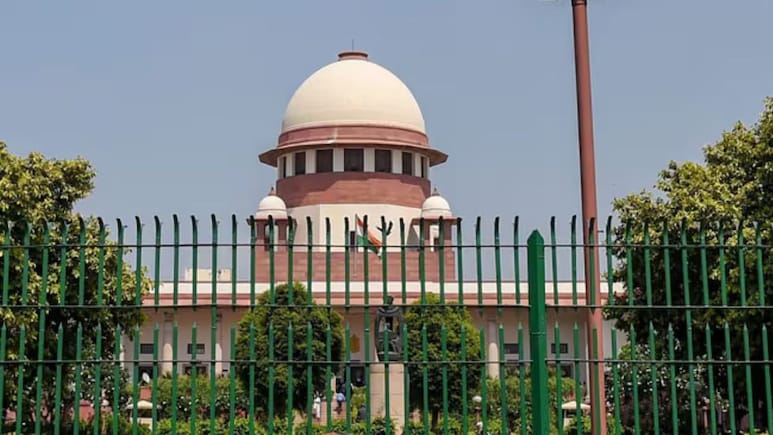
- Chief Justice Surya Kant questioned a Ludhiana trader about drafting a petition on PM Cares Fund under RTI Act
- The court doubted the trader's authorship due to legal language used in the petition
- The court issued a stern warning to the trader regarding the petition
The Supreme Court on Tuesday saw Chief Justice of India Surya Kant losing his cool at a trader from Punjab's Ludhiana who filed a public interest litigation (PIL) seeking inclusion of the PM Cares Fund under the RTI Act.
It began as a regular hearing in the Supreme Court on a busy Tuesday morning. But within minutes, the courtroom had turned into a scene of sharp questions by the Chief Justice to the Class 12-pass trader over this one question, "Who drafted this PIL?"
Before the bench led by Chief Justice of India Kant and comprising Justices Joymalya Bagchi and R Mahadevan stood a man from Ludhiana - not a lawyer, not a seasoned activist - but a cloth trader who had come to court as a petitioner-in-person.
He quickly became the centre of an extraordinary exchange in the courtroom.
The PIL seeking the PM CARES Fund to be brought under the RTI Act, on paper, was packed with dense legal arguments and phrases that sounded straight out of a constitutional law textbook.
That was what caught the court's attention. At the very outset, the Chief Justice asked the man about himself - his qualifications and what he did for a living. The answer was simple. He had studied till Class 12 and ran a small hosiery trading business in Ludhiana.
The Chief Justice then asked him how much tax he paid. The trader replied that his income tax last year was about Rs 5.25 lakh. When the court asked if he had ever filed a petition in a high court before approaching the Supreme Court directly, he said this was his first time.
The Chief Justice smiled and remarked, "Bada bahaduri ka kaam kiya... seedha Ludhiana se chalke aa gaye (very brave of you... coming straight from Ludhiana to the Supreme Court)." Then, the tone changed: "Main aapka exam loonga (I'll take your exam)."
Looking at the petition in front of him, the Chief Justice said he had doubts whether the trader had drafted it.
"I will take your test here. If you score even 30 per cent, I will believe that you wrote this petition," Chief Justice Kant said.
He asked the trader to honestly say who drafted the document. The court also remarked his income tax return details may need to be placed on record. But the man stood his ground.
"Sir, you can check my phone," the petitioner said.
He said he initially approached a typist named "Mr Das" in September last year. He insisted he had not taken advice from any lawyer.
"I do not have faith in lawyers," the trader said, adding he has "a few good friends" though.
The Chief Justice then issued a warning: if the truth wasn't disclosed, the court would order an investigation. He pointed to a phrase in the petition: "Fiduciary Risk of Corporate Donors."
"What does that mean?" Chief Justice Kant said.
The trader fell silent. He tried to touch upon another point, but couldn't after the Chief Justice stopped him. "Mr Sidhu, this is written here on paper, some lawyer has given this to you," the Chief Justice said.
The petitioner eventually gave an explanation: he had written the petition himself, but with the help of three or four AI tools because he could not afford to hire a lawyer.
The typist, he added, had helped format the document. "The typist was very helpful. I gifted him four jackets," he told the court, adding the typist had asked for Rs 1,000 per hour.
The Supreme Court has told the typist, "Mr Das", to appear before the bench.
In the order dismissing the petition, the Supreme Court noted that it was filed "without any sense of responsibility" and contained "vague, wild, frivolous and scandalous allegations." However, the court said it would not pursue a deeper investigation to identify who may have been behind the filing, and dismissed it with a warning.
Before the trader left, the Chief Justice told him, "Jaao Ludhiana mein 2-3 aur sweater becho (go back to Ludhiana and sell 2-3 more sweaters)" - because if such petitions continue to be filed through others, the people behind them may walk away, but the trader could end up paying the price.
Track Latest News Live on NDTV.com and get news updates from India and around the world

