





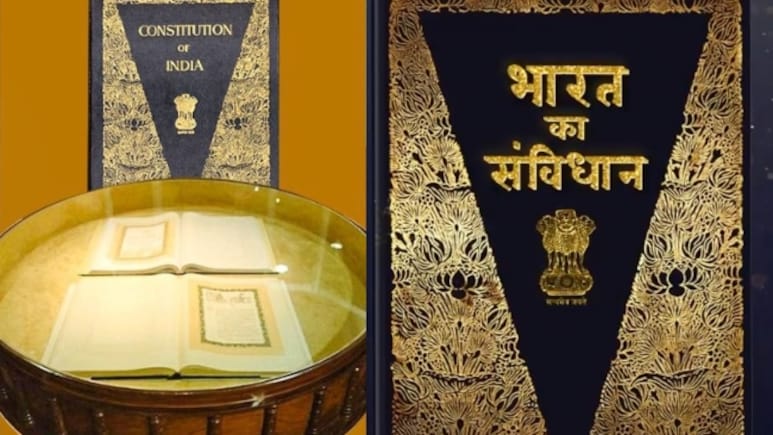
The Indian Constitution is the longest in the world.
Constitution Day, or Samvidhan Divas, is observed in India every year on November 26 to commemorate the adoption of the Indian Constitution. On this day in 1949, the Constituent Assembly formally adopted the Constitution, which came into force on January 26, 1950. Here are some fascinating facts about one of the world's most important democratic documents:
According to a factsheet released by the Ministry of Information and Broadcasting, the people of India are the ultimate custodians of the Constitution. Sovereignty rests with the citizens, and the Constitution was adopted in their name.
- Over nearly three years, more than 53,000 citizens visited the Constituent Assembly's gallery to witness the debates that shaped the Constitution.
- At the time of its commencement, the Constitution contained 395 Articles, 22 Parts and 8 Schedules, making it the world's longest written Constitution.
- The Constitution of India was neither typeset nor printed. It was handwritten in both English and Hindi and contained around 90,000 words.
- The original manuscript was handcrafted by artists from Shantiniketan under the guidance of Acharya Nandalal Bose, while the calligraphic text was written by Prem Behari Narain Raizada in Delhi.
- The original copies of the Constitution are preserved in special nitrogen-filled cases in the Library of Parliament.
- Each part of the Constitution begins with artwork depicting a significant phase or scene from India's history, created under the supervision of Nandalal Bose.
- The 22 illustrations, rendered largely in the miniature style, portray various periods of the Indian subcontinent's history, from the Indus Valley Civilisation and the Vedic Age to the Maurya and Gupta empires, the Mughal era and the freedom movement.
- A total of 284 members of the Constituent Assembly signed the Constitution in the Constitution Hall of Parliament in New Delhi on January 24, 1950.
- The Constituent Assembly met for the last time on January 24, 1950. During this session, Dr Rajendra Prasad was announced as the first President of India.
- There were 15 women members in the Constituent Assembly, including Sarojini Naidu, Rajkumari Amrit Kaur, Hansa Jivraj Mehta, Sucheta Kripalani and Durgabai Deshmukh. They advocated equal rights at a time when women in many parts of the world were still denied basic freedoms.
- The National Flag of India was adopted in its present form by the Constituent Assembly on July 22, 1947, just weeks before Independence on August 15, 1947.
- The Constitution came into force on January 26, 1950. G. V. Mavalankar became the first Speaker of the Lok Sabha after India became a republic.
How may i help you today
Show full article
Track Latest News Live on NDTV.com and get news updates from India and around the world

