





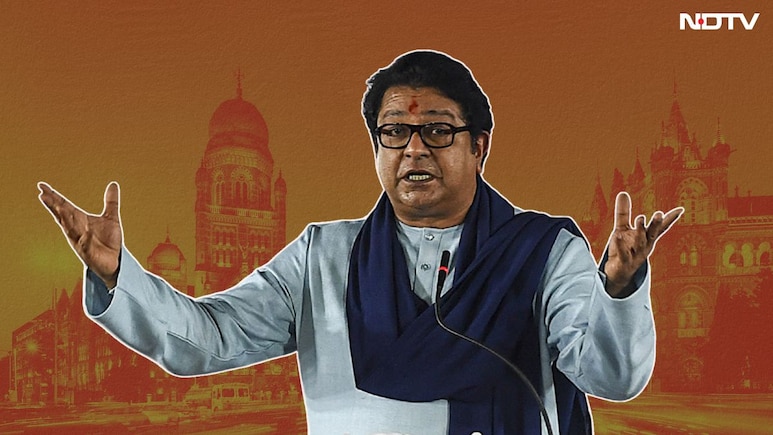
For Raj Thackeray, who once mirrored the firebrand Bal Thackeray, survival has now become a hard bargain in Mumbai's evolving politics. The setback for his Maharashtra Navnirman Sena (MNS) in the Brihanmumbai Municipal Corporation (BMC) elections reflects the shrinking support for the aggressive politics of the Thackeray legacy.
The MNS is ahead in 10 wards in the BMC as votes are still being counted for the BMC elections 2026. The Shiv Sena (UBT), led by Raj's cousin Uddhav Thackeray, managed to keep afloat their crucial alliance, with an edge in 75 seats. The alliance, however, has proved to be no match for the BJP-Shiv Sena (Eknath Shinde) combine, which together is leading in about 118 wards.
The withering of support despite a fierce campaign and fiery speeches echoes the diminishing influence of Raj Thackeray, whose reunion with his estranged cousin had until yesterday promised a new dawn in Mumbai's politics.
Read: How Failed Thackeray Reunion May Have Cost 1 Cousin More Than The Other
In what could be the biggest threat to his party, the MNS now faces a serious risk of derecognition as a state party. The party's vote share had collapsed to 1.55% in the 2024 Assembly elections and it failed to win a single seat. The loss in BMC polls only exacerbates its problems.
The loss of official party status and a common election symbol would severely weaken the MNS's institutional identity and electoral viability.
With no control over the BMC, Thackeray can no longer sustain the patronage and protection systems that keep party workers loyal and active. As a result, cadre atrophy could set in, with increasing defections to the BJP and Eknath Shinde's Shiv Sena in search of political survival.
The BMC results further show that the reunion with Uddhav Thackeray failed to consolidate the Marathi vote bank, despite them prioritising Marathi identity politics over civic issues during their high-pitched campaign.
This failure indicates that the "Thackeray nostalgia" is no longer sufficient to counter the BJP's organisational dominance.
Read: How Death In A Cinema Hall Paved The Way For Raj Thackeray's Shiv Sena Exit
Lacking legislative relevance, Raj Thackeray is likely to rely heavily on street politics, Marathi language agitations, and media-driven vigilantism as a survival strategy.
For organisational survival, the MNS may even be forced into aligning with the BJP-led Mahayuti as a junior partner, though there has been no such buzz yet.
Besides, Raj Thackeray's son Amit Thackeray finishing third in Mahim in last year's assembly elections had already stalled succession plans within the party and raised doubts about his capacity to rejuvenate the party.
With no visible tailwinds, the party faces some difficult decisions to stay afloat. As Maharashtra politics hardens into a bipolar Mahayuti-MVA contest, the MNS now risks total marginalization unless it accepts subordination or fades into irrelevance.
Track Latest News Live on NDTV.com and get news updates from India and around the world

