





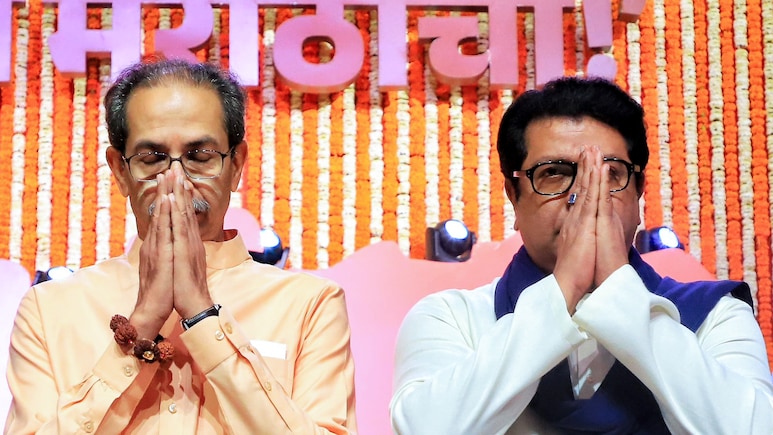
Maharashtra's complicated political space took a turn ahead of the Brihanmumbai Municipal Corporation elections when estranged cousins Uddhav and Raj Thackeray joined forces after 20 years. The much-publicised reunion was meant to consolidate the Marathi vote and reclaim the legacy of Bal Thackeray - Uddhav's father and Raj's uncle - from his aide Eknath Shinde, who is now in control of both the Shiv Sena name and symbol.
For Uddhav Thackeray, who had gambled once by cutting off ties with longtime ally BJP and forming an alliance with the Congress and Sharad Pawar's NCP, the latest move was seen as a desperate roll of the dice after that coalition suffered an embarrassing defeat in the 2024 Maharashtra Assembly elections.
The BMC elections were also crucial because the corporation is one of Asia's richest and the Shiv Sena had been in power there for 25 years. For Uddhav Thackeray's Shiv Sena (UBT), then, this election was about defending its last bastion.
Friday's results have made it clear, however, that the coming together of the Thackerays did not work, and that may have largely been down to one cousin.
The undivided Shiv Sena had won 84 out of 227 wards in the BMC in 2017, where the majority mark is 114, and the Shiv Sena (UBT) is, as of 6 pm, leading in 73, second only to the BJP's 88. Raj Thackeray's Maharashtra Navnirman Sena, on the other hand, is leading only in 10.
The Shiv Sena (UBT) contested 160 seats, meaning its strike rate is set to be over 45%, while the MNS fought 53, leaving it with a win percentage of just 19.
What's worse, Raj Thackeray's strident stand on non-Maharashtrians and a violent championing of Marathi pride, including his workers beating up people for not speaking the language, is also being seen as having cost the Shiv Sena (UBT) seats, especially in wards with a large non-Marathi population. The speculation, thus, is that, despite a transfer of votes from the MNS to his party, Uddhav Thackeray would probably have been better off contesting on his own or with the Congress, which has won 11 wards but enjoys more support among non-Maharashtrians.
Sharad Pawar's NCP, which was in an alliance with the Shiv Sena (UBT) and the MNS, failed to open its account. Things may have been different, however, if the Maha Vikas Aghadi - Congress-Shiv Sena (UBT)-NCP(SP) - coalition, which has been in existence since 2019 and won more seats than the ruling alliance in the 2024 Lok Sabha polls, had fought together.
Track Latest News Live on NDTV.com and get news updates from India and around the world

