





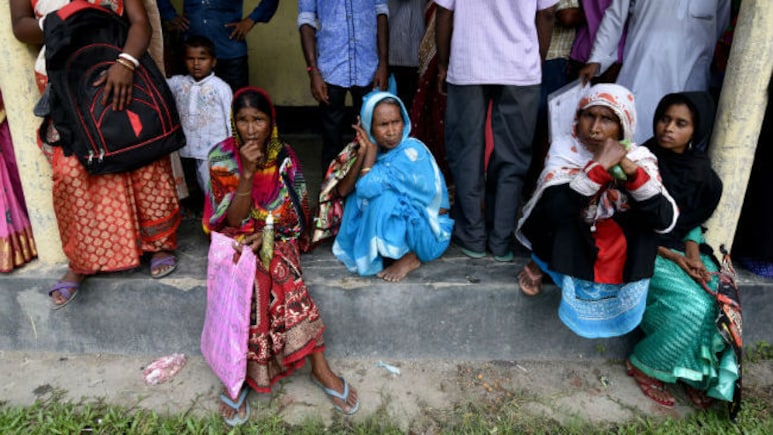
Assam is heading to the polls again. Voters across 126 seats will decide the state's next government on April 9, with results due on May 4. The ruling BJP, along with its allies, is trying to retain power, while the Congress leads an opposition alliance.
Campaigns talk of welfare schemes, roads, schools, and jobs but discussions around identity, migration, and voter eligibility remain at the forefront. These concerns have influenced Assam's politics for decades. In 1983, an election held during a period of unrest led to one of the deadliest mass killings in India.
The 1983 Elections
The 1983 Assembly election took place during the Assam Agitation (1979-1985). The movement, led by the All Assam Students Union (AASU), demanded the identification and removal of “illegal migrants,” especially those believed to have entered the state after 1971. Bengali-origin Muslims were increasingly seen as “outsiders” in Assam.
Student groups and protest leaders called for postponing the polls. The government, though, decided to go ahead with the polls. This decision led to tension across the state.
The Nellie Massacre
On February 18, 1983, violence broke out in Nellie and nearby villages in Nagaon.
Over six to seven hours, mobs attacked villages largely inhabited by Bengali-origin Muslims. The attacks spread across at least 14 villages. People were forced out of their homes by mobs armed with guns and machetes. Many victims were women, children, and the elderly who could not run fast enough to escape.
The official death count was around 1,800, while unofficial estimates put it above 3,000.
Cause Of The Violence
The election was the immediate trigger, but tensions had been building for years. There were long-standing disputes over land, migration, and political representation between Assamese, tribal communities like the Tiwas, and Bengali-origin Muslims.
Communities also disagreed over who should be on voter lists, and rumours of attacks and reprisals circulated in the days before the violence.
The decision of Bengali Muslims to vote despite the AASU boycott was seen as a provocation.
Police registered hundreds of cases after the massacre, but many were closed for lack of evidence, and the remaining cases were dropped after the 1985 Assam Accord.
No one was ever convicted. An inquiry commission led by Justice TP Tewary investigated the violence and the role of the administration. The report was not made public for decades, until 2025, when the Assam Assembly tabled both the official report and an unofficial citizens' report.
Track Latest News Live on NDTV.com and get news updates from India and around the world

