Opinion | 155 Aircraft For One Man - And Other Mysteries About US' Iran Rescue Op
When has it ever been the case that you need to deploy 155 aircraft on a Combat Search and Rescue (CSAR) Mission? Why were the two C-130s deployed when each has the capacity to carry up to 90 troops?
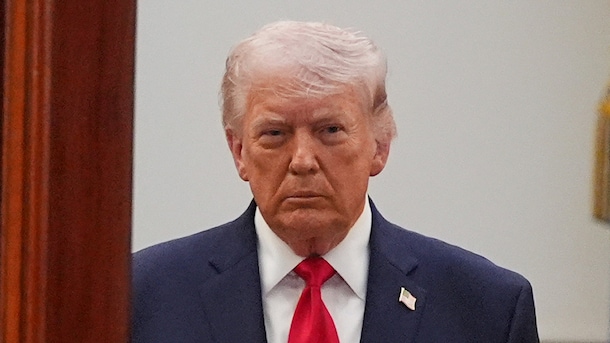
US President Donald Trump's press interaction on April 6, Easter Monday, was awaited with great anticipation, with possibilities of announcements ranging from a possible ceasefire or a declaration of victory or even a reiteration of his threat to bomb Iran to the 'Stone Age' by knocking out its power plants and bridges. Flanked by the CIA Chief, the Secretary of War and the Chairman of the Joint Chiefs of Staff, he, however, chose to focus primarily on the massive operation launched to rescue the American officer from the downed F-15 Eagle aircraft, giving minute details of how the operation unfolded and how the US military lived up to its motto of never to leave any personnel behind enemy lines. Yes, he did reiterate his threat of bombing Iran, saying that "the entire country can be taken out in one night", with some analysts saying that this was perhaps a veiled threat at a possible nuclear strike into Iran.
The developments in the war zone in Iran, especially related to the downing of the F-15 aircraft and the subsequent rescue, however, raise serious questions. One, how did Iran successfully target the F-15 when its air defences had been completely destroyed? Two, why did a rescue mission require a package of more than 100 aircraft to support it? Why was the extraction site so near to the Isfahan nuclear site?
Also, while examining the whole event, it is important to understand the configuration and role of the F-15 Eagle fighter aircraft.
The Shooting Down Of The Eagle
The entire episode owes its origin to the shooting down of an American F-15 Eagle on April 2; the aircraft was on a deep strike mission in Northwestern Iran (perhaps in Isfahan province) when it was shot by an Iranian missile. Initially, Iran claimed to have scored a hit on the stealth fighter F-35, but the debris later confirmed that it was an F-15E Strike Eagle from the Fighter Squadron deployed from RAF Lakenheath in the UK. This was the first time in 20 years that an American-manned fighter aircraft was shot down in enemy territory.
When the fighter came down, both occupants, the pilot and the Weapon Systems Officer (WSO), ejected safely. As they ejected from the fast-moving aircraft at an interval of a few seconds, they landed in separate locations, kilometres apart, in hostile and mountainous terrain. The pilot was rescued in the next few hours in broad daylight by the US special operations forces, who located him first and launched a rescue mission with a full package, including two HH-60W Jolly Green II combat rescue helicopters.
The extraction was, however, not easy. Facing direct fire from Iranian ground forces, one Blackhawk helicopter, which was carrying the recovered pilot, was shot, and a few crew members on the helicopter, too, were wounded by the missile strike. But the helicopter managed to fly out of Iran into friendly territory, with all members, including the rescued pilot, safe. During this mission, another US aircraft, an A-10 Warthog, which specialises in providing close ground support, was hit by Iranian fire. Once again, the pilot managed to fly the aircraft back into Kuwaiti airspace before ejecting safely. The A-10, however, crashed.
The Rescue of the WSO
It is the rescue of the second officer that is shrouded in mystery and the details of which have posed questions. As per the official version, the WSO, a Colonel-ranked officer, landed 20-30 kilometres away from the pilot and, despite being seriously injured, evaded Iranian forces and tracked for over 30 kilometres overnight, climbing mountainous features of altitude up to 1,700 metres, before being rescued in a daring mission.
Detailing the mission himself during the press briefing on April 6, President Trump said that 21 aircraft were deployed to help with the search-and-rescue in the first wave, flying for hours under "very, very heavy enemy fire". The WSO was "bleeding profusely" but was able to climb mountainous terrain and contact US forces to communicate his location. Rescuers mobilised a massive response that included subterfuge to confuse the Iranians about where they were looking. The president added that the entire operation involved 155 aircraft, including four bombers, 64 fighters, 48 refuelling tankers, and 13 rescue aircraft, among others.
Under intense air cover, the special operations teams were inserted into Iran to link up with the WSO. To ensure minimum interference from Iranian forces, areas around it were bombed and roads around the extraction site were destroyed, so as to prevent Iranian reinforcements from reaching there by road.
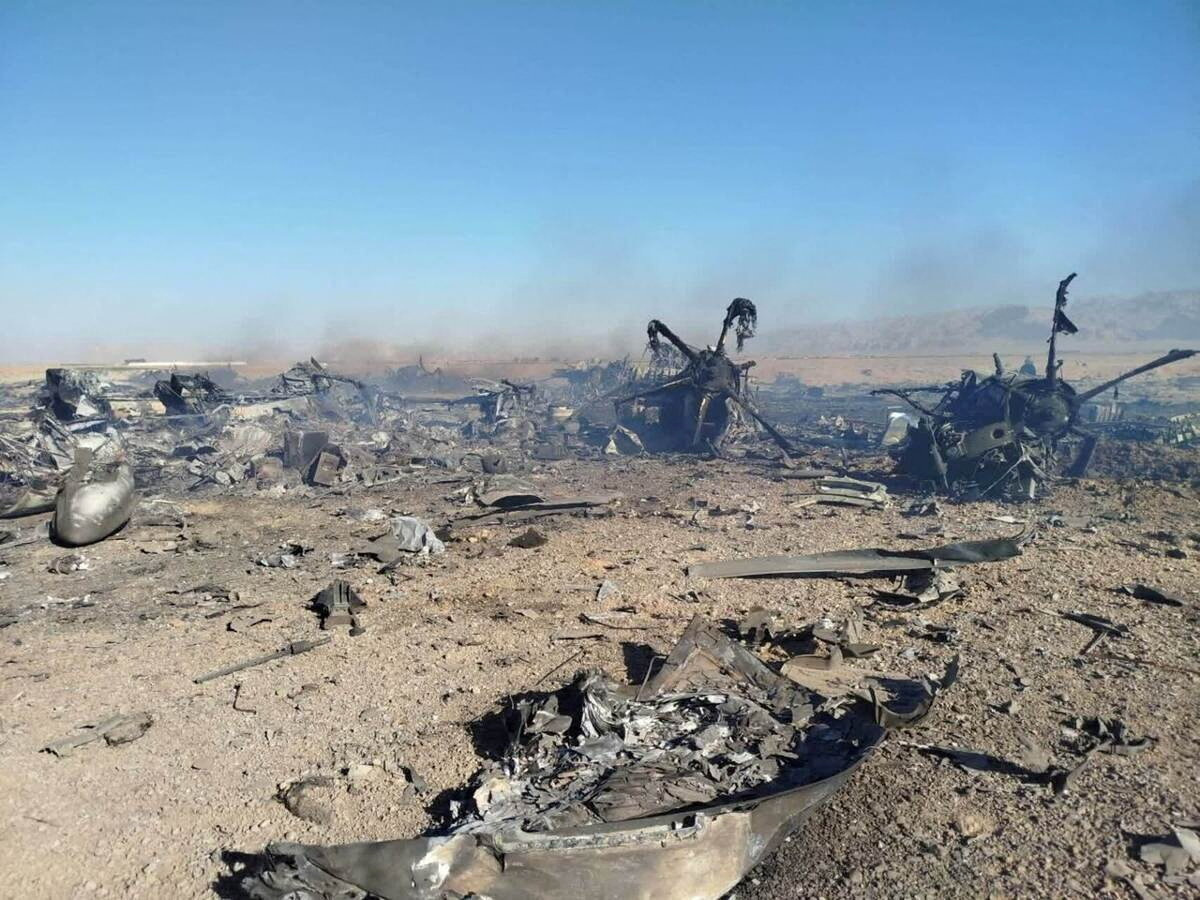
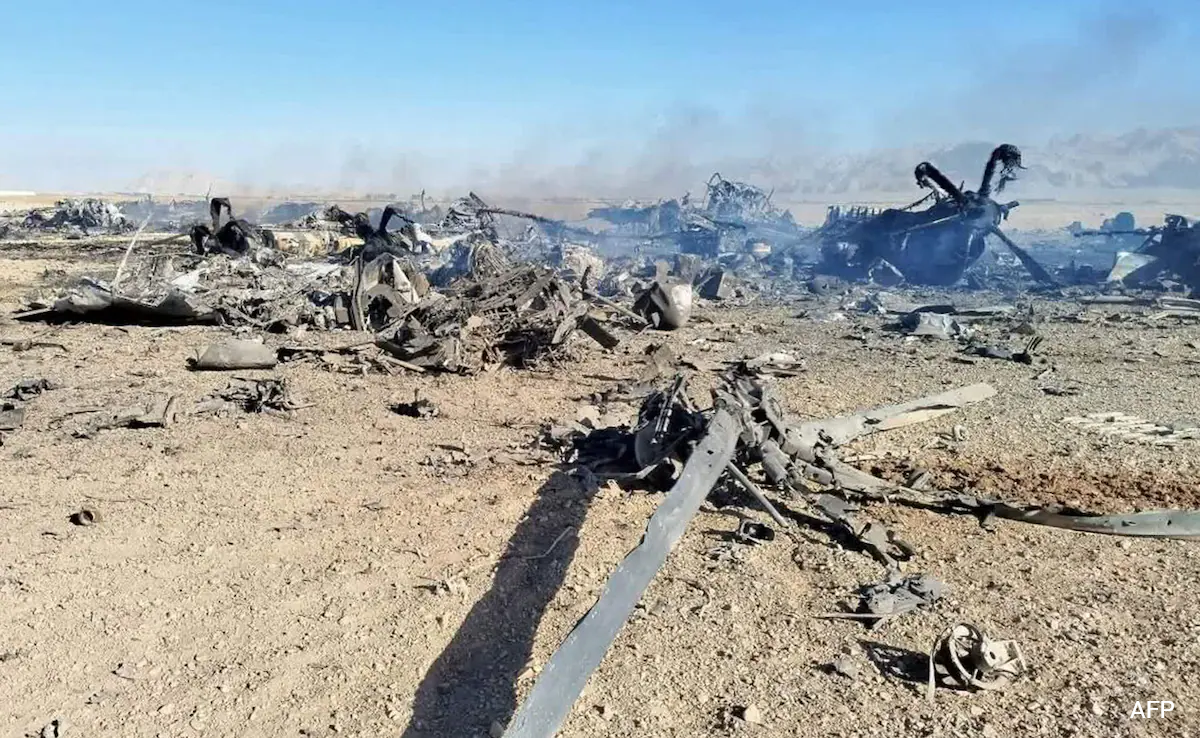
However, near the extraction site, as per official reports, two C-130 transport planes that had been landed at a forward position carrying the special forces on the rescue mission got bogged down and were stuck in the mud and gravel, unable to take off. To ensure that the mission's success was not subverted, the US military flew in three replacement C-130s, kept ready as a contingency. The WSO and all others were thereafter safely extracted under heavy fire from Iran after destroying the two C-130s in situ to ensure that precious American hardware did not fall into Iranian hands.
The final result - all US troops made it out safely, including the WSO. The cost of the mission was massive, in excess of USD 400 million. The price paid: at least five to seven aircraft destroyed or shot, namely, one F-15 Eagle, one A-10 Warthog, one Blackhawk helicopter, two C-130 planes (destroyed in situ) and possibly two HH-60W Jolly Green II combat rescue helicopters. There were also reports that an MQ-9B drone was downed by the Iranian forces during this operation.
The Mystery
While the US successfully extricated its WSO and all others involved in the mission, questions are being raised about the mission itself. When has it ever been the case that you need to deploy 155 aircraft on a Combat Search and Rescue (CSAR) Mission? Why were the two C-130s deployed when each has the capacity to carry up to 90 troops? Does it imply that the mission required almost 200 troops for the rescue - or were the troops already there, inserted for another mission? Was the case of the extrication site being very close to the Isfahan nuclear site just a coincidence, or was it that there was a special operation being planned to extricate 450 kilograms of enriched Uranium from the nuclear plant, deeply buried inside the site? Were the C-130 landed at or near an abandoned airstrip close to Isfahan city for the rescue mission, or was the real operation aimed at extricating enriched Uranium? If the rescue mission did not have the element of Uranium extraction included, why were fixed-wing aircraft deployed when such missions are better executed by small and swift helicopters? Remember, the site of extraction was not more than 200 kilometres from the Iranian border in the West, from where such a mission could have been executed without all the noise and destruction. And finally, if there was indeed another daring mission to retrieve enriched Uranium from Isfahan, does this rescue help cover up a botched operation?
The F-15 Eagle Configuration And The 'Wizzo'
The discussion would not be complete without looking at the F-15 Eagle's configuration and the fact that it has two officers, as opposed to most modern fighter aircraft, which fly on a 'one-pilot' configuration. The F-15E is a deep-strike mission aircraft with longer range and endurance capabilities. It is designed for both air-to-ground and air-to-air missions and is built to operate in total darkness and severe weather conditions using advanced navigation systems. The aircraft has two crew: the pilot and a weapons systems officer in the back seat. The front pilot handles the primary flight controls, manages air-to-air radar, and directly engages enemy aircraft. Their main responsibility is keeping the jet airborne, evading threats, and positioning the aircraft for a strike. The weapons officer, popularly called a "Wizzo", is responsible for selecting targets and making sure the weapons are programmed for the appropriate attack. The WSO monitors multiple screens and display panels giving real-time radar mapping, infrared imagery, and threat warnings.
Interpreting this complex sensor data in real-time requires an experienced and highly skilled WSO, who is generally a mid-level officer. This division of responsibility, flying at high speeds and managing complex weapon systems, works best with two officers, allowing the WSO to identify and lock onto targets miles away without distracting the pilot from flying.
The rank of WSO - also a Colonel - is interesting. Unlike the Indian Armed Forces, which have a different rank structure for the Army, the Air Force and the Navy, the US military has similar ranks for the Army and the Air Force, while the Navy follows the global system of ranks. Therefore, in India, a Colonel in the Army is equivalent to a Group Captain in the Air Force and a Captain in the Navy, while in the US, an officer with a similar designation would be a Colonel in the Army and the Air Force, and a Captain in the Navy.
To conclude, the daring rescue operation of the WSO is worthy of a movie script. However, whether the mission is to be classified as a success because the WSO was rescued or a cover-up for a botched operation to recover enriched Uranium, only time will tell. The only thing certain is that the US military lived up to its motto of not leaving any man - or woman - soldier behind enemy lines.
(The author is a retired Army officer and a senior research consultant at Chintan Research Foundation)
Disclaimer: These are the personal opinions of the author
-
Pak's 'Global Power' Act Is Fooling No One - Least Of All Its Gulf 'Creditors'

Dubious oil claims to failed 'mediation' attempts and the UAE and Saudi now apparently asking for repayment of their loans, Pakistan's repeated attempts to project itself as a 'global player' must be taken with a grain of salt.
-
$4.5 Billion A Month Jackpot: Why Iran Wants World To Accept Hormuz 'Authority'
Reports from Iran indicate the country plans to use potential toll payment money to rebuild infrastructure destroyed by US-Israel strikes, and re-stock missile and drone arsenals.
-
Blog | The Dantewada Massacre, And What India Needs To Do To Stay Maoist-Free
In 2010, I was Assistant Chief of the Air Staff controlling transport aircraft and helicopters, and on April 6 that year had to arrange An-32 aircraft to carry coffins of 75 CRPF jawans.
-
Opinion | How Iran Has Pierced The One 'Shield' That Protected America For 30 Years
In the past, US campaigns in Iraq, Afghanistan and Libya were conducted against relatively weak air defences. That has not turned out to be the case with Iran, puncturing the long-held myth of America's 'indomitable' air power.
-
Opinion | The Quiet 'Upheaval' Within US Military Over The Iran War
General Randy George's ouster carries echoes of a similar episode in 2003, in the run-up to the Iraq war. But much more is happening within the US military, courtesy Hegseth.
-
How Iran Sucker-Punched Trump Into 'Escalation Trap' 'Hellhole'
Trump is now under pressure, not just from allies but also within; the President's approval rating is the lowest it has ever been with mid-term elections in November.
-
Eagle Down: How US Carried Out Precision Search And Rescue Op In Hostile Iran
How the United States transformed a tactical failure into a narrative of national resolve.
-
Opinion | 450 Missile, 2,000 Drone Attacks Later, Why Is UAE Still Not Fighting Iran?
The UAE is Iran's second-largest trading partner and also home to roughly half a million Iranians. Why, then, has it absorbed more fire than any other Gulf state?
-
In Numbers: How Has India Kept Fuel Prices Low Even As Europe Sees 70% Spikes?
India imports 88% of its crude. Why then is it not seeing massive price hikes for fuel and LPG? Inside the unique strategy it's following...